Lessons from air traffic control chaos for Medicare for All
In an opinion piece, Merrill Matthews argues that the recent air traffic control crisis provides several warnings against the Democratic push for “Medicare for All,” suggesting that a government-run healthcare system would lead to technological delays, funding shortages and staffing issues.
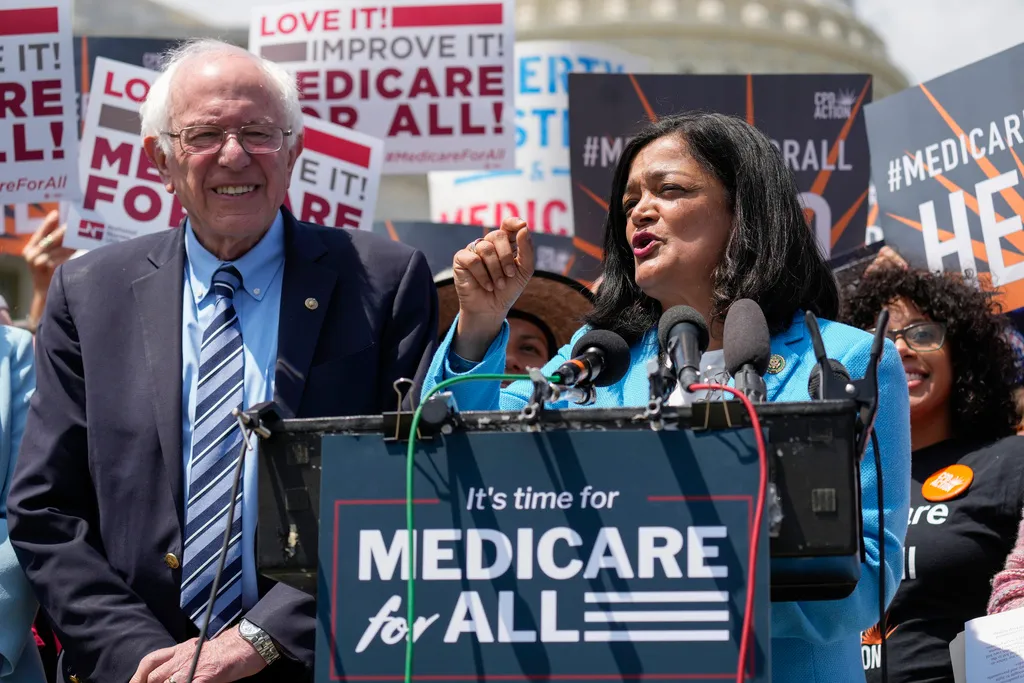
There are lots of lessons to be learned from the recent air traffic control chaos — and not just about air traffic control. Many of those lessons apply to the current Democratic push for Medicare for All . What are some of those lessons?
First, the air traffic control system is a government-run program. Medicare for All would also be government run. Medicare for All is not an expansion of the current Medicare program that covers most seniors, as the name of the proposal deceptively implies. Medicare for All eliminates Medicare, as well as the Medicaid program and all private health insurance, including the 165 million Americans who have employer-provided health insurance.
Under Medicare for All the government — the same politicians and bureaucrats who oversee air traffic control — will run health care. They will determine what drugs, medical devices and services patients can have and when they can have them — if they can have them at all.
Second, the government delayed access to the newest air-traffic control technology, which we now learn is grossly outdated.
Experts claimed that part of the system goes back to the 1990s and still runs on copper wire instead of fiber. The shutdown that stranded thousands of planes and millions of passengers was due a glitch while belatedly patching the outdated system.
Government-run health care systems also delay access to the newest technology. Take Great Britain’s National Health Service, one of the models for U.S. reform. The Guardian has written , “Patients could face delays accessing drugs on the NHS after health bosses agreed that the most expensive treatments can be stalled.”
Or how about this from Canada , another model for U.S. reform. “Out of G7 nations, Canadian patients on public plans have the longest average wait time for new drugs.”
U.S. patients currently have access to the latest technology, whether it’s diagnostic tests, medical devices, innovative surgeries or prescription drugs. That will come to an end under Medicare for All, just as it has in other government-run health care systems.
When Medicare for All proponents claim patients will have access to all the latest medical technology and services, don’t believe them. It didn’t happen with air traffic control, even though on any day millions of lives are at stake, and it won’t happen in health care, even though on any day millions of lives are also at stake.
The third lesson is there is never enough federal money. You will hear Medicare for All advocates assure voters the system will be fully funded. But that didn’t happen in the air traffic control, and it won’t happen in health care.
Secretary of Transportation Sean Duffy is using the current crisis to ask for $20 billion, which he upped to $50 billion . Incoming Democrats may or may not approve the funding. And that’s because all federal spending, including health care, becomes a political battle.
A fourth lesson is that limited funding leads to staffing shortages. According to the Federal Reserve Bank of St. Louis , there were 44,000 air traffic controllers in 2012. That number dropped to 35,000 in 2018 and 30,000 in 2025 — even though there were many more planes in the air. Even so, the controllers do a great job with the tools they have.
There will also be far fewer doctors and other medical professionals under Medicare for All.
The Canadian Medical Association recognizes many Canadians go to the U.S. to get needed health care in a timely manner, “Given Canada’s health care system’s struggles with doctor shortages and long waits for procedures, it’s believable.” And a new report from the Canadian Broadcasting Corporation says “4.5 million Canadians who are middle aged and older have had trouble accessing specialist care.”
A final lesson is that no one wants to take responsibility for government failures. President Trump blamed traffic control problems on the Biden administration. But the negligence goes back decades, under both Republicans and Democrats. As for Congress, it’s claiming most of the $12.5 billion appropriated for air traffic control reform hasn’t been used — so don’t blame them.
Under Medicare for All, the government will say it has provided adequate funding. Hospitals, doctors and other medical providers will complain they are being overworked and underpaid. Medical device and drug companies may cut back on their research and development because the funds under a government-controlled system will be limited. And patients will see waiting lines grow and access to innovative therapies decline.
Ironically, many air-traffic-control experts want to turn the government-run system over to the private sector while Democrats say we need to turn the privately run heath system over to the government.
Yes, we have many problems in the U.S. health care system. But this comes 16 years after Democrats passed an ObamaCare system with no Republican support, which is clearly broken. Now, Democrats say Medicare for All will fix a broken system they claimed to have fixed 16 years ago. They were wrong then, and they’re wrong now.
Merrill Matthews is the Texas state chair of Our Republican Legacy.
Topics in this story
Gathered from external sources. Rights to this text belong to whoever originally published it.