The Memo: Zelensky looks for way back from brink with Trump, to little avail
Ukrainian President Volodymyr Zelensky looks to be seeking a way back from the brink in his relationship with the U.S. — but he does not appear to be finding a receptive audience in President Trump. That leaves doubt and suspicion shrouding the path ahead — even as some in the GOP express dismay at Trump’s…
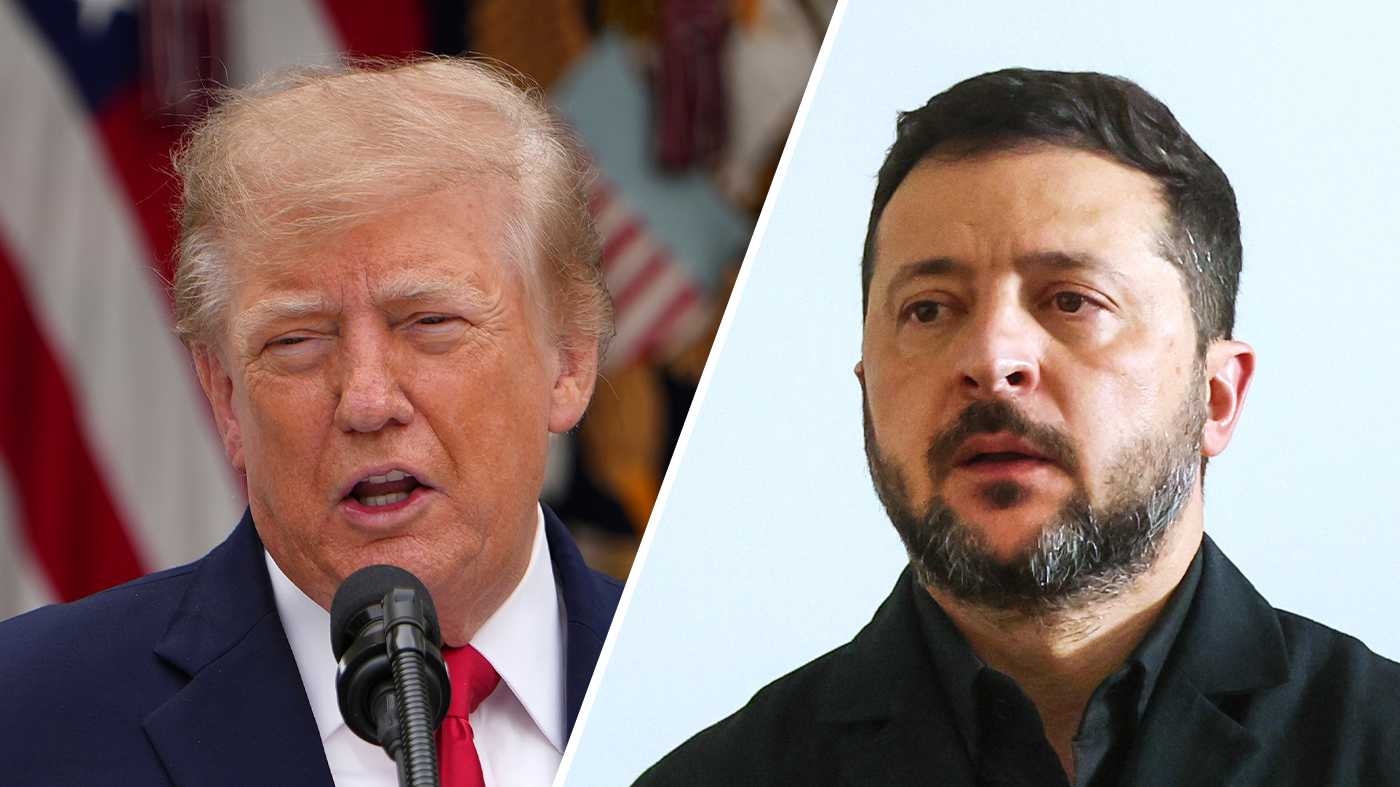
Ukrainian President Volodymyr Zelensky looks to be seeking a way back from the brink in his relationship with the U.S. — but he does not appear to be finding a receptive audience in President Trump.
That leaves doubt and suspicion shrouding the path ahead — even as some in the GOP express dismay at Trump’s recent shift toward harsher treatment of Kyiv and positive language about Vladimir Putin’s Russia.
A Zelensky social media post on Tuesday said that he had spoken with Secretary of State Marco Rubio about various “sensitive issues.”
He added: “We were very concrete and the conversation was positive. We shared the things we have to manage. And we will manage them, I’m sure of it.”
But there wasn’t that much evidence of such assurance from Washington.
Speaking with reporters in the Oval Office on Tuesday afternoon, Trump belittled Ukraine’s chances of prevailing in the war sparked by Putin’s February 2022 invasion.
“Russia is a big machine. They just keep grinding forward, and that’s what they’ve done. They’ve taken a very large piece of land. And, you know, you can say that Ukraine is doing well or poorly, but the land gets bigger and bigger all the time, week by week. They just march forward,” Trump said.
Moments later he added that the Kremlin has “a lot of people to draw from. Ukraine does not have a lot of people to draw from, and it’s time to make a deal.”
Trump famously promised on the 2024 campaign trail that he could end the war on his first day back in the presidency. His failure appears to irk him, but his irritation has recently become fused with a desire to pin the blame for high diesel prices in the U.S. on Ukrainian attacks on Russian refineries.
“We have given tremendous amounts to Ukraine. We’ve gotten nothing back other than high diesel,” Trump complained on Tuesday.
In fact, high U.S. fuel prices are almost universally considered to be primarily a consequence of the war on Iran that Trump launched, in conjunction with Israel, approximately eight months ago.
High prices are now weighing down GOP chances in the midterms. In opinion polls that measure voter sentiment about specific issues, Trump usually fares worst on inflation and the cost of living.
These intertwined problems have led to a head-spinning sequence of events in relation to Ukraine within the past two weeks.
Trump has, in swift succession, announced a diesel deal with Russia, undercutting the economic pressure on Moscow that Ukraine’s allies have sought to create; suggested Ukraine should get a new president; announced he would waive sanctions on Russia that were passed by Congress in memory of the late Sen. Lindsey Graham (R-S.C.); and suggested he might meet with Putin and Chinese premier Xi Jinping — with Zelensky apparently frozen out — to discuss how to end the war.
There have been more opaque events too, the exact details of which are contested.
Most dramatically, the Ukrainians say they have faced restrictions in their use of a satellite system which is vital to the effectiveness of their drone program.
The issue has led to a spate of allegations and denials as to who, if anyone, slowed down the usage of a program known as Starshield, which is in effect a military off-shoot of the Elon Musk-owned Starlink.
Trump has denied he did so and has expressed skepticism that Musk would have, either. Musk has commented only obliquely, noting that Starshield is run by the Pentagon and that ultimate authority over it rests with the president.
The Wall Street Journal reported on Tuesday afternoon that it was Musk who had ordered the slowdown. The Journal also claimed, citing two sources, that “Musk and Trump discussed the Starlink decision in a call soon after the slowdown became public.” One of those sources said that the two men had also discussed the matter prior to the slowdown.
Reuters had previously reported that the order to limit Starshield had come from “inside the White House.”
Separate from the Starshield issue, Kyiv has also leveled accusations that the U.S. had paused sharing of vital intelligence, leaving it in the dark about Russian ballistic missile launches. This has been denied by the U.S., most starkly by Rubio.
Speaking to reporters in Mumbai, India, on Tuesday Rubio insisted: “There has not been some deliberate, political directive to go out and harm Ukraine. It’s just not accurate.” He called the suggestion that Ukrainians had died because the U.S. had denied them information “scandalous” and “outrageous.”
Meanwhile, addressing Ukraine’s shortage of interceptor missiles, Defense Secretary Pete Hegseth told reporters traveling with him in Wisconsin, “We haven’t changed our posture in any way toward the Ukrainians, but certainly with things like interceptors, we want to make sure our guys have the most possible as well.”
Zelensky on Tuesday said that “early warning is now working.” He also referred to the importance of “our American partners” as he met Trump’s special envoy Steve Witkoff. The Ukrainian president wrote on social media that the president’s son-in-law Jared Kushner had “joined us online.”
The exact specifics of what was discussed is unclear, though Zelensky made reference to the security guarantees that his nation has long sought, and to the idea of having a meeting with himself, Trump and Putin.
Trump’s overall stance has drawn criticism from some GOP lawmakers. Rep. Don Bacon (R-Neb.), who is retiring, told CNN ‘s Jake Tapper on Monday that comments from Trump playing down recent Russian attacks were “absolutely disgraceful” and that Trump was “morally blind” on the conflict.
Some experts have been similarly critical.
John Herbst, who served as U.S. ambassador to Ukraine during former President George W. Bush’s administration, told an Atlantic Council event on Tuesday that Trump was using “classic accommodationist tactics” and was engaged in “a truly misguided policy, which guarantees there’ll be no end to this war.”
The Memo is a reported column by Niall Stanage.
Topics in this story
Gathered from external sources. Rights to this text belong to whoever originally published it.