Iran is no Vietnam, but Trump is mimicking Lyndon Johnson’s failed approach
Trump needs to learn the lesson in Iran that Johnson never did in Vietnam: that there is no slow squeezing of the enemy to the negotiating table.
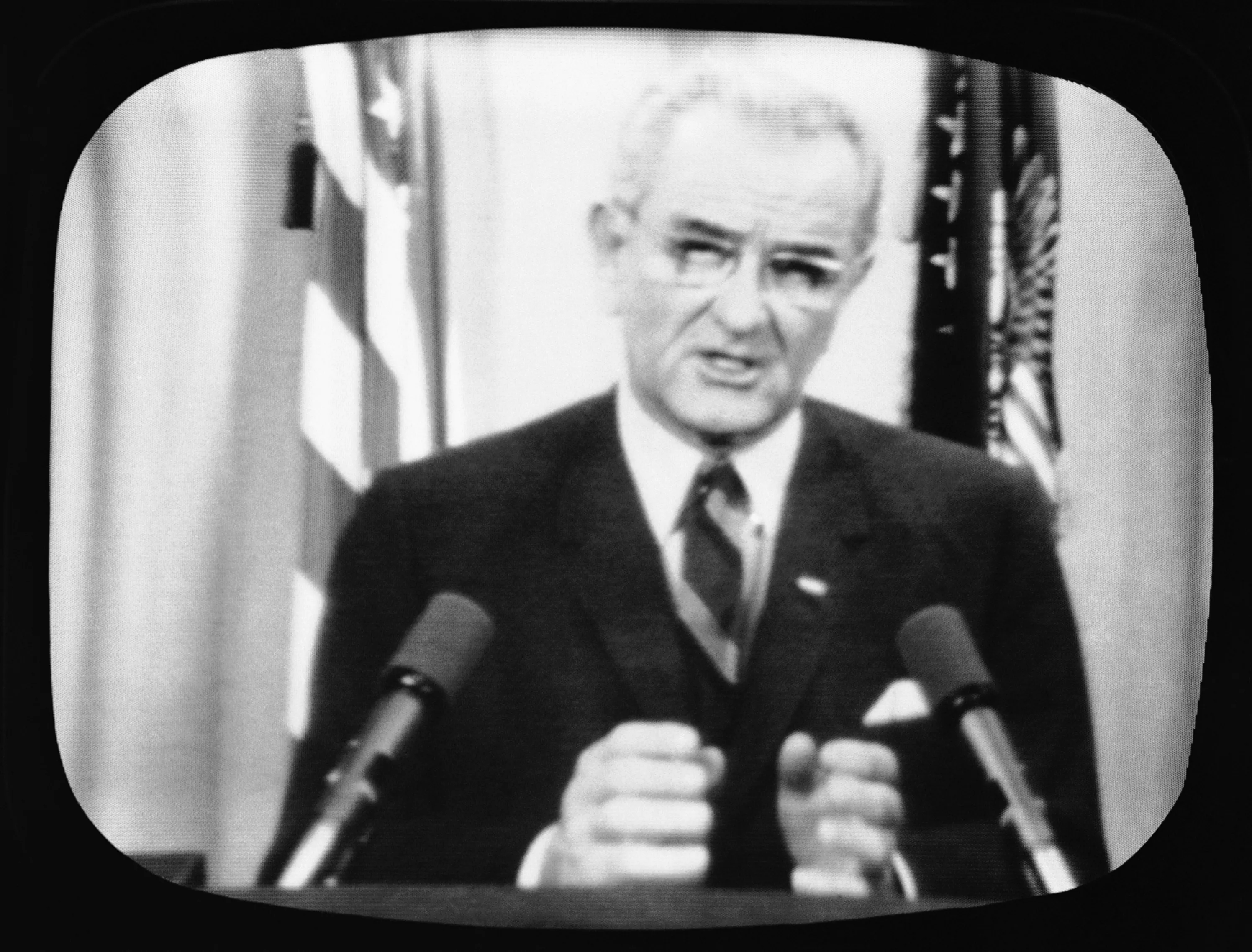
President Trump and his national security team are heading back to the future in Vietnam.
No, we do not mean April 29, 1975, when the U.S. chaotically evacuated Saigon . Nor are we referring to the quagmire the Vietnam war had become by then.
Rather, we refer to Operation Rolling Thunder , which began in March 1965 and ended just after Halloween in 1968. The U.S. military’s limited aerial campaign was intended to coerce the North Vietnamese to the negotiating table. Instead, over time, it began planting the seeds that resulted in Hanoi’s victory over South Vietnam ten years later.
Today, Team Trump is attempting to wield a similar failed strategy in Iran. Like President Lyndon Johnson’s administration in 1965, Trump is trying to change Iran’s behavior without first militarily defeating it. As in Vietnam, it will not work.
Again, this is not to suggest Iran is a quagmire. But some parallels do hold. Both the Vietnam of 1965 and today’s Iran are using confusion over who is really in charge to keep Washington off-balance. Tehran is using this confusion to play for time. They see the upcoming November midterms as their best possible path to victory.
To that end, Trump, wittingly or not, is giving them the same time to pursue that strategy as Johnson gave the Vietnamese.
The parallels run even deeper than that. Trump, whether he realizes the historical and military parallels or not, is pursuing the same gradualist approach to war that ultimately felled Johnson’s strategy in Vietnam.
There is no slow squeezing of Iran to the negotiating table. Johnson, although he failed to learn from it, was first taught that when Operation Mayflower failed 71 days after Operation Rolling Thunder began in Vietnam. Johnson suspended Rolling Thunder for seven days in May 1965 as an incentive for Hanoi to come to the negotiating table. Instead, the North Vietnamese delegation in Moscow spurned him by refusing to receive then-U.S. Ambassador to Russia Foy Kohler’s offer to enter into peace talks.
Thereafter, for the next three years until 1968, Johnson kept trying to gradually coerce North Vietnam back to the negotiating table, much like Trump has been doing with intermittent cease-fires and bombings. It never worked, because airpower has limitations.
Iran’s Islamic Revolutionary Guard Corps and its leaders are creating their own modern-day version of the Vietnamese strategy against Johnson. Leaders in Tehran is more than willing to come to the negotiating table — the regime is even willing to sign deals, such as the June memorandum of understanding. But that won’t bind the Islamic Revolutionary Guard Corps’ commanders from attacking vessels attempting to transit the Strait of Hormuz. They have no intention of honoring any deal the nation’s civilian leaders enter into with Trump’s White House.
Nonetheless, Trump keeps trying the same failed approach. By our count, U.S. Central Command has announced hitting largely the same type of target sets 16 times. Mowing the lawn, either as a strategy to bring Iran back to negotiations or to mitigate against attacks in the Strait of Hormuz, is not going to work.
Trump has failed to identify the decisive terrain in Iran. Likewise, Johnson never defined decisive terrain in Vietnam because he was not trying to win — he was just hoping to cut a deal with Hanoi.
Today, the Strait of Hormuz is the decisive terrain of the war and yet Trump refuses to fully secure it, opting instead to control it (doctrinally, there is a difference).
If Trump is to achieve victory in Iran, then he must stop micromanaging the war from the Oval Office. Johnson never learned that lesson. His Tuesday lunches with Secretary of State Dean Rusk and Secretary of Defense Robert McNamara, wherein strategies, targets, and tactics were decided, led to the quagmire that Vietnam eventually became.
Team Trump is not in a quagmire yet in Iran, but it must avoid repeating this same mistake.
Mark Toth writes on national security and foreign policy. Col. (Ret.) Jonathan Sweet served 30 years as a military intelligence officer and led the U.S. European Command Intelligence Engagement Division from 2012 to 2014. They are the cofounders of INTREP360 and the INTREP360 Intelligence Report on Substack.
Topics in this story
Gathered from external sources. Rights to this text belong to whoever originally published it.