Trump’s Taiwan two-step
South Korea is not a happy country. It was unwilling to help President Trump’s team keep the Strait of Hormuz open. So the petulant president decided it was time to rekindle his love affair with North Korea’s dictator, Kim Jung Un, and punish the South by cutting short joint exercises. One wonders if the logical consequence will…
South Korea is not a happy country. It was unwilling to help President Trump’s team keep the Strait of Hormuz open. So the petulant president decided it was time to rekindle his love affair with North Korea’s dictator, Kim Jung Un, and punish the South by cutting short joint exercises.
One wonders if the logical consequence will be the South’s acquisition of nuclear weapons, as it can no longer trust the Trump administration to honor its defense commitments to Seoul.
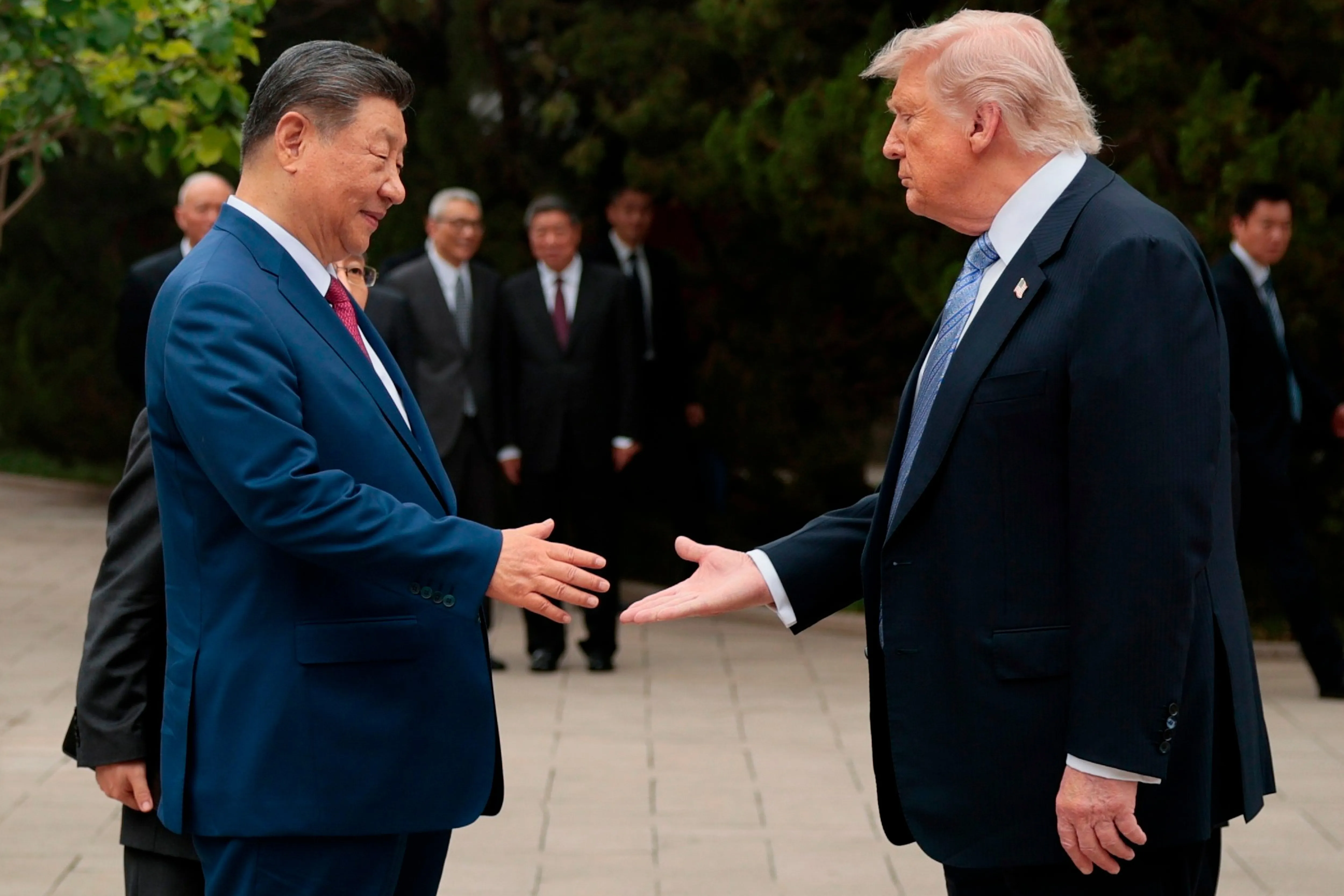
What happens when China’s President Xi Jingping meets with President Trump next month? Suppose a Trump Taiwan two-step tango takes place and Trump decides there is no reason for the U.S. to go to war or to defend Taiwan, should China invade.
Trump’s argument, before his ill-advised war with Iran, could have been that about two thirds of Americans would not support going to war over Taiwan. But after the bungled Iran “excursion,” opposition to a war with China must surely be greater.
Taiwan’s internal politics reinforces that preference. Taiwan has the resources to create a “ Porcupine Defense ” that would make any Chinese invasion very costly and thus unlikely. But it has not done so. Taiwan still depends on the U.S. for its ultimate defense.
Of the 113 seats in the Yuan , Taiwan’s Parliament, 52 are held by the Kuomintang party, which supports some form of reconciliation with the mainland; 51 are held Democratic People’s Party, whch wishes to remain separate; and there are 10 other seats. That is one reason why a full Porcupine Defense has not been implemented.
China probably is taking the long view — that at some stage, Taiwan will chose to be absorbed.
Trump could expedite that process, working out a deal with Xi, just as he may negotiate a modus operandi with Kim. In that case, the U.S. would not be prepared or required to defend Taiwan if Xi makes a promise or commitment not to invade. Perhaps he would even help to resolve the war with Iran, greatly easing demands on the U.S. military.
The U.S. National Defense Strategy sets as a top priority to deter China in the Indo-Pacific through strength, not confrontation, to prevent access to the first island chain. The strategic reality is that China has set up a powerful perimeter to prevent its being denied access . With its longest range missiles and aviation units, its weapons engagement zone extends more than 1,500 miles from China’s borders.
In unclassified war games, this zone holds any surface forces at sea and ashore at substantial risk, meaning that high casualties are quite possible in any conflict.
But the U.S. has a better alternative. For much of the Cold War, it maintained the ability to wage war to defend NATO at the conventional and nuclear levels, for which it maintained substantial tactical or battlefield nuclear weapons and strategic forces through it bomber, ballistic submarine and land-based missiles.
Trump could state, as his insurance policy, that the U.S. has both conventional and nuclear forces ready to make any invasion of Taiwan a disaster. Although the analogy with NATO lacks the Article Five commitment — that “an attack against one shall be considered an attack against all” — such a threat should suffice to keep China from making a big mistake.
From Trump’s perspective, this would be a trifecta. Whether North Korea and China would be helpful in allowing him to extricate himself from Iran, that could occur. While this approach may not alter the war in Ukraine, it would permit Trump to defuse potential tensions in Korea, alter the commitment to Taiwan and improve U.S.-China relations.
It would not be so bad if Trump could execute this Taiwan two step tango. But I would not bet the future on an administration with such a poor record of execution.
Harlan Ullman is senior adviser at Washington’s Atlantic Council, chairman of a private company, and principal author of the doctrine of shock and awe. His next book, co-written with Field Marshal The Lord David Richards, former UK chief of defense and due out this Fall, is “Who Thinks Best Wins: How Decisive Strategic Thinking Will Prevent Global Chaos. “
Topics in this story
Gathered from external sources. Rights to this text belong to whoever originally published it.