Appeals court questions if Trump’s conviction survives presidential immunity
A New York appeals panel questioned on Thursday whether presidential immunity or federal law bars President Trump’s criminal conviction stemming from a hush money payment made during his 2016 campaign to cover up an alleged affair. Trump’s personal lawyers said Manhattan District Attorney Alvin Bragg’s (D) legal theory of the case was preempted by campaign…
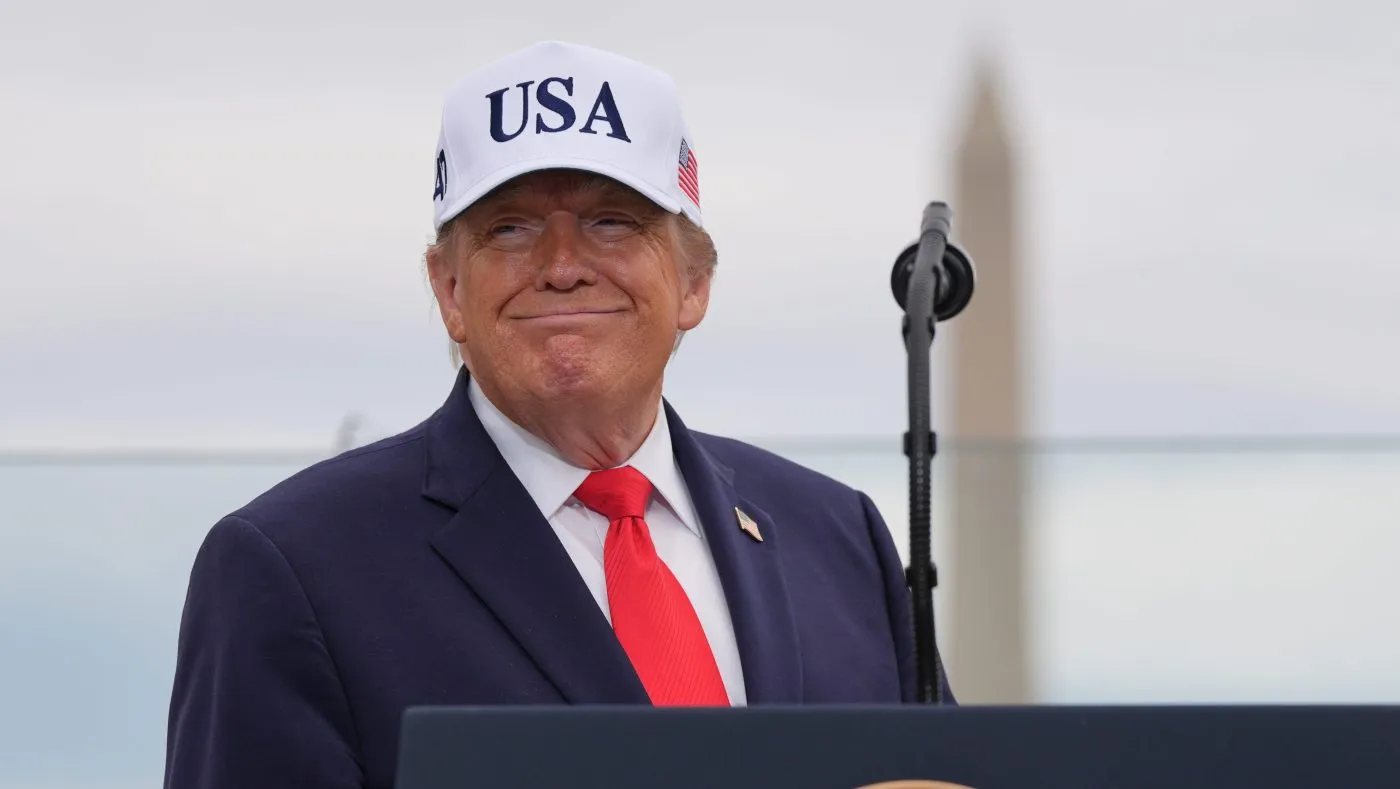
A New York appeals panel questioned on Thursday whether presidential immunity or federal law bars President Trump’s criminal conviction stemming from a hush money payment made during his 2016 campaign to cover up an alleged affair.
Trump’s personal lawyers said Manhattan District Attorney Alvin Bragg’s (D) legal theory of the case was preempted by campaign finance law and that his team wrongly showed jurors official acts from Trump’s time in the White House, including his online posts.
“Isn’t this public messaging by a sitting president, and it involves presidential communicative authority, and therefore it is directed at shaping public perception?” Associate Justice Martin Shulman asked.
“Wouldn’t that be or fit within the outer perimeter that the Supreme Court was talking about here, and therefore would have barred this stuff from coming in?”
In addition to the posts , Trump says jurors shouldn’t have been able to consider his call records while in office, his 2018 government ethics form and testimony from his onetime campaign press secretary, Hope Hicks, about her time working in the White House.
Bragg’s office says the trial was sound and none of that evidence was protected. But if the judges disagree, the guilty verdict should still stand because any issues were harmless, his office says.
It left several of the judges on Thursday questioning where to draw the line.
“If you take all of those things cumulatively, right, a problem with this evidence, there’s a problem with this evidence,” Associate Justice Bahaati Pitt-Burke said, “at what point does it not — does it stop being harmless error and turn into something else?”
Steven Wu, Bragg’s appellate chief, responded that “it would have to be a lot more than there was in this case.”
The president is fighting to overturn his 34-count criminal conviction of falsifying business records stemming from a $130,000 hush money payment to adult film star Stormy Daniels. The payment was made in the final days of the 2016 presidential campaign to cover up an alleged affair years earlier, which Trump denies.
Trump was sentenced to no jail time , though the verdict made him the first president to become a convicted felon.
The president is fighting to remove that status and destroy the case, one of four criminal prosecutions Trump faced as he campaigned to return to the White House for another term. All the others were dismissed. Bragg’s was the only one to go to trial.
Trump advances several arguments on appeal, but much of his push centers on the Supreme Court’s landmark ruling handed down after the trial that former presidents are entitled to at least presumptive immunity for their official acts.
His personal lawyers have latched on to Hicks’s testimony, in particular, that while working in the White House, Trump told her, “it would have been bad” for the Daniels story to have come out before the election.
During closing arguments, prosecutors told jurors the comment was devastating to Trump’s defense and it put the nail in his coffin. Now, it’s coming back to bite prosecutors.
“Is that so important, or was it not so important?” Associate Justice Shlomo Hagler asked.
Beyond immunity, Trump’s lawyers also argue that the case is preempted by the Federal Election Campaign Act (FECA), a federal law that governs campaign finance limits. Falsifying business records in New York would be a misdemeanor on its own, but Bragg bumped up Trump’s charges to the felony version by saying the scheme involved undisclosed campaign contributions.
“There’s never been a case where a local district attorney — there’s 2,300 of them in the United States — has ever prosecuted a candidate, a federal candidate, much less a presidential candidate, for a violation, effectively, of FECA,” said Robert Giuffra, Trump’s attorney and a partner at Sullivan & Cromwell.
Thursday’s argument comes as Trump separately tries to move his appeal to federal court, hoping that he can more easily advance his presidential immunity arguments there.
The push has fallen flat so far, though the judge who has long been denying the push died late last month . His most recent rejection of Trump’s arguments is set to head to a federal appeals court later this month.
Topics in this story
Gathered from external sources. Rights to this text belong to whoever originally published it.