My father taught me the dignity of labor: We ‘get to’ live, work and love
After her father’s death, Asra Nomani revisits the quiet acts of service that shaped her life and finally understands the true meaning of the dignity of labor.
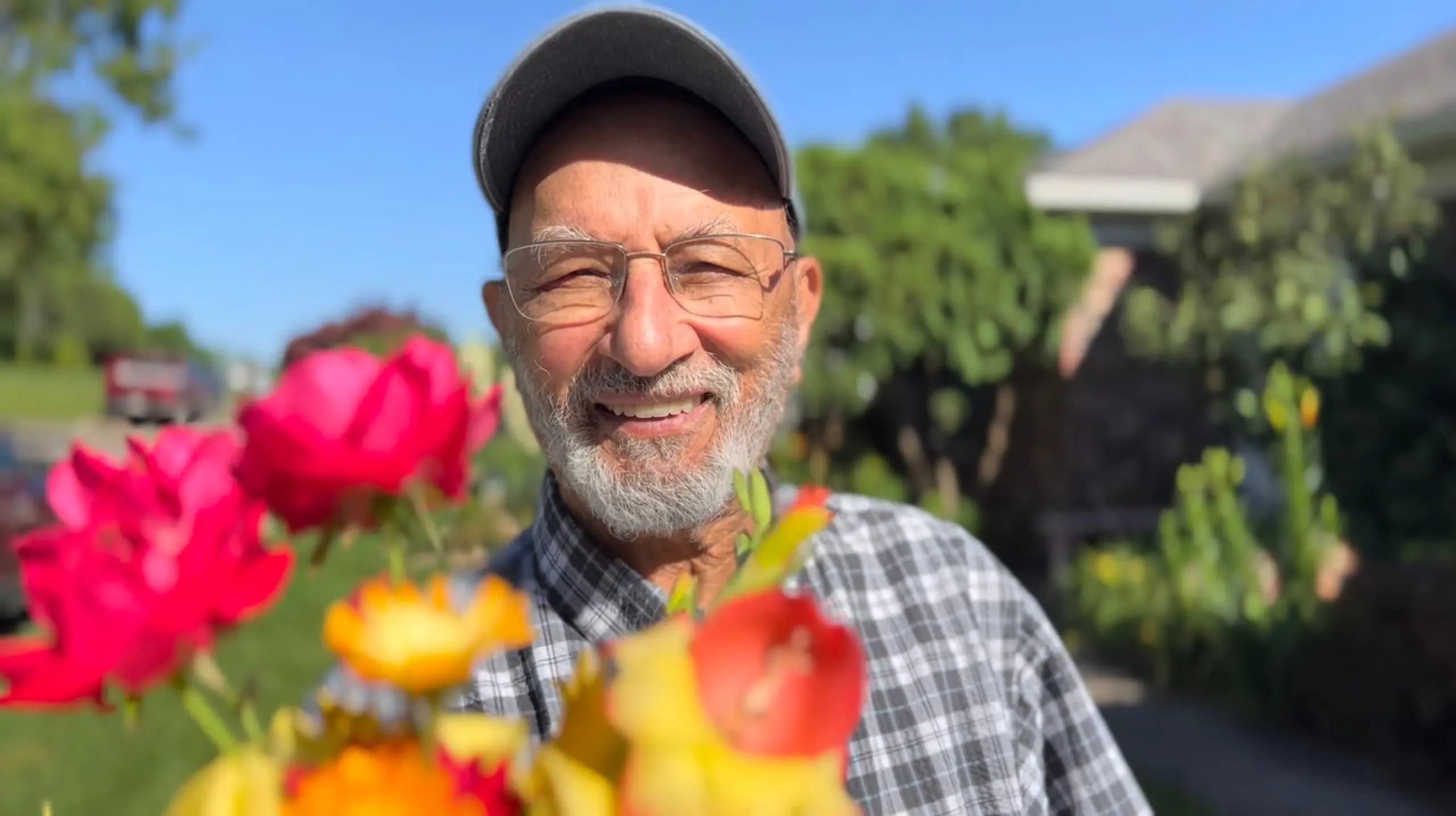
My father froze when he saw his professor washing cars. It was 1962, and Zafar Nomani was a visiting teacher at Kansas State University in Manhattan, Kan., newly arrived from India on a fellowship. One day, riding past a church car wash, he spotted his professor among the people scrubbing down cars beside his students. For the rest of his life, my father treasured that moment. "I saw the dignity of labor," he would tell us. More than six decades later, on this Labor Day weekend, my family is mourning my father, who died in early August at the age of 93 in our adopted hometown of Morgantown, W.Va. And as I negotiate new relationships with his power washer, his weed trimmer, his tools and the daily chores that he quietly managed, pushing a cart at our local Kroger on Patterson Avenue, I find myself reliving – and rewriting – the story of my life with him. For most of my life, I thought I was challenging the patriarchy. Now I realize I grew and became the investigative journalist that I am because of the patriarch in my life. Living a Philosophy of Gratitude: 'I Get To...' I arrived in America from India in the summer of 1969 as a 4-year-old girl and I grew up in the 1970s with feminism, women’s rights and Gloria Steinem, who died this week at 92, just a year younger than my father. I learned to interrogate male power, religious authority and the restrictions that societies imposed on women. I still believe in the work of empowering women and girls. But in my father's absence, I have come to understand something I failed to fully appreciate while he was alive: the quiet and largely invisible power of a good patriarch. I spent much of my life believing my strength came from resisting my father’s authority; after his death, as I grieve his absence from this world, I recognize that much of my strength, intellect and purpose came from the invisible labor he performed to make my independence possible. I thought I was overcoming the patriarch; I now see that – with his devoted and beloved wife beside him – my father was performing the quiet service that allowed me to become the woman capable of challenging him. That epiphany has also changed the meaning of "labor" for me. Labor, I now understand, isn't just the work we perform from 9 to 5, as Dolly Parton, another national treasure lost this summer, sang. Some of the most important labor of our lives is never entered on a time sheet. It is the ordinary caregiving through which people provide one another shelter, safety, security. This summer, for two months, I helped care for my father with my family in hospital rooms at our local hospital. His last breath came in Room 8. Amid the oxygen tubes, medications, alarms and fear, I fell in love with my father all over again. I resurrected the spirit of the girl who once lay against his belly listening to stories about the kings and queens of India. I remembered the girl who arrived in the U.S. At the time, my father was a Ph.D. student and our family lived in poverty in graduate-student housing in Piscataway, N.J., in a humble red two-bedroom home converted from military barracks on Bevier Road. In the winters, my parents turned on the oven to heat the home. But my parents still found a way to throw me a birthday party in our backyard. The grievances and misunderstandings that accumulated over a lifetime fell away. What remained was the gratitude my father had modeled for me through the way he lived his life. His philosophy was not "I have to," but "I get to." My father never lived from the premise that life had victimized him. He didn't organize his days around the complaints of "I have to..." I have to work. I have to study. I have to take care of my family. His philosophy was exactly the opposite: the gratitude of "I get to..." I get to. I get to work. I get to study. I get to take care of my family. That philosophy had been forged long ago in his response to adversity and suffering. JASON MIYARES: MOTHER FLED CUBA AND FOUND THE FREEDOM TOO MANY AMERICANS NOW FORGET Warming Hands Born in the summer of 1933 in India under British colonial rule, my father survived the Bengal famine of 1943 when the British diverted food from India to military troops fighting in World War II. As a boy in Hyderabad, India, he stood in lines for food aid from the United States. Tears came to his eyes decades later when he remembered the coarse red sorghum scraping his throat as he swallowed grain he said had been intended as animal feed. But the lesson he took from hunger wasn't "Look what I suffered." It was "I get to eat." After being wed to my mother in 1962 in an arranged marriage, he confided in her on their wedding night his philosophy of transcending suffering with a simple purpose: "Serve humanity." That led him to the car wash moment in Kansas. Years later, while studying at Rutgers University, my mother babysat other people's children to help raise enough money for airfare for my brother, Mustafa, and me to reunite with our parents. When we moved to Morgantown, W.Va., in 1975, and he began building his career as a professor of nutrition, he worked from morning until night. He didn't begrudge those hours. Instead, his ethos was plainly simple: "I get to work." He rarely announced this philosophy. Like many men of his generation, he wasn't fluent in the modern language of feelings. His love language was service. And what that service meant for me, especially as a girl growing up in the 1970s, was remarkable. A stricter interpretation of Islam was spreading around the world, fueled in part by the religious forces rising from Saudi Arabia and the new Islamic Republic of Iran. Once, my father was told that I needed to cover my legs because otherwise they were haram, or Islamically forbidden. My father didn't stop me from running track. He was a girl dad before it was a thing. One cold, rainy day in the spring of 1978, after I had run a mile race on the track at the West Virginia University Coliseum, I stood weeping at the finish line because my hands were so painfully frozen. My father swooped down from the bleachers, took my hands inside his and breathed his hot breath over them, again and again, thawing my fingers. He didn't complain about the rain. He didn't complain about standing there in the cold. His actions said: "I get to care for my daughter." DANA PERINO: FIVE IMPORTANT LESSONS FROM MY FATHER FOR EVERY PROUD GIRL DAD Driving to Opportunities My father’s labor of love often happened behind the wheel, driving us everywhere — to school, to opportunities, to airports, to the next place where one of us might grow. In the summer of 1981, my father drove me to Pittsburgh International Airport for a National Science Foundation camp in Tahlequah, Okla. While I was away, he turned his attention to another journey: helping my mother, Sajida, realize her dream of becoming the first woman in her family to start a business. He stayed up through the night, hand-drawing the window sign for her boutique, Ain’s International, named using the last part of my middle name. Then he drove around town, stapling promotional flyers for her store on bulletin boards around campus. He saw dignity in every act of service: "I get to help my wife." She built a store on High Street in downtown Morgantown that became a home away from home for generations of college students. They sat on stools at her counter and told her their stories, their heartbreaks and their troubles. As a first-generation immigrant, my father understood that opportunity wasn't something to hoard. It was something to create for others. When I decided to become a journalist, my father knew well the expectations of our culture: a daughter eventually left her father's home for her husband's. But when I wanted an internship in New York City in the summer of 1983, he got into our Subaru and drove me from our home on Cottonwood Street to an interview at Harper's Magazine on Park Avenue. Years later, in Room 8, he still remembered one of the details of that trip. After dropping me off, he drove to New Jersey because the parking was cheaper. He had never complained to me about the cost of parking. He reveled in the act of service: "I get to drive my daughter toward an opportunity." When I went to graduate school in Washington, D.C., in the late summer of 1986, he climbed back behind the wheel of our Subaru and drove with me again, helping me hunt for an apartment on Massachusetts Avenue and Embassy Row for a rent of $300 a month that my mother and he paid. His work was sacred: "I get to help my daughter build her life." But growing up inside that shelter didn't mean I always recognized it. When I was in my late 20s, a successful reporter at the Wall Street Journal's Washington, D.C., bureau, I went to a psychologist carrying the grievances young adults can accumulate against their parents. I catalogued what my father had done wrong, leaving my brother and me in India with his parents while he settled with my mother in the U.S., leaving me with "abandonment issues." I even persuaded my father to come into a therapy session on Wisconsin Avenue NW and listen as I poured out my anger. He could have dismissed me. He could have invoked his authority. He could have walked out. Instead, he listened. I even complained that he hadn't made me a baby book as American children enjoyed. He didn't grouse. He filled out a baby book for me with hand-drawn pictures. Again, when confronted with my pain, his instinct wasn't to defend himself. It was to do something. MARK MERRILL: THE FOUNDING FATHERS GAVE US AMERICA. 250 YEARS LATER, WE STILL DEPEND ON GOOD DADS Building a Baby's Room: 'Life is multivariate' When I went to Pakistan after the attacks of Sept. 11, 2001, to report on extremism, I couldn't have imagined what awaited me. Then my friend and colleague from the Wall Street Journal, Daniel Pearl, was kidnapped after he left a home I had rented in Karachi. I called home. My father told me, "It is your farz," or duty, "to help your friend." That was another definition of my father's sense of labor. Duty wasn't drudgery. Duty was love and friendship expressed through action. Then, in one of the darkest periods of my life, I saw my father's sense of sacred duty express itself for me. Weeks later, I learned I was pregnant. I had fallen in love with a boyfriend in Karachi, and we had talked about marriage. But amid the dragnet of intelligence and military officials surrounding my house as they searched for Danny, he disappeared, frightened by what was unfolding around us. I broke the news to my mother, afraid of how my father would react. In Pakistan, it's a crime to be unmarried and pregnant. Then my father sent me an email with just three words: "I love you." There was no lecture. No shame. His message, as I now understand it, was a divine gift: You get to be a mother. And, characteristically, he turned those words into work. Over the next months, my father finished a new bedroom in his home for my baby and me. When he picked me up at the airport, his fingernails were coated with the baby-blue paint that is still on those walls. Later, when I raised my son as a single mother, my father retired and quietly stepped into another job with a clear mission: Helping care for his grandson, reading the morning newspaper with my boy on his lap. During the challenging middle-school years, he moved in with us, sleeping on the lower bunk of my son's bunkbed and cooking us biryani lamb-and-rice dishes for dinner with packets of Shan Foods boxed spices. Even the most mundane crises became occasions for service — and, inevitably, for science. When a tree fell in our yard, he put my son's bicycle helmet on his own head as a homemade safety helmet and went outside to study the problem. He examined the angles, the weight, the branches and the physics. He approached the challenge with the same zest he tackled every adversity: "I get to clear the tree." When I interviewed him about his strategy, he articulated the scientific method he had instilled in me: "Life is multivariate." As a scientist, my father studied the Islamic practice of fasting from sunup to sundown during the month of Ramadan and became a pioneer in research that would later help inform what we now understand as intermittent fasting. But the most important experiment he conducted, at least for me, was an experiment in unconditional love. Ours was a family that was an experiment in assimilation, integration and authenticity. Once I asked him why he hadn't shamed me when I returned home pregnant without a wedding ring. Life was an experiment, he told me. Learn from everything. That was how I learned to become a researcher, an investigator and a journalist. He taught me to look at evidence, revise conclusions and challenge assumptions, even when they are our own. Most remarkably, he was willing to apply that scientific openness to himself. Pioneering as a Girl Dad: 'Zaf4Peace' When I went to our mosque in Morgantown in the fall of 2003 and an elder told me, "Sister, take the back door," my father stood with me and supported me when I walked in through the front door. As a board member of the mosque, he wept in the kitchen, pleading with the other board members, "Make room for our daughters." Mosque leaders didn't agree with him. Eventually, he surrendered his authority and stepped down from the board. At home, he and I often debated gender dynamics and global politics in our kitchen. I argued with him fiercely. I challenged him. And, each time, he allowed himself to be challenged by his daughter. And he kept supporting me, one cold morning standing with me and other women at the intersection of Johnnycake Road and Adamsview Road in Windsor Mill, Md., holding a sign we'd printed at Kinko's in the pre-dawn morning, advocating for "#MuslimReform" and women's rights. When I faced online death threats and character assassination, my father invented a moniker, "Zaf4Peace," to defend his daughter on comment boards. For years, I thought my strength came from pushing against him. Now I understand that my strength came because of his courage in giving me room to push. An immigrant father in a new culture, so foreign from his own, he grew with me, and, in that shelter, I was able to grow. That recognition makes the ordinary moments feel more poignant now. He wasn’t perfect. Neither was I. And I carry many regrets for decades I wish I could relive from a place of gratitude for the father who was actually in front of me, rather than for some Hallmark version of the patriarchy imagined. I have understood in my father’s absence that we were on a lifelong journey together. In 2011, when I got a seat on a flight to Guantanamo Bay, Cuba, to cover the military tribunal of the man who confessed to murdering my friend Danny and to orchestrating the Sept. 11 attacks, I could have taken a taxi to Andrews Air Force Base. Instead, I asked my father to drive me. And I got cranky when he braked at green lights. How irrelevant that annoyance suddenly seems. How precious the ride feels now. Years later, when I was struggling through heartbreak, a psychologist introduced me to positive psychology and told me, "Plant flowers; don’t feed the wolf." I repeated the words to my father. He went to Home Depot, came back with potted rose bushes and planted them for me. Then he listened quietly as I wept beside him. He didn't have words for me, just quiet labor. Looking back, I see that pattern everywhere. DAVID MARCUS: LABOR DAY IS FOR THE PROUD WORKERS WHO BUILT OUR COUNTRY Planting Flowers: 'Thank you' Love expressed itself in our lives through labor. The labor of warming your daughter's frozen hands. The labor of tending to a fallen tree. The labor of changing your mind. The labor of planting flowers. The labor of defending your daughter's right to walk through the front door. The labor of getting up every morning and looking around at the people entrusted to your care and not thinking, I have to take medicine, but: I get to. Even in sickness, my father lived in gratitude, whispering, "Thank you," through the respiratory treatments that marked his last days. This summer, the man who had spent a lifetime caring for us became the one who needed care. In doing so, he gave us the precious gift of being able to serve him. At his bedside was the next generation he loved – Safiyyah, Samir, Shibli and Kenzy – whispering their adoration softly into his ear. And then came the final reversal. This summer, in Room 8, my father became the one whose hands grew cold. Nearly five decades after that rainy track meet, I sat beside him in Room 8 and held those hands that had once enclosed mine. His muscles were tired. His body was failing. I held his hands, and I breathed my warm air onto his fingers, just as he had once breathed onto mine. This summer, I was able to say again and again: "I get to care for my father." His lesson of unconditional love and service had come full circle. Even after his last breath, he had one more lesson to teach me about love. When it came time for my father's funeral prayer, I didn't demand to walk through the mosque's front door. I stood sentry outside. There was a time when I might have understood that moment principally as a confrontation with patriarchy. I understood it differently now. I was there with my father. For one day, the argument was no longer important. Honoring him was. The professor whom my father saw washing cars in Kansas in 1962 couldn't have ever known what the young scholar from India would carry away from that encounter. My father called it the dignity of labor. It took me a lifetime to understand how completely my father embodied that value. And it took his passing from this Earth for me to recognize how completely he had taught it to me. The dignity of labor isn't simply the dignity of a paycheck, a profession or physical work. It is the dignity in serving another human being without humiliation or reward. It is the dignity in making another person's life possible. It is the dignity of doing the work nobody applauds. It is the dignity of a father standing in the rain, warming his daughter's hands. And this Labor Day, with my father's weed trimmer and power washer waiting for me, I feel his presence everywhere amid his absence. I finally understand the inheritance he left behind. There is work to do, serving our families and this world. And we get to do it. CLICK HERE TO DOWNLOAD THE FOX NEWS APP
Topics in this story
Gathered from external sources. Rights to this text belong to whoever originally published it.