Forget blackout drinking. Gen Z is throwing 'wellness darties'
A frat threw a "wellness darty." It incited an online debate about the role of Gen Z party culture as more young people look to de-center alcohol.
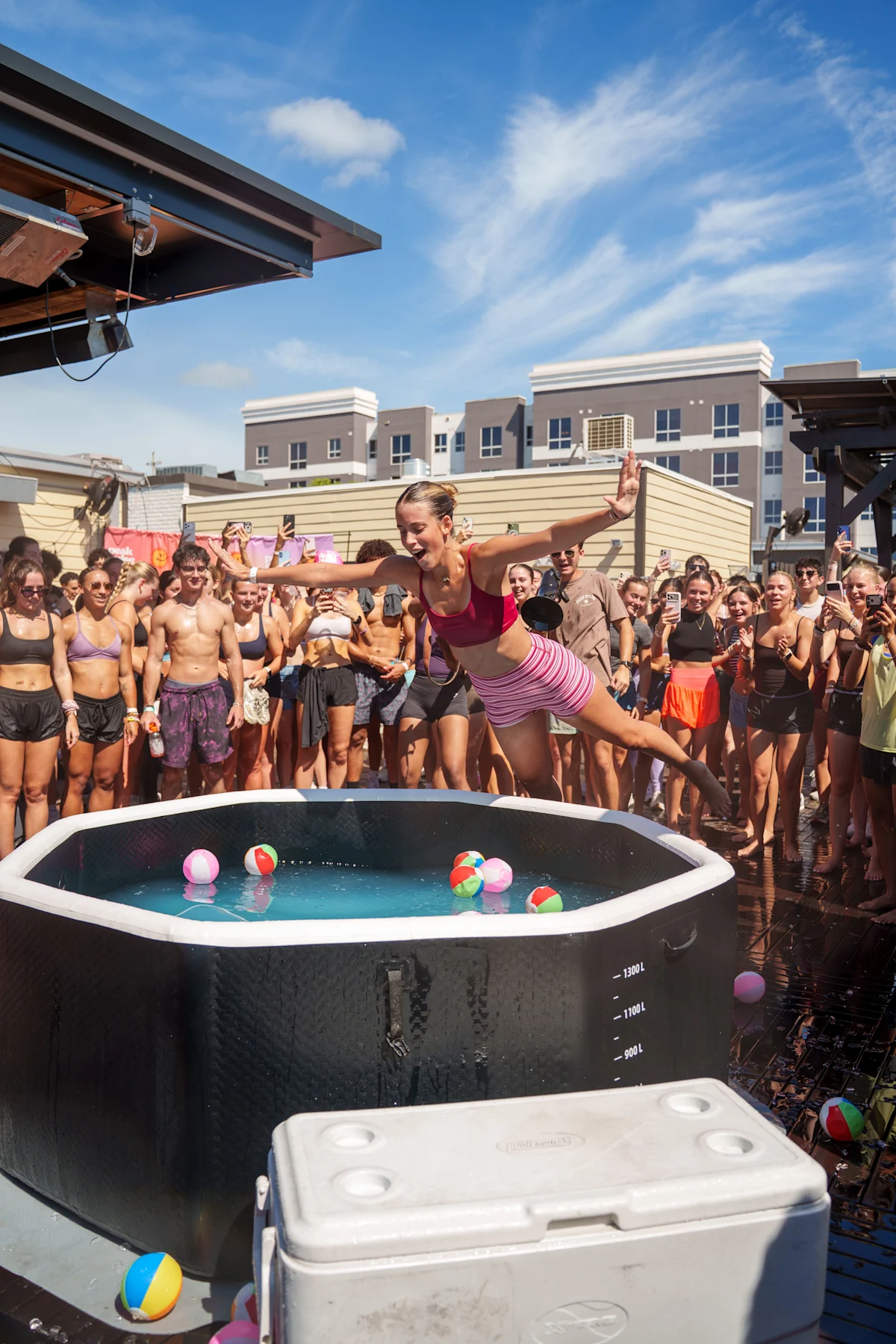
Running, cold plunges and protein bars might not sound like your typical college party . But at one University of Florida fraternity house last month, they were the main event. Students jogged, stretched and worked out in matching sets before cooling off in ice baths and grabbing fruit.
College kids are calling them "wellness darties," or daytime parties, and the internet has thoughts.
"Imagine explaining a wellness darty to someone who went to college in 2012," Aydan Child, founder of Peak Pulse Run Club, wrote over a Sep. 8 TikTok of University of Florida students working out in front of a frat house. "A little bit of wellness in college won't hurt anyone," reads the caption.
The video, which has racked up 2.6 million views, spurred a larger debate over what party culture looks like for a generation drinking less and increasingly interested in wellness. These "wellness darties," a fusion of a workout, social gathering and party, are one example of the broader shift toward intentional socializing as more young people look to de-center alcohol .
The original video's comment section filled with opinions and prompted reaction videos with thousands of views . "This new generation is so boring," one commenter lamented.
"What happened to drinking Burnettes or Svedka before class as a pregame because you had a party afterwards? What happened to getting blackout drunk? What happened to day drinking?" one Gen Zer, Erika Jensen, posted in response to the original video. "I fear we have lost the plot."
Research has shown young people are indeed drinking less , having less sex and going to fewer parties . While those things can be positive, they're also indicators of increased social isolation. Much of Gen Z missed out on pivotal years in the classroom or office during the COVID-19 pandemic, impacting their ability to socialize.
Simultaneously, Gen Z is prioritizing wellness and longevity more than past generations. Groups like Peak Pulse and Sweat & Soak have tapped into that, and found an interested customer base in Greek life students.
The party that went viral was the innovation of Child, a 25-year-old UF graduate who wanted to provide college students alternative social outings. While Child is sober, he says that the events are intended for everyone. The events frequently end at a bar, where matcha and coffee are encouraged, but alcohol is also offered.
"People are realizing we can have fun in other ways and meet people, get outside, have a good time while feeling good, looking good, and actually bettering ourselves rather than just drinking," Child says.
Still, many young people argue that college party culture is as alive as ever. Florida State University, one of the schools Peak Pulse has partnered with, in August was ranked as Niche's #1 party school.
University of Alabama sophomore Riley Meyer, who helped facilitate a Sweat & Soak darty on Aug. 29, says it feels "really good" to socialize without alcohol.
"I think my generation… does have a problem with socialization, especially without the context of alcohol at a party, and I think that when you have an activity built in, it gives you something to do," Meyer says.
Meyer says the online reaction to the wellness darties is "crazy," and that these videos are just one snippet in the lives of college students, many of whom she says party "90% of the weekend." She says that students will likely begin pregaming at 8 a.m. for the University of Alabama's home opener football game next weekend.
"People are acting like this wellness darty is every single day," Meyer says. "It's more about balance."
They dance at sunrise, then go to work: Inside a sober morning rave in NYC
This union of wellness and party culture is part of a bigger shift toward intentional socializing as more Americans de-center alcohol and seek out offline events. According to data from Eventbrite , morning raves have grown 20%. Coffee clubbing, and sauna and ice bath events, which are also part of this soft clubbing movement, are up 478% and 256%, respectively.
In New York, popular dance club Joyface hosts a matinee disco geared toward millennials. There are variants of cold plunge parties in San Francisco and Savannah , Georgia; a silent disco in Florida ; and coffee parties in Toronto and Miami.
Child and Meyer view these college parties as an extension of that. Wellness and party culture can coexist, they say.
After the wellness darty Meyer attended at the University of Alabama, she says she and her friends went home, took a break, and then went out.
"It's not like it prohibited us from going out, it just gave us something else to do," Meyer says.
Rachel Hale's role covering Youth Mental Health at USA TODAY is supported by a partnership with Pivotal and Journalism Funding Partners. Funders do not provide editorial input.
Reach her at rhale@usatoday.com and @rachelleighhale on X.
Topics in this story
Gathered from external sources. Rights to this text belong to whoever originally published it.