National Rape Hotline Calls Are Up 60% Since the Cornell Case Broke. It’s Just One Way Survivors Are Speaking Up
For survivors of sexual assault, social media can be a traumatizing place — a smiling picture of a person who questioned your story in one swipe, a news article about a similar act of violence in the next.
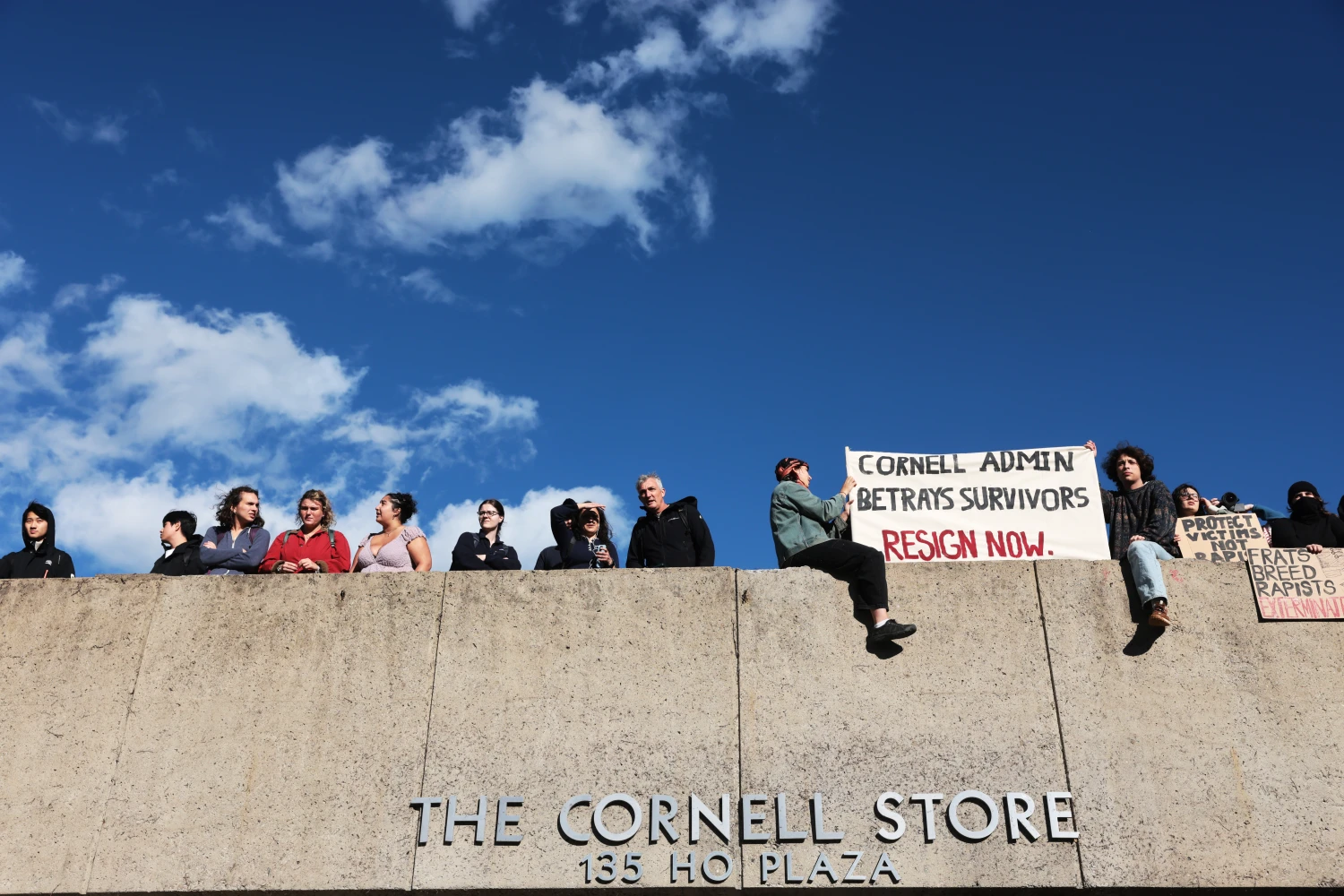
For survivors of sexual assault, social media can be a traumatizing place — a smiling picture of a person who questioned your story in one swipe, a news article about a similar act of violence in the next. But over the past few weeks, content related to sexual assault has reached a fever pitch, as details about an alleged gang rape on Cornell University’s campus in October 2024 continue to emerge. The accuser, a former student referred to as Jane Doe in a civil lawsuit filed last month, alleges multiple members of the Chi Phi fraternity plied her with drugs and alcohol before sexually assaulting her for hours. New York Gov. Kathy Hochul has appointed the state’s Attorney General Letitia James as special prosecutor in a new criminal investigation, and in a statement Saturday, Cornell President Michael I. Kotlikoff said an outside law firm will be conducting an independent review of how the university handled the incident. He also called the allegations “deeply disturbing” and said they raise questions about the investigations that were conducted. The university previously said in a statement that it conducted a monthslong Title IX investigation, which resulted in “a range of sanctions which included expulsions and suspensions,” but did not specify who received what outcome. The university also denied the claim in Doe’s lawsuit that the male students were allowed to write essays to “mitigate their conduct.” The university and local authorities’ response to Doe’s case is at the center of the outcry among survivors, as are New York state’s controversial consent law and the SnapChat messages from fraternity members allegedly referring to Doe as “free p---y.” With roughly one in four women experiencing sexual violence at college, according to the Rape, Abuse & Incest National Network (RAINN), the relatability may be inspiring more women to speak out, experts tell TODAY.com. “I’ve seen a lot more people this time talking about how this is a systemic issue that is in part reflective of failures of federal policy around gender discrimination, and that students have been asking for more for a long time, and that’s really encouraging to me,” Nicole Bedera, Ph.D., a sociologist studying sexual violence who wrote a book on Title IX, tells TODAY.com. When an Alleged Rape Case Goes Viral There are some 15,700 posts on Instagram as of Oct. 6 using the hashtag #IamJaneDoe. The hashtag is also popular on TikTok, but the company did not immediately respond to TODAY.com’s request for info on how many times it’s been used recently. A RAINN spokesperson tells TODAY.com that calls to the National Sexual Assault Hotline were up about 60% last week. Monday, Sept. 28, saw a 25% rise, and for any given day the rest of the week, the increase was between 50-80%. This jump isn’t as high as with some other major news moments, RAINN President Scott Berkowitz tells TODAY.com, but “this one feels like it’s going to stick around for a bit” because of the steady increase over several days. “It’s definitely building,” he adds. While feeling re-traumatized is a theme among recent online posts from survivors, seeing content about sexual assault can also have positive effects, Bedera says. “Is it triggering to hear about sexual assault? The overwhelming answer (in the research) is it depends. And the thing it depends on is the way we talk about it,” she explains. Framing sexual violence as a problem that is not the fault of victims and that could be stopped some day is much more likely to help people feel empowered, she says. “It’s really about whether or not we’re telling survivors this should have happened to you or this should not have happened to you.” One 2021 study, which looked at 207 female rape survivors, found that the #MeToo movement may change how survivors view their own experiences. Before #MeToo, participants were more likely to label a sexual assault as a rape if there was physical violence and force involved; after #MeToo, assaults without force or other violence were just as likely to be labeled rape. “I do think that seeing and hearing about other stories in which there wasn’t physical violence, but it still was sexual assault or rape for other reasons, like coercion, positions of power, intoxication leading to lack of consent, can help individuals realize what happened (to them) also fits that,” explains Amie Newins, Ph.D., associate professor of psychology at University of Central Florida and lead author of the study. For survivors who feel beaten down by Cornell content, that’s normal too, says Nancy Glass, Ph.D., associate director of Johns Hopkins Center for Global Health who studies gender-based violence. “It can remind them of the lack of support they received, and it can remind them of the doubt that they may experience, the victim-blaming,” she explains. Common trauma symptoms include feeling out of control, distressed, anxious, angry, fear of going certain places and struggling to concentrate, Glass says. “What can happen is that women will isolate themselves and it takes them back to both their own experiences, and it’s not just the rape, but how they were treated (after),” she adds. A Survivor’s Choice to Share When Christy Forrester left a two-part comment on a viral Instagram post about the Cornell case, she wanted to show fellow sexual assault survivors that “people care, that I care,” she tells TODAY.com. Forrester, psychotherapist at Becoming Imaginal Therapy, which offers telehealth services in several states, recently marked 20 years since her rape, so she wanted to share “a report from down the road,” she explains. “I’m turning more towards the life I want to live and less living in reaction to what happened to me. ... I wanted some people to feel some hope,” Forrester says. Rather than sharing “toxic positivity” and implying “you’ll get over it,” Forrester says she wants to emphasize, “You’re going to walk your journey, and you very well could come to a door that opens to a different life.” “Your future matters,” she adds. After two decades of speaking out as a rape survivor, Forrester says she’s ready to focus on her future, but when the Cornell story broke, she decided to revisit her experience to “light the way” for someone else. Still, she understands why others don’t speak out and urges not comparing. “Each person has to survive this in their own way,” she says. Fiona McAleer, a Cornell graduate who went through the Title IX system for her own assault, says these viral moments tend to leave survivors with “mixed emotions.” “There is some relief that it is being talked about on a wider scale because hopefully some change could come from that,” she tells TODAY.com. “Of course, I think there’s a lot of anger. ... I know that I, myself, and a lot of other people reached out to the media right after our assault and said, ‘Hey, there’s a story here. This is what happened to me,’ and we were turned away from the media for years.” “It kind of feels like a slap in the face that, now that the public’s eyes are on this, people are now reporting on it. We’ve been screaming into what feels like a void for years,” she adds. McAleer says she continues to speak out because campus sexual violence “is not an anomaly.” “This is a systemic issue that has been happening for years,” she says. “If we ... continue to move on without looking at the entire system as a whole, then more people are going to experience more awful things and not receive the help and support that they need from the institutions who are there to protect them.” How to Take Care For survivors struggling mentally in this news cycle, the experts all give the same advice: Talk to someone you can trust, whether that’s a family member or a person picking up a hotline. Glass says these people should aim to “just listen,” be nonjudgmental and allow the survivor to decide if they want to report anything. “There are resources, there’s people that support them and believe them, and they can reach out for help,” Glass says. “You need people who are going to be in solidarity with you — that’s really important. You need and deserve that validation,” adds Bedera, who worked as a rape crisis counselor. She also suggests, if you’re feeling up for it, finding an activity, possibly with others, that can help you feel like you’re contributing to positive change in the world. Forrester points to the importance of taking breaks from the news and social media, especially if it’s harming you. “We’re not letting down the fight by slowing down and watching a funny movie or taking a break from the news cycle,” she says. “Sometimes it’s better to step away.” Mental health care, such as therapy, can also be a powerful tool for sexual assault survivors, Glass and Forrester say. For anyone in immediate crisis, the 988 National Suicide & Crisis Lifeline is available. When the News Cycle Moves On The recent outcry over the Cornell case has felt so loud, possibly because “many women feel like there’s an attack on women and women’s rights in our country,” Glass says. “I think that often is the problem for women — that message constantly that ... their experience is not as important and they can just get over it, but this could impact these young men to get a job in the future.” Glass hopes the reaction to this case could lead to more recognition of what survivors endure and services to address and prevent sexual assault. “There are organizations that are doing amazing work, but at the same time, their funding’s cut,” she says. Forrester thinks about how individual survivors may find themselves trying to cope after sharing their story with no clear benefit. “I do fear that’s what happens with the news sometimes ... bringing them into contact with their pain, and then there’s no real support,” she says. “When you speak your story, it comes with the risk that people are going to seem like they really care about it until they don’t.” “Real care means staying alongside someone as they process what comes up and reconnect with the life they want to live. Therapy can be one place to receive that care,” she adds. When the news cycle moves on, Forrester wants survivors to know they can decide how they will, as well. “Survivors deserve choices about speaking, listening and stepping away. Not everybody benefits from speaking or paying attention to this,” she says. “If you have to be quiet in order to be safe, that’s a different kind of bravery.” “(Make) room for boundaries, for connection, for creativity and joy, even when the pain remains, because survivors deserve a life that holds more than what happened to them,” Forrester adds. She also believes it’s important for society at large to keep having “hard conversations” about sexual violence. “Give each other a chance to learn and grow,” she says. While McAleer says “nothing can really fix what happened” to her, she continues to advocate because “serious change to how universities are handling cases of sexual violence” is one of the only things that would “provide a little bit of justice.” If you or someone you know has been sexually assaulted, call the National Sexual Assault Telephone Hotline at 1-800-656-4673. The hotline, run by the Rape, Abuse, & Incest National Network (RAINN), can put you in contact with your local rape crisis center. You can also access RAINN’s online chat service at
Topics in this story
Gathered from external sources. Rights to this text belong to whoever originally published it.