Gaza doctors face tough decisions as patients face long waits for diagnoses
Medical staff in Gaza struggle to treat patients with shortages in testing equipment.
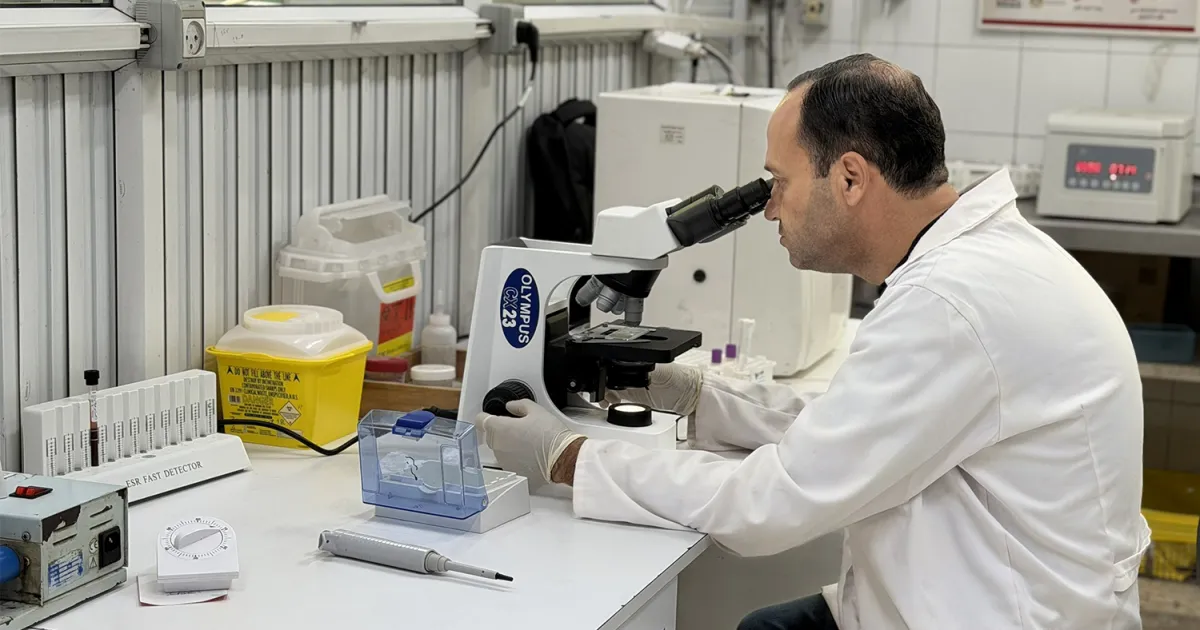
Deir el-Balah, Gaza – At Al-Aqsa Martyrs Hospital here in central Gaza, Bassem Hassan, director of the laboratory department, deals with medical tests whose results will determine the futures of his patients.
Hassan’s team gives doctors the information they need to diagnose a range of illnesses, from kidney disease to diabetes, and without this crucial information, they will not know how to proceed with their cases.
But Israel’s genocidal war and siege on Gaza has resulted in widespread damage to medical infrastructure and shortages of key materials needed to make diagnoses.
There has been a suspension of all blood gas testing, which is particularly important for cardiac and intensive-care patients, and shortages of blood-collection tubes, which are essential for clinical chemistry tests.
Automated clinical chemistry analysers, which laboratories rely on for more than 60 percent of their tests, have also stopped operating. Some sterilisation equipment and refrigerators used to store blood and plasma have also ceased working.
“Given these limited resources, tests are prioritised according to the severity of each case with priority given to kidney, cancer and heart patients as well as those in intensive care,” Hassan told Al Jazeera.
Doctors know that laboratory test results are needed to determine the correct medication dosages given to patients, monitor their responses to treatment and make urgent medical decisions.
Without this information, doctors are left without a key part of the jigsaw puzzle that could determine the death or survival of a patient.
As the third anniversary of the war on Gaza approaches, more than three-quarters of medical imaging equipment in the enclave is out of service. Shortages of laboratory testing materials are at 87 percent, and there is a 74 percent deficit in essential consumables required for laboratory and diagnostic testing.
Gaza’s ministry of health has warned that with these dire shortages and repeated breakdowns of medical equipment, blood banks and laboratories risk shutting down.
This would most affect patients suffering from critical conditions, such as electrolyte imbalances, high potassium levels, impaired kidney function and heart disease.
Marwan Al-Azaiza, head of the cardiology department at Al-Aqsa Martyrs Hospital, told Al Jazeera that due to these shortages at public hospitals, doctors sometimes have to use private laboratories if the patients can afford this added expense.
“In other cases, doctors rely on clinical examinations, electrocardiograms and the indicators available to them, even though this does not constitute a complete substitute for the tests needed to confirm or rule out certain diagnoses,” he said.
Medical teams are looking to coordinate with charities, health organisations and relief institutions to provide broader care for the people of Gaza.
Meanwhile, only five of the 18 CT scanners in Gaza remain operational, and the remaining ones are running beyond their capacity.
There are also no magnetic resonance imaging (MRI) services in Gaza after the destruction of nine machines in Israeli attacks.
Mohammed Abu Salmiya, director of al-Shifa Hospital in Gaza City, told Al Jazeera that medical teams are now forced to restrict laboratory tests, X-rays and CT scans to the most urgent cases.
“This reality forces doctors to make difficult choices between patients, deciding who needs the test immediately and whose test can be postponed,” he told Al Jazeera.
“Although this approach is necessary under the current shortages, it means that many other patients remain on waiting lists with diagnostic tests delayed even when they are needed to diagnose their conditions or monitor their treatment.”
Yousef al-Athamneh, 57, from Deir el-Balah suffers from kidney failure and requires dialysis three times a week. He worries about the shortages of bicarbonate, bloodlines, dialysis machines, intravenous fluids and other materials that are needed for his dialysis sessions.
“What frightens me most is the possibility that one day dialysis supplies will run out or that a machine will break down while replacement parts are unavailable, leaving me unable to access the treatment that keeps me alive,” he told Al Jazeera. “All we ask is for the most basic necessities of medical care to be available, so that we can go to our dialysis sessions with the reassurance that we will return home to our families.”
Khalil Al-Daqran, spokesperson for Al-Aqsa Martyrs Hospital, said cancer patients are facing shortages of chemotherapy drugs and other medicines. The destruction of the Turkish-Palestinian Friendship Hospital, the only hospital in Gaza that had specialised in cancer treatment, has also added to the strain on medical teams.
Israel’s tightened siege on Gaza means it is almost impossible for cancer patients to seek treatment abroad, Al-Daqran added.
Overall, 350,000 patients with chronic diseases, including diabetes and high blood pressure, face medication shortages, which pose a threat to the continuity of their treatment and their lives, he added.
“Cancer patients, people living with chronic illnesses and those suffering from heart and kidney disease require regular treatment that cannot be postponed while doctors are being forced to work with extremely limited resources,” Al-Daqran said.
“What we need now is guaranteed access to medicines, medical supplies and equipment, so that shortages do not become an additional cause of deaths that could have been prevented.”
Topics in this story
Gathered from external sources. Rights to this text belong to whoever originally published it.