Tired of drinking water? Dietitians say these 13 water-rich foods can help you stay hydrated
From cucumbers to cottage cheese, dietitians share 13 of the best water-rich foods to make hitting your hydration goals a lot less boring.
Our experts independently review everything we recommend. If you buy through our links, we may earn commission.
Most of us know how important it is to stay hydrated, but actually hitting those goals? Not always as easy as it sounds. Between busy mornings, forgetting your water bottle at home (again) and just not loving the taste of plain water, it's no wonder so many of us fall short of our daily hydration goals. The good news is that if good old H2O isn't quite doing it for you, drinking water isn't the only way to hydrate . From juicy fruits to crunchy vegetables, a surprising number of everyday foods are made up of 80% water or more.
Not only are these foods hydrating, but they also offer vitamins, minerals and fiber that plain water simply can't offer. Now, we're not saying this is your pass to not drink water — it's still important. Instead, Lauren Manaker , MS, RD, suggests treating these foods "as a helpful bonus rather than your main source," especially when eating feels more appealing than chugging another glass of water.
"After a workout is a great example," she says. "When you sweat, you lose both fluids and electrolytes like sodium and potassium. Water-rich foods such as watermelon, oranges or a smoothie can help replace some fluid while also delivering natural sugars and minerals that support recovery." She adds that hot days are another good time to lean on them.
So, what are the best water-rich foods to eat? To find out, I asked Manaker and another registered dietitian, Johannah Katz , to help me round up the 13 best water-rich foods to add to your meals and snacks — plus a few easy ways to work them into your day, whether that's tossing them into a salad, blending them into a smoothie, or just eating them straight off the cutting board.
"Cucumbers are roughly 96% water , making them one of the most water-rich foods you can eat," says Katz.
Ways to use them: Add sliced cucumber to sandwiches, salads and grain bowls, or pair it with hummus or a Greek yogurt dip for a snack.
Eat if: You want something crunchy with minimal prep. Simply wash and slice — or, if you have mini cucumbers, you can bite right in.
Pro tip: Opt for English, Persian or cocktail cucumbers; that way, you can leave the peel on to get the full fiber and nutrient benefit.
"Clocking in at about 95% water , celery is an easy, low-effort way to support your fluid intake throughout the day without drinking another glass of water," says Manaker.
Ways to use it: Ants on a log isn't just for kids: spread peanut or almond butter on celery sticks for added protein and healthy fats. You can also chop it and add it to grain bowls or salads, like chicken or tuna salad.
Eat if: You also want a little boost of electrolytes . Manaker points out that celery delivers a small but meaningful amount of potassium and other electrolytes that help support fluid balance in the body. "That one-two punch of hydration and electrolytes makes it a smart snack choice, especially in warmer months," she says.
Pro tip: Keep cut celery fresh by storing it in a mason jar and covering it completely with water. Refresh the water every few days.
Not a celery fan? Zucchini contains about 95% water , but isn't stringy or as polarizing in taste.
Ways to use it: While delicious air-fried or grilled, zucchini can also be enjoyed raw. Slice it thin and add it to sandwiches, wraps or salads, or use a spiralizer to make zoodles.
Eat if: You want a low-calorie way to bulk up a meal. Because zucchini is so water-rich, it adds volume and a satisfying bite to a dish without adding many calories.
Pro tip: Salt sliced or shredded zucchini and let it sit for 10–15 minutes before using it raw. This draws out excess moisture so it doesn't water down dressings or dips.
Bell peppers are the unsung hero of the veggie platter. Not only do they provide a pop of color, but they're also rich in antioxidants, slightly sweet and have an impressive 92% water content .
Ways to use them: Eat raw with hummus, or slice thinly and add to noodle bowls or salads.
Eat if: You want a boost of vitamin C. One cup of sliced, raw red bell pepper provides well over 100% of the daily value (DV) for vitamin C — more than an orange .
Pro tip: Different bell pepper colors provide differing types and amounts of antioxidants and other beneficial plant compounds, so aim to include a variety of colors.
Romaine lettuce often gets a bad rap for being "just water." While it is water-dense, containing about 94% water , it's also a good source of vitamins A and K.
Ways to use it: Use whole leaves as a wrap for chicken salad, add it to burgers and sandwiches, or cut whole hearts in half and grill for a warm, smoky salad twist.
Eat if: You want a boost of eye-health nutrients. A cup of shredded romaine provides roughly 20% to 23% of the DV for vitamin A (as beta-carotene). It's also a source of zeaxanthin and lutein, antioxidants that support retinal health and may help protect against age-related macular degeneration .
Pro tip: Romaine typically holds onto some dirt in its base. The best way to get rid of it is to soak the leaves in cold water for about 2 minutes to let the dirt settle to the bottom, then pat them dry with a paper towel or spin them in a salad spinner.
"Watermelon is about 91% water, so it's an easy way to get additional fluid through food while also adding fruit to the day," says Katz.
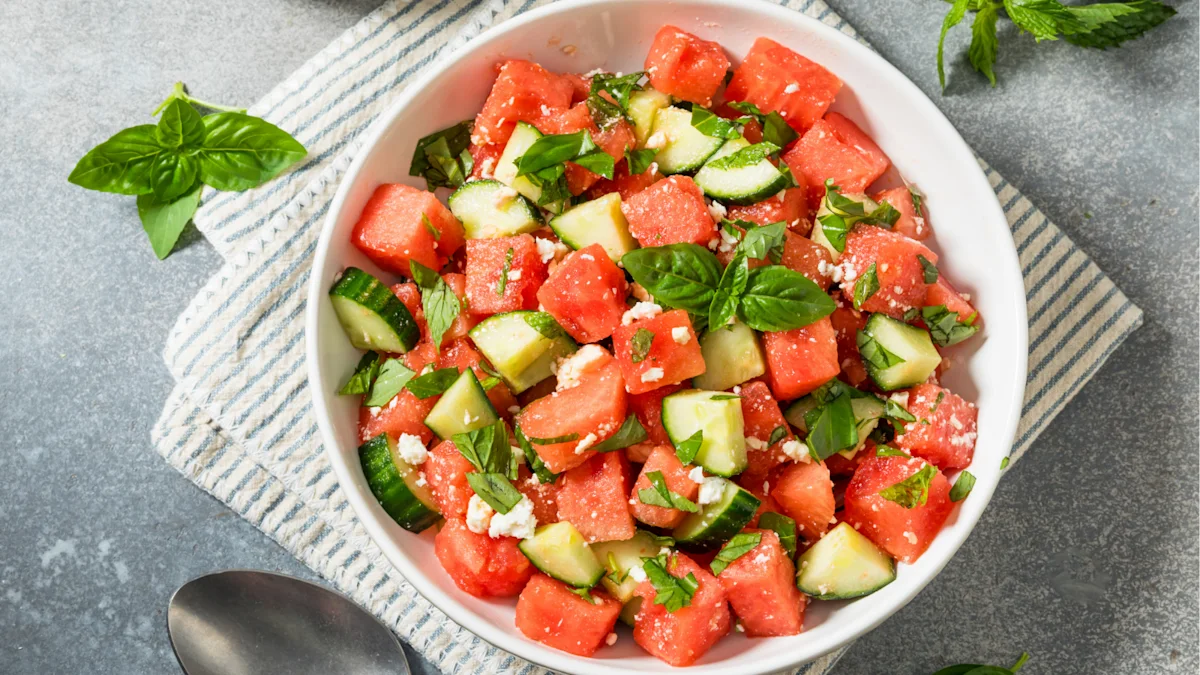
Ways to use it: It's plenty delicious on its own, but watermelon can also be cubed and paired with feta and mint leaves for a refreshing salad, diced for salsa or frozen and blended with lime juice for a slushy-like treat.
Eat if: You're craving something sweet. Watermelon contains natural sugar along with a host of vitamins, minerals and antioxidants, making it a nutritious way to satisfy your sweet tooth.
Pro tip: There's nothing sadder than cutting open a watermelon only to find a mealy texture and watery flavor. To pick a ripe watermelon, look for the field spot , the patch where it rested on the ground. It should be yellow rather than white or pale green.
"Strawberries are also approximately 91% water and provide fiber and vitamin C in addition to contributing fluid," says Katz.
Ways to use them: For a hydrating snack, pair strawberries with plain or lightly sweetened yogurt. They also work great on salads or paired with avocado, jalapeño, onion, lime juice and salt for a summery twist on salsa.
Eat if: You want a hydrating fruit that pairs well with both sweet and savory — and doesn't require as much knife work as a melon.
Pro tip: For ultimate sweetness, set strawberries out on the counter for at least 20 minutes before eating.
While not quite as water-dense as its pink-fleshed cousin, cantaloupe is still a great hydrating pick, containing about 90% water .
Ways to use it: Besides enjoying it on its own, cantaloupe pairs well with slightly salty foods. Try pairing it with cottage cheese (another food on our list), or adding it to a salad with feta or buffalo mozzarella and prosciutto.
Eat if: You need a fruit that you can meal prep for the week without worrying about it getting mushy.
Pro tip: Look for cantaloupes with a creamy, tan-yellow color and little to no green.
"Oranges are roughly 87% water , which means every juicy bite is quietly contributing to your daily hydration goals. They're an especially great option for people who struggle to drink enough water on their own," says Manaker.
Ways to use them: Peel and add segments to salads and smoothies, or pair with cheese for an easy snack.
Eat if: You want a portable, no-prep hydration option.
Pro tip: Don't throw out the pith (the white part) — it's where a good amount of the fiber and flavonoids (a group of antioxidants) live.
Tomatoes are approximately 95% water , making them one of the most hydrating options on our list. They're especially great because they're versatile and also provide vitamin C, potassium and folate .
Ways to use them: Toss cherry tomatoes into salads, slice vine-ripened or heirloom tomatoes and pair with basil and buffalo mozzarella for a caprese salad, or blend into a quick gazpacho for a fully hydrating, no-cook meal.
Eat if: You want a hydrating food that's also good for your heart. Tomatoes are an excellent source of lycopene , an antioxidant that's been associated with a reduced risk of heart disease and several types of cancer.
Pro tip: If you eat tomatoes regularly, it's worth investing in a serrated tomato knife. The serrated blade cuts through the skin better without smushing the tomato and creating a sad, soggy mess.
While lettuce usually steals the water spotlight, spinach is also hydrating, with up to 92% water .
Ways to use it: Blend raw spinach in smoothies or protein shakes , add it to scrambled eggs or pasta or use it in place of lettuce in sandwiches and wraps.
Eat if: You're also looking to support brain health. Spinach is one of the leafy greens emphasized in the MIND diet , an eating pattern developed by researchers to help support brain health and reduce the risk of dementia and Alzheimer's disease.
Pro tip: Pair spinach with a source of vitamin C (like bell peppers) to boost how much of the iron found in spinach your body actually absorbs.
Fruits and vegetables aren't the only food sources of water. Plain nonfat yogurt is another excellent option, containing around 87% water , though the amount varies by product. Plus, it offers a boost of protein and, when it contains live and active cultures, probiotics .
Ways to use it: Pair it with strawberries and other water-filled fruits for a hydrating breakfast parfait, or go the savory route and use it in place of sour cream or mayo in dressings and dips.
Eat if: You want a hydrating food that also delivers protein and calcium to support bone health.
Pro tip: Greek and Icelandic yogurt are higher in protein but lower in water. If hydration is one of your main goals, stick with regular plain yogurt or a lightly sweetened variety, ideally with less than 6 grams of added sugar per serving.
Last but certainly not least: cottage cheese . Like yogurt, cottage cheese provides protein and calcium along with water. Its water content is a bit lower than yogurt's, at around 81% , depending on the product.
Ways to use it: Blend it until smooth for a higher-protein cream cheese substitute, or go the classic route and top it with sweet fruit or diced tomato and cucumber with a sprinkle of salt and pepper.
Eat if: You want hydration paired with plenty of protein. One cup of low-fat cottage cheese provides roughly 25–28 grams of protein, depending on the brand.
Pro tip: If you're not a fan of the texture, blend it until smooth in a blender or food processor. You'll get the same nutritional benefits without the lumps.
Tools to make eating water-rich foods easier
A salad spinner may seem like one of those kitchen tools destined to collect dust, but I promise you'll use it more than you'd expect — it's one of the easiest ways to thoroughly clean and dry produce. This particular spinner stands out for its drain vents on the lid, a rubber bottom to keep it from slipping and a stainless steel bowl that doubles as a serving dish.
Fresh produce can add up, so it's worth storing it in a way that helps it last longer. These glass food storage containers feature tight-sealing lids to help slow moisture loss and limit oxygen exposure. Plus, since you can see what's inside, it's easier to remember to actually eat the produce before it goes bad.
If you cook with tomatoes often, you'll be glad to have a dedicated tomato knife. This one has a dual-serrated blade that makes slicing tomatoes a breeze, and reviewers say the handle is comfortable to hold in either hand.
These silicone-sleeve mason jars are ideal for prepping yogurt parfaits and cottage cheese bowls, or even just stashing pre-sliced fruits and vegetables. Reviewers say the lids seal tightly, so there's no need to worry about spills, and all parts are dishwasher safe for easy cleanup.
Along with cutting up a pineapple, slicing a watermelon is one of my least favorite kitchen prep tasks. This tool makes it easier — though it does require a bit of hand strength. Simply slice the top and bottom off your watermelon and press the slicer down; it also works for other medium to large fruits, including cantaloupe.
Fruit-infuser water bottles are a great way to make water more exciting and use up produce you have in the fridge. Have a quarter of a cucumber you won't get to? Or watermelon that's sliced up and going to be too soft in a day or two? Add it to the infuser basket. For easy sips on the go, the water bottle features a convenient flip cap and nonslip grip, and it fits most standard-size cupholders.
Our health content is for informational purposes only and is not intended as professional medical advice. Consult a medical professional on questions about your health.
Topics in this story
Gathered from external sources. Rights to this text belong to whoever originally published it.