Dentists say these 9 common brushing mistakes could be damaging your teeth
Brushing harder isn't brushing better. Here's what dental pros wish you'd do instead.
Our experts independently review everything we recommend. If you buy through our links, we may earn commission.
You've probably been brushing your teeth since you were barely tall enough to reach the bathroom sink. But when was the last time anyone actually checked your technique? For many of us, the answer is probably decades ago. We asked pros from the American Dental Association and the American Dental Hygienists' Association, plus a private-practice dentist, what's really going on between you and your toothbrush every day, and they did not hold back. Brushing mistakes can do real damage, wearing down tooth structure, injuring gum tissue and contributing to receding gums, according to a 2025 review in the journal Healthcare .
While you can't un-brush the last 30 years or so, you can fix it tomorrow morning. Here's what you're probably doing wrong — and how to fix it.
Brush, spit, sip, swish, spit. Done. Right? Nope. Rinsing with water right after brushing "washes some of the fluoride in your toothpaste away, which can reduce the fluoride's effectiveness," says dentist Andrew Zucker , consumer adviser spokesperson for the American Dental Association. In a 2024 study in BMC Oral Health , researchers had 10 adults brush with fluoride toothpaste and either rinse or just spit. When they skipped the rinse, fluoride levels in their saliva stayed elevated for up to half an hour. That's 30 extra minutes of fluoride remaining in your mouth, where it can help strengthen enamel against decay. Swish it away and you're pouring that down the drain.
"People assume harder means cleaner and whiter, but over time it can contribute to gum recession, sensitivity and wear near the gumline," says Arthur Glosman , a cosmetic and restorative dentist in Beverly Hills, Calif. That same instinct sends people reaching for a firmer brush, which doesn't help either. Hard bristles can wear down enamel and make gums recede, which is how teeth become sensitive . "Be thorough, not aggressive," Glosman says — light grip, soft brush, ideally one with the ADA Seal of Acceptance . And if you can't trust yourself to go easy, some electric toothbrushes buzz when you press too hard.
This Oral-B version, voted best affordable electric toothbrush in Yahoo testing, comes with a pressure sensor that stops pulsations if you're brushing too hard.
Best affordable electric toothbrush with timer
Unsure if you're an aggressive scrubber? Look at your brush head. "Your bristles should never be splayed out or bent over," says Zucker. "If your toothbrush doesn't look almost new, then you're definitely brushing too hard."
3. You're using mouthwash at the wrong time
Brushing and then immediately swishing with mouthwash feels like adding a bow atop your good dental hygiene. But since most contain less fluoride than your toothpaste, rinsing with it right after you brush swaps the strong stuff for the weak stuff. A better idea? "Wait 15-20 minutes after brushing to rinse your mouth with a fluoride mouthwash," says Zucker. That goes double for fluoride-free formulas: a 2026 review in the International Journal of Dental Hygiene found that rinsing with one right after brushing "greatly reduces" the fluoride left in your mouth, and recommends using it between fluoride exposures rather than immediately after. Which is another argument for making mouthwash part of your after-lunch routine — and not snacking or drinking for 30 minutes afterward.
4. You're using way more toothpaste than you need
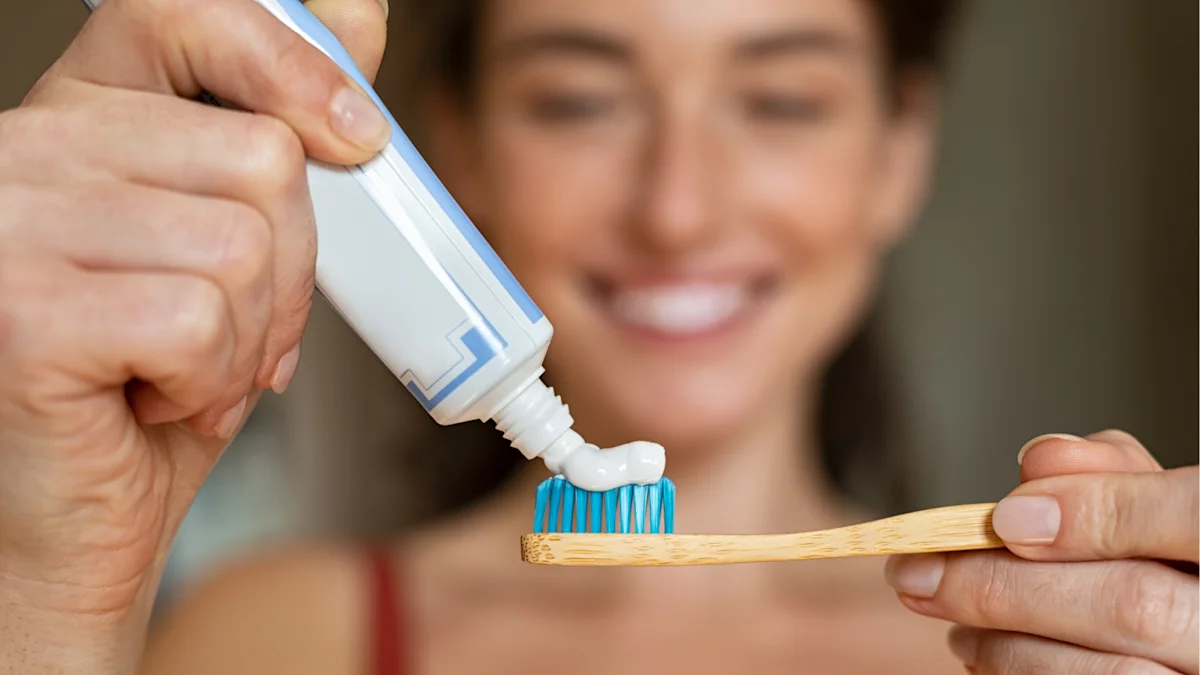
Blame the commercials and their photogenic ribbon of paste. "A pea-sized amount of fluoride toothpaste is sufficient," says hygienist Jessica August , president of the American Dental Hygienists' Association. Overdoing it is not only a waste of money, but can actually work against you. "More toothpaste doesn't mean cleaner teeth. Instead, when you have a mouthful of foam, you're more likely to spit and rinse immediately, which can reduce the amount of fluoride that remains on your teeth," she says.
Need help deciding on the best toothpaste ? Both of these Colgate options earned top marks in our testing:
Colgate Optic White Pro Series Toothpaste
5. You're brushing right after your coffee
Brushing after breakfast sounds responsible, but if your morning meal includes coffee or orange juice, it isn't. "The ADA recommends waiting at least an hour before you brush your teeth after eating acidic foods and beverages, like coffee," Zucker says, though some experts put the window at 30 minutes. Acids weaken enamel, and brushing while your enamel is temporarily softened can contribute to erosion. "Think of the delay as giving your teeth some recovery time after a meal," Zucker says. "It allows your saliva to naturally wash away acids and re-harden your enamel, protecting you from permanent tooth erosion."
What you can do right away is rinse with water, which starts washing the acid off while you wait. Zucker says milk or a small snack with calcium in it helps neutralize the acid too. Or skip the problem entirely and brush before breakfast.
"I don't think anyone brushes for two full minutes," says Zucker, and the research backs him up — partially. A systematic review in the International Journal of Dental Hygiene found that manual toothbrush users average just under a minute and a half, well short of the two-minute goal. With 64% of folks opting for a manual , that's a lot of minutes missed. However, the same study found that electric toothbrush users went above and beyond, averaging nearly 2.5 minutes. But if you're sticking with a manual, August recommends setting your phone timer or playing "a song that's about two minutes long." Either way: "Two minutes of thoughtful brushing is much more effective than 30 seconds of aggressive scrubbing," she says.
7. You're spending all your time on your front teeth
Be honest: You're playing favorites with your teeth. August sees it constantly. "Spending most of your time on the front teeth and rushing through the back is common," she says. And she gets it. Back teeth are harder to reach, "so they often get less attention." But making time for them is important. While plaque can stick to any ol' tooth, it's often found on the back molars and at the edges of fillings, according to the National Library of Medicine .
To ensure all your teeth get the same TLC, August recommends picturing your mouth as four quadrants — upper right, lower right, upper left, lower left — and giving each about 30 seconds of quality brush-time. Two minutes split evenly means the teeth you never see get the same attention as the ones you do.
Some electric toothbrushes, like the Philips Sonicare 9900 Prestige — Yahoo's top-rated electric toothbrush in testing — briefly pause every 30 seconds to let you know it's time to move to the next quadrant of your mouth.
Philips Sonicare 9900 Prestige Electric Power Toothbrush
"Most people brush the surface of their teeth, but don't always angle the toothbrush to effectively clean where their teeth and gums meet," says August, noting that getting closer to the gumline is one of the corrections she makes over and over again. "The gumline is one of the most important areas because plaque can accumulate there and contribute to gum inflammation."
To get the right clean, point your toothbrush up toward your gumline at roughly a 45-degree angle, so the tips tuck just under your gum's edge. Then gently brush in circular motions, says Glosman, noting it's important to avoid the long horizontal saw, which rides straight over the gumline. Then repeat behind your teeth, where the gumline runs just the same — and where no mirror will help you.
If you're a manual toothbrush fan, know that this one was crowned the best of the lot, with testers specifically calling out how its soft, tapered bristles can "dive deep" around the gumline.
Colgate 360 Advanced Floss Tip Bristles Toothbrush (6 pack)
9. You treat brushing as the whole routine
"Brushing is important, but it's only one part of keeping your mouth healthy," August says. "It cannot clean every surface of your teeth." For that, you need to call in the daily reinforcements. "That could be traditional floss, floss picks, interdental brushes or another device, depending on your needs and anatomy," she says, noting that your tongue needs a gentle pass too. Lots of bacteria and debris can accumulate there, causing bad breath.
These flossing and oral-care tools earned top spots in Yahoo testing .
Plackers Micro Line Floss Picks (150 count)
Waterpik Aquarius Water Flosser Professional
3 teeth-brushing questions that keep coming up
Floss first, or brush first? A 2018 trial in the Journal of Periodontology found that flossing before brushing left less plaque between the teeth and more fluoride. Even so, the ADA's position , as Zucker puts it, is that "you can floss before or after brushing your teeth and still receive the same benefits." Why the mismatch? The study followed 25 dental students through a single brushing session. It never looked at whether anyone ended up with fewer cavities.
Charcoal toothpaste for whiter teeth? "There is no evidence that shows dental products containing charcoal are safe or effective for your teeth," Zucker says — and Glosman adds that charcoal products "can be abrasive." Also abrasive: baking soda, which "can actually scrape and wear away at your enamel," Zucker says. For whitening that won't cost you your enamel, he points to toothpastes carrying the ADA Seal of Acceptance.
Wetting your brush before? While it seems everyone has an opinion, the truth is, it's up to you. "There is no evidence to support that wetting your toothbrush before or after applying your toothpaste is harmful or changes the effectiveness of your toothbrushing habits," Zucker says.
Andrew Zucker , DDS, consumer adviser spokesperson for the American Dental Association
Arthur Glosman , DDS, cosmetic and restorative dentist in private practice in Beverly Hills, Calif.
Jessica August , RDH, president of the American Dental Hygienists' Association
Our health content is for informational purposes only and is not intended as professional medical advice. Consult a medical professional on questions about your health.
Topics in this story
Gathered from external sources. Rights to this text belong to whoever originally published it.