Baby 'cot cams' plan after inquiry finds Lucy Letby crimes could have been prevented
Plans will be "urgently" developed for live-streaming cameras after an inquiry report into Lucy Letby's crimes.
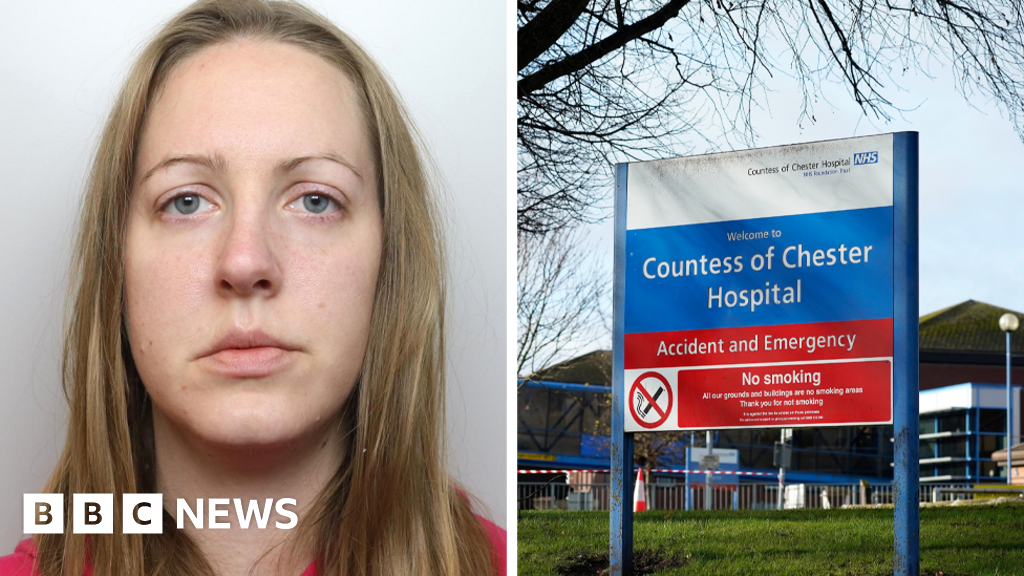
Health Secretary Yvette Cooper has said officials will "urgently develop plans" to introduce live-streaming cameras on England's baby wards after an inquiry into Lucy Letby's murders and attempted murders.
Inquiry chair Lady Justice Thirlwall called for a series of urgent reforms to neonatal units, including CCTV for all cots and incubators, and restricting access to insulin.
Thirlwall said some of the babies Letby killed could have been saved if managers at the Countess of Chester Hospital had taken action earlier.
Her report criticises a "complete failure to protect babies" and a "profound failure of management, governance and safeguarding" at the hospital.
Thirlwall said this was because "no one seems to have understood that safeguarding action is required when a member of staff is suspected of causing deliberate harm and does not require colleagues to be sure of guilt."
She said it would never be possible to know exactly how many lives could have been saved if safeguarding procedures had been properly followed.
One of the senior doctors who tried to raise concerns about Letby with hospital managers, consultant paediatrician Dr John Gibbs, now retired, told the BBC the Thirlwall Inquiry report was "grim reading".
In a rare interview he said he accepted that consultants must bear "collective" responsibility for some of the failings identified in the report, and said he wished they had been "brave enough to follow our suspicions and escalate things to the police earlier".
Chief executive and registrar at the Nursing and Midwifery Council (NMC), Paul Rees, said he was "truly sorry for the NMC's failings" in the Letby case and that "we also did not act quickly enough to suspend Lucy Letby".
Sharing her findings at Liverpool Town Hall, Thirlwall described "dysfunctional management and governance, a gulf between hospital leadership and clinicians, and failure to understand the fundamentals of safeguarding".
Letby was moved on to administrative duties in July 2016 after consultants expressed concerns about her to the hospital's executive team.
But the inquiry has found that alarm bells should have been sounded earlier.
There were several "missed opportunities" for hospital bosses to intervene, the report said, including when three babies died in one cluster in June 2015.
Parents of the babies were "kept in the dark for years" over the concerns that their babies might have been deliberately harmed, the inquiry also found.
Thirlwall described the lack of consideration shown to parents as "reprehensible".
Repeatedly untruthful, callous and quiet - what we learned about Lucy Letby from inquiry report
Key findings from Lucy Letby Thirlwall Inquiry
As it happened: Read the live coverage from the Thirlwall Inquiry
The report is highly critical of managers at the Countess of Chester Hospital.
Hospital bosses carried out a number of internal reviews into increased infant mortality in 2015 and 2016, but did not invite Cheshire Police to investigate until May 2017.
Letby remained on site until her arrest more than a year later.
Cheshire Police said it would "carefully review" the contents of the report and "fully consider" relevant recommendations.
Thirlwall said the hospital's former chief executive Tony Chambers behaved in a "dictatorial manner" and had "intended" to obstruct a police investigation into deaths on the ward.
Chambers, along with director of nursing and head of safeguarding Alison Kelly and medical director Ian Harvey, "dismissed the idea that Letby was deliberately harming babies", Thirlwall added.
But whether these managers believed Letby was harming babies or not was "irrelevant", Thirlwall said, adding that action should have been taken as soon as concerns were raised.
In a joint statement, Chambers, Kelly and Harvey along with the hospital's former HR director Sue Hodkinson said: "We are carefully reviewing the Thirlwall report and its recommendations.
"Given that there are a number of investigations under way, and that the work of the Criminal Cases Review Commission has not yet completed, it would be inappropriate for us to offer any further comment at this time.
"Our thoughts remain with the families affected by the tragic events that took place at the Countess of Chester Hospital."
The inquiry also condemned wider NHS culture, finding evidence of "toxic negativity" that discouraged whistleblowers.
The chair of the British Medical Association said on Tuesday that whistleblowers in the NHS "deserve strong protections, and the inquiry makes it clear that these doctors did not get them".
Regulator the Care Quality Commission (CQC) was also criticised, with the report saying it did not show enough curiosity to look beyond what it was being told by the Countess of Chester Hospital.
Responding to the report, the CQC's chief inspector of hospitals said "crucial information" was not shared by the Countess of Chester, but that the commission as a regulator did not take a "sufficiently investigative and inquiring" approach.
Dr Tony Onon said the regulator had since changed its approach to assessments.
Health Secretary Yvette Cooper said she was "profoundly sorry" on behalf of the government for the failures set out in the report.
She said she had asked officials to "urgently develop plans" for cot-cams in neonatal units, and that the government would consider Thirlwall's other recommendations in full.
Cooper also said she expected NHS leaders across the country to uphold their safeguarding responsibilities.
She plans to meet Thirlwall, who made 17 recommendations including restricting access to insulin, later this week to discuss the inquiry in more detail.
The consultant paediatrician who had tried to raise his concerns about Letby to hospital management said he accepted the police should have been contacted sooner.
Dr John Gibbs was working at the Countess of Chester Hospital throughout the period in 2015 to 2016 when Letby carried out her crimes.
"I wish we consultants had been brave enough to follow our suspicions and escalate things to the police earlier," he said.
"When I say, 'we consultants', I am responsible as well and if my other consultant colleagues didn't go to the police, I should have."
He also spoke about the failure of consultants to spot the significance of blood test results that suggested a baby had been poisoned with insulin in August 2015.
He described this as "a collective team failure".
He said: "Others of us were on call and covering the neonatal unit over the next week or two before the baby moved out of the unit. We all had the opportunity to review the notes.
"As I admitted when I appeared before the inquiry to give evidence, I feel we failed the babies and I apologise to the families for that.
"In a careful way, Lady Justice Thirlwall points out how we could and should have escalated matters ultimately to the police earlier than we did."
Gibbs said he agreed with the report's finding that hospital executives had multiple opportunities to act and potentially save babies' lives.
Chief executive and registrar at the Nursing and Midwifery Council (NMC), Paul Rees, said his thoughts were with the babies that died or came to harm and their families "who have endured unimaginable suffering and pain".
He said: "From the moment concerns about Letby were first brought to the NMC's attention 10 years ago we should have stepped up proactively, shown a sense of professional curiosity and triggered action at a senior level.
"We should have considered the possibility of deliberate harm much earlier than we did."
He said the NMC had since "strengthened our guidance on interim orders", which clarified to "our decision-makers that they can seek to restrict or suspend a professional's practice much earlier".
Thirlwall was clear that her inquiry was not an investigation into Letby's guilt, which some supporters of the jailed nurse still contest.
A number of Letby supporters gathered outside Liverpool Town Hall to voice their concerns over her conviction, calling for her release, before Thirlwall delivered her inquiry findings.
Now 36, Letby is serving 15 whole-life prison terms for murdering seven babies and attempting to murder seven more.
She was convicted in 2023 and has been denied permission to appeal against her convictions twice.
Cheshire on the BBC, watch BBC North West Tonight on BBC iPlayer and follow BBC North West on X . You can also send story ideas via Whatsapp to 0808 100 2230.
Will the Thirlwall report change the debate about Lucy Letby?
Lucy Letby inquiry report delayed for third time
Lucy Letby sentenced to 15th whole life term
Topics in this story
Gathered from external sources. Rights to this text belong to whoever originally published it.