The new 'mommy's little helper' is a $175-a-month injectable to fight exhaustion
Exhausted moms are taking NAD+ for more energy and less brain fog. But has the science caught up with the hype?
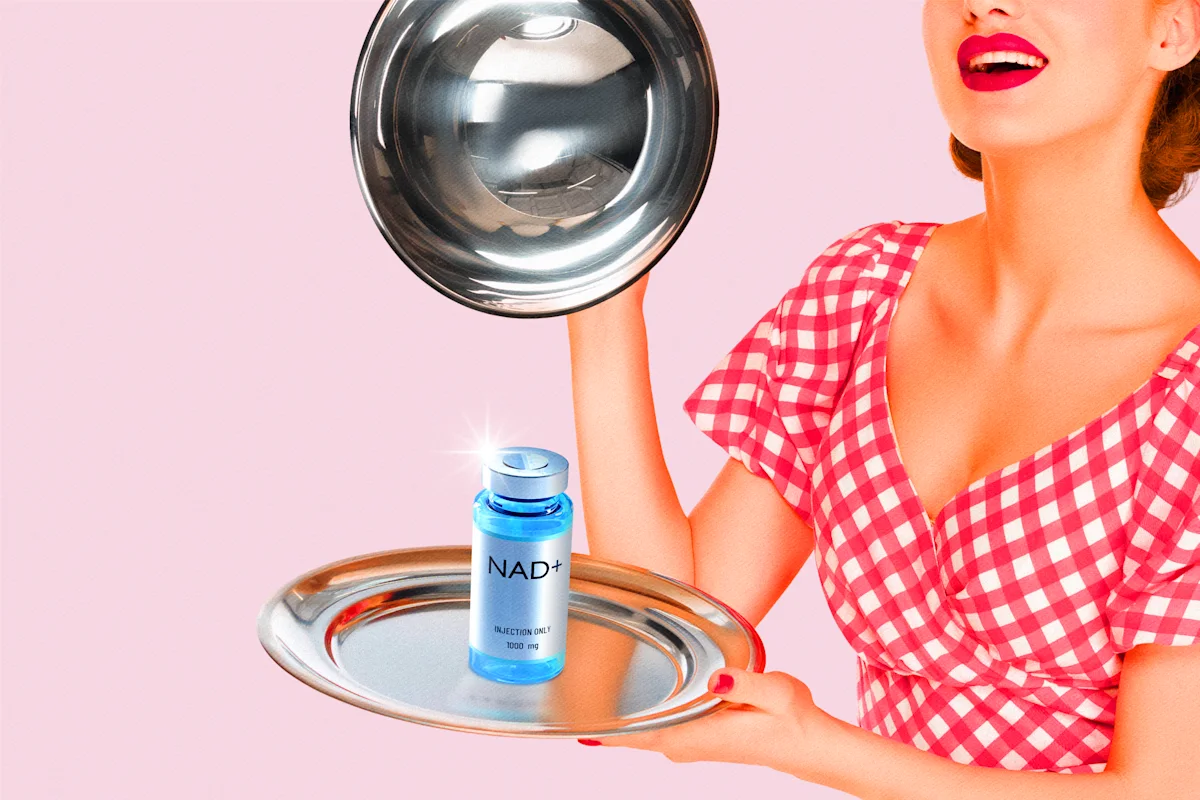
As a working 30-something raising two young kids, I'm perpetually tired, and it shows. My eyes tend to look sunken, my skin wouldn't exactly be described as "glowy," and I rarely have energy to do my hair. But on social media, my fellow moms are suddenly looking perky.
In TikTok videos and Instagram carousels, these women show before-and-after photos in which they go from ragged to refreshed, seemingly overnight. Their secret? NAD+ supplements and injections — the new "mommy's little helper" when it comes to battling the all-encompassing fatigue of motherhood.
"I feel better than I have in 10 years," says Tia Collis, a 43-year-old mother of two from Florida, who injects herself with the anti-aging treatment.
Claims like these are why taking NAD+ (nicotinamide adenine dinucleotide) and its precursors NMN (nicotinamide mononucleotide) and NR (nicotinamide riboside) is catching on beyond longevity bros and biohackers, trickling down to tired moms in their 30s and 40s.
As Dr. Mindy Goldman , the chief clinical officer of Midi Health, tells me, NAD+ is a coenzyme found naturally in nearly every cell in our body, helping maintain their function and convert food into energy. As we age, our NAD+ levels decrease, which may make it harder for cells to produce energy and repair damage. Women like Collis inject themselves with NAD+, hoping to bring back the youthful energy they need in the trenches of motherhood, along with sharper focus and less brain fog.
"There's growing interest in whether supporting NAD+ levels may help with things women care about, like energy, metabolism and brain health," Goldman says.
That possibility is what initially drew Collis to try injectable NAD+ for herself. Like me, Collis' life is a constant game of balance. She's not only raising her two kids, who are 11 and 3, but also working full-time as a realtor, entrepreneur and content creator. All this juggling is made more challenging by the fact that she has Hashimoto's disease, an autoimmune disorder that impacts the thyroid and can cause fatigue and sluggishness.
"I was having to take a nap every day," she recalls.
Not anymore. On Instagram , Collis posted videos of herself sticking a needle full of injectable NAD+ into her leg , showing her glowing results and saying she feels like she's "25 again." Her fatigue and brain fog have cleared, she tells me. She was a big enough fan that she eventually became an affiliate of the company she buys from to spread the word.
"It [makes] me feel more human and less like a 42-year-old midlife zombie," she tells her audience in one video.
Videos like Collis's are frequent discussion topics in mom circles, like my group chats with my friends with young kids, where we constantly trade ideas to make it through our hectic days. When one of my friends began taking NAD+ pills, we all eagerly awaited her results like she was our personal guinea pig.
But the promise of a shot, powder or pill turning me into a supermom comes with a price tag: Injectables can run $175 for a month's supply , powder supplements, which typically contain NAD+ precursors like NMN, can cost about $120 and even the pills are around $69 , raising the question of whether the results are really worth the cost.
Well, maybe, says Goldman. She cautions that supplemental NAD+ is still being studied. So while we understand a lot about what it naturally does in our cells, we don't have robust human research on the benefits of boosting the co-enzyme's levels.
"Social media has helped generate a lot of excitement around NAD+, but the claims can sometimes get ahead of the science," says Goldman.
Naturopathic medicine specialist Jacob Hill tells the Cleveland Clinic that a lot of interest in these supplements comes from "the potential anti-aging and longevity benefit." But, he adds, "research in this area is still developing. The long-term benefits and risks are unclear until more research is available."
From what Goldman has seen, there does seem to be a fair number of women who report feeling more energetic and mentally sharp, and she understands why these benefits would be appealing to mothers of young kids — and perimenopausal women — specifically. However, she cautions against believing some of the more over-the-top claims.
"Be cautious of promises around reversing aging, dramatic weight loss or eliminating fatigue, and look for information that reflects both what we know and what we're still learning," she says.
Goldman is supportive if people want to give the supplement a try. But she also wants moms to engage in other ways to beat burnout, like getting regular exercise, prioritizing sleep and eating nutritious food.
"It may be one tool women are interested in exploring, but it shouldn't replace addressing the underlying reasons they may be feeling that way," she says.
Ultimately, while NAD+ may not be a silver bullet that will change my entire life, it can be one piece of a broader plan for balance and self-care. After trying the pills, my friend told us she decided not to continue because the small energy boost she felt wasn't worth the high cost. But those who do notice a big difference may encourage others to give it a shot.
Collis tells me that while she always advises her followers to consult their doctors before starting any vitamins or supplements, she also wants women like her to know there are ways to feel better.
"There are tools to help the fatigue and brain fog," she says. "You don't have to suffer like that."
Topics in this story
Gathered from external sources. Rights to this text belong to whoever originally published it.