Do You Have The ‘Sugar Sag’? If Your Skin Is Aging Faster Than You’d Like, Here’s What To Know.
It’s called glycation, and your diet isn’t the only thing that can speed it up.
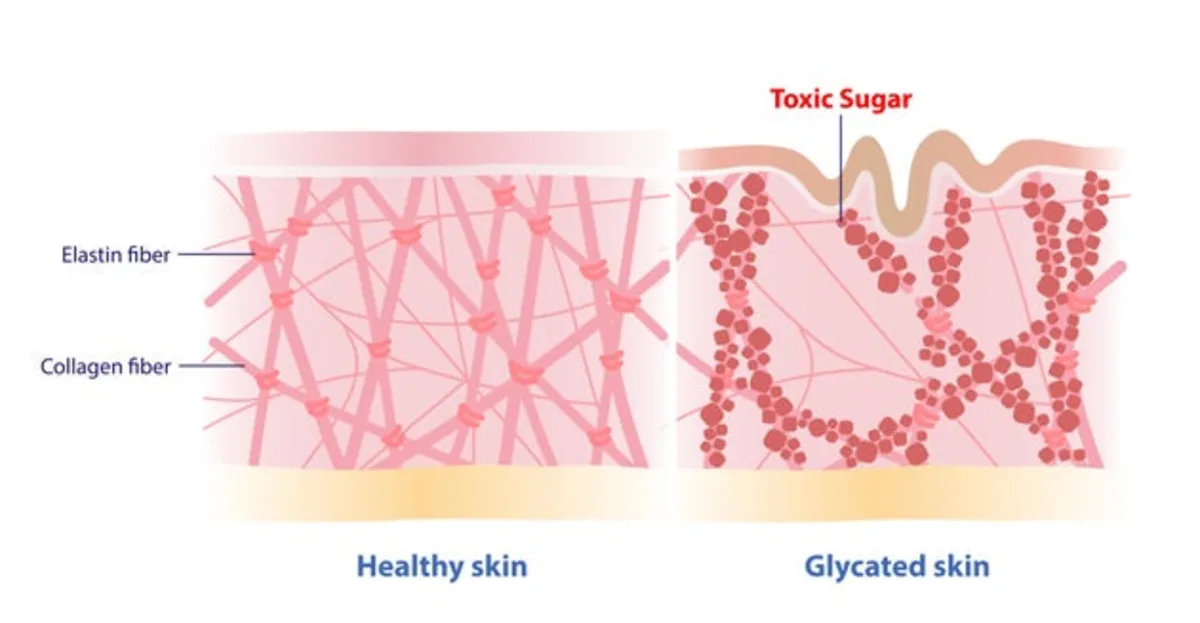
You probably know that eating too much sugar can impact your health in a variety of ways, including increasing your risk for diabetes, obesity and heart disease . But you may not realize that high-sugar diets can also affect your skin by promoting a process known as glycation .
Often referred to as the " sugar sag ," skin glycation is "a totally natural process where excess sugars bind to the proteins in your skin, specifically collagen and elastin," Dr. Jennifer Holman , a dermatologist with U.S. Dermatology Partners Tyler in Texas, told HuffPost. This can lead to wrinkles, sagginess and other signs of aging.
While a lifelong higher sugar consumption plays a role in glycation , Holman said it's not the only factor. And everyone will experience "some degree of glycation as part of normal aging," Dr. Alexandra Richmond , a dermatologist and founder of Dermhaus in Charleston, South Carolina, told HuffPost.
Here's what to know about glycation, its causes, and how to prevent and treat it.
Like this article? Keep independent journalism alive. Support HuffPost .
"Skin glycation is a sugar-protein reaction," Richmond said.
It's a natural biological process where sugars in your body bind to proteins, such as collagen and elastin, and form compounds called advanced glycation end products, or AGEs, she explained.
"Think of collagen as the structural framework that gives skin its firmness and elasticity," Richmond said.
"Over time, AGEs make the structural proteins stiffer, weaker and less able to repair themselves," Dr. Kenneth Mark , a cosmetic dermatologist in New York City, told HuffPost. "Since collagen and elastin are what keep skin firm, smooth, and resilient, glycation can accelerate visible skin aging."
The effects of glycation can be skin dullness, wrinkles, and a thick or yellow appearance, Holman said.
It can also affect the elasticity of blood vessels , which could potentially lead to plaque buildup and high blood pressure.
Diets consistently high in added sugars and refined carbohydrates contribute to glycation because they elevate blood sugar levels, Mark said, adding that people with diabetes may accumulate AGEs more rapidly.
However, diet is only one factor that can speed up glycation, Holman said.
Exposure to the sun's ultraviolet radiation, pollution and smoking can also damage collagen, elastin and DNA in the skin, she added. Genetics, overall health and chronic inflammation play a role, too, Richmond said.
Glycation is also part of the normal aging process, so everyone will experience it on some level, Mark added.
When AGEs form in the skin, it makes collagen and elastin (the proteins that make your skin supple and elastic) "sticky and brittle," Holman said.
Under a microscope, she said, the elastin fibers are "essentially just a broken network, and this is a byproduct of AGE damage to these fibers." So they can't do their job giving structure and bounciness to the skin.
The less-flexible and less-functional collagen fibers become more rigid, and AGE formation can interfere with normal collagen turnover and stimulate inflammation, Richmond said.
All of this can cause the skin to be less firm and elastic, and increase wrinkles, fine lines, sagging, dullness, uneven texture and thinness, she said, noting that these changes do "overlap with normal skin aging."
Since glycation is a natural process that happens along with normal aging, it's difficult to stop. "Obviously, we can't prevent aging," Holman said.
The best strategy to slow glycation is "reducing the factors that accelerate it," Mark said.
"Fortunately, the same things that are good for overall health are generally good for your skin," Richmond said.
This includes wearing sunscreen with at least SPF 30 every day, limiting excessive added sugar or refined carbohydrates, and eating a balanced diet rich in fruits, vegetables and protein, she said.
Plant-based foods contain antioxidants, which have been shown to reduce oxidative stress in the skin, Holman said. And using skin care with antioxidants like vitamin C and retinoids can help, too, Richmond said.
Other ways to slow glycation include exercising regularly, not smoking, getting plenty of sleep, and managing conditions, like diabetes, that cause chronically elevated blood sugar.
Once AGEs are formed and incorporated into collagen, there's no proven treatment to reverse it, Richmond said.
"So clinically, we're largely talking about prevention, slowing accumulation, and treating the visible consequences of aging rather than completely reversing glycation," she explained.
If you're dealing with the signs of glycation and they're bothering you, see a dermatologist, who can recommend the best treatment based on your skin's specific needs, Holman said.
For instance, laser treatments "stimulate collagen remodeling" and improve the skin's surface, Mark said. It can also improve skin laxity and pigmentation, Richmond said.
Retinoids can encourage skin cell turnover and stimulate collagen production, she added. Other options include microneedling, chemical peels, fillers, Botox and skin care products with antioxidants like vitamin C.
"While these treatments don't erase glycation, they can noticeably improve the skin's appearance by supporting healthier collagen," Mark said.
Topics in this story
Gathered from external sources. Rights to this text belong to whoever originally published it.