Tony Bennett had Alzheimer’s, but one thing the disease could not take away: The part of his memory that refused to disappear
Tony Bennett’s Alzheimer’s diagnosis became public in 2021, although his family said he had been diagnosed in 2016.
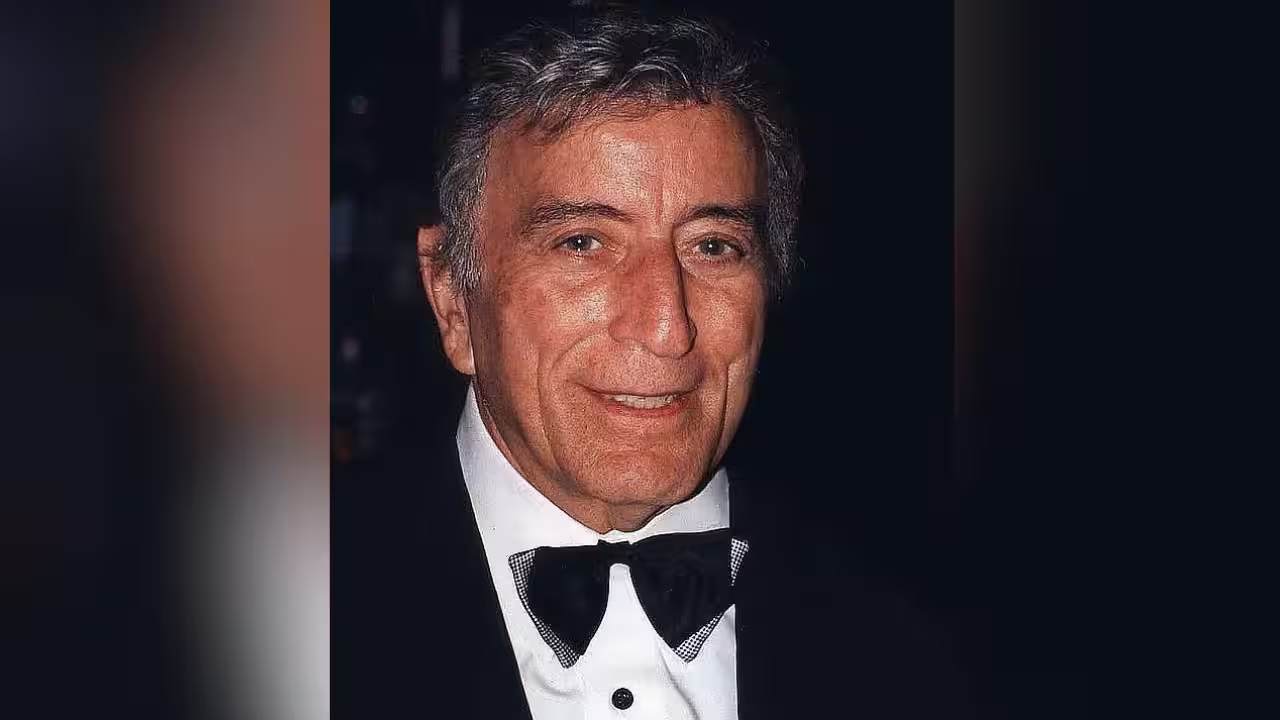
Tony Bennett’s Alzheimer’s diagnosis became public in 2021, although his family said he had been diagnosed in 2016. The legendary singer continued making music for years after the diagnosis and performed publicly with Lady Gaga in 2021.He died on July 21, 2023, at the age of 96. Yet his final years left behind an unusual observation about the way music and memory can coexist with Alzheimer’s.Bennett could lose track of people and events, but his songs remained deeply familiar.The one thing Bennett did differently: he kept singingThere was no special musical treatment that reversed his Alzheimer’s. Bennett simply continued doing something that had been part of his identity for most of his life: singing. According to healthcare innovator Neal K. Shah, Tony Bennett’s experience with Alzheimer’s was a reminder of how music can remain accessible even when other memories become difficult to retrieve.His family later recalled that even near the end of his life, he could still sing his familiar songs. Shortly before his death, he sat at the piano and sang “Because of You,” the song that had become his first No. 1 hit decades earlier.His wife, Susan Benedetto, later described the enduring connection between Bennett and his music, saying that he never lost the memory of the lyrics.Why can a song survive when other memories fade?Alzheimer’s does not erase every type of memory at the same speed.According to the US National Institute on Aging, the disease initially damages areas such as the hippocampus and entorhinal cortex, which play major roles in forming memories. As the disease progresses, damage spreads to other brain networks.Music, however, involves several systems at once, including areas linked with emotion, movement, hearing and memory. Familiar music can evoke memories and emotions and is being studied as a supportive approach for people with dementia.Research has also found that long-known music can activate brain regions involved in autobiographical memories and emotions that may be relatively less affected during earlier Alzheimer’s disease.What families can learn from Bennett’s storyThe practical lesson is not that music can cure Alzheimer’s. It cannot.The more meaningful lesson is that a person with dementia may still have access to parts of their identity that family members can reach.A childhood song, an old prayer, a favourite singer or a familiar melody may sometimes create a connection when ordinary conversation becomes difficult.The NIH also says music-based approaches are being studied for brain disorders of ageing, including Alzheimer’s disease, while researchers continue to examine exactly how music affects the ageing brain.For caregivers, that can make music more than background noise. It can become a gentle way of meeting someone where they still are.Bennett’s final song carried a lifetime of memoryThere is something especially poignant about Bennett ending his musical journey with “Because of You.”It was not a new song. It was a piece of his own history.That is perhaps why his story continues to resonate. Alzheimer’s took away many things from Bennett over the years, but music remained a language he could still speak.His experience does not prove that music stops Alzheimer’s or restores lost memory. It shows something quieter: even when disease changes the brain, familiar music may still provide a pathway to emotion, identity and connection.Disclaimer: Tony Bennett’s experience should not be considered evidence that singing or listening to music can treat, reverse or prevent Alzheimer’s disease.Get the latest movie news, reviews, and celebrity updates. Download the TOI App.
Topics in this story
Gathered from external sources. Rights to this text belong to whoever originally published it.