Chad Lawson on exploring his musical language in ‘Awakening: The Stillness Within’: ‘Listening became more important than talking’ - Exclusive
Discover how pianist Chad Lawson blends Western piano with Indian classical music in his new album \"Awakening: The Stillness Within,\" exploring the deeper meanings of stillness and healing.
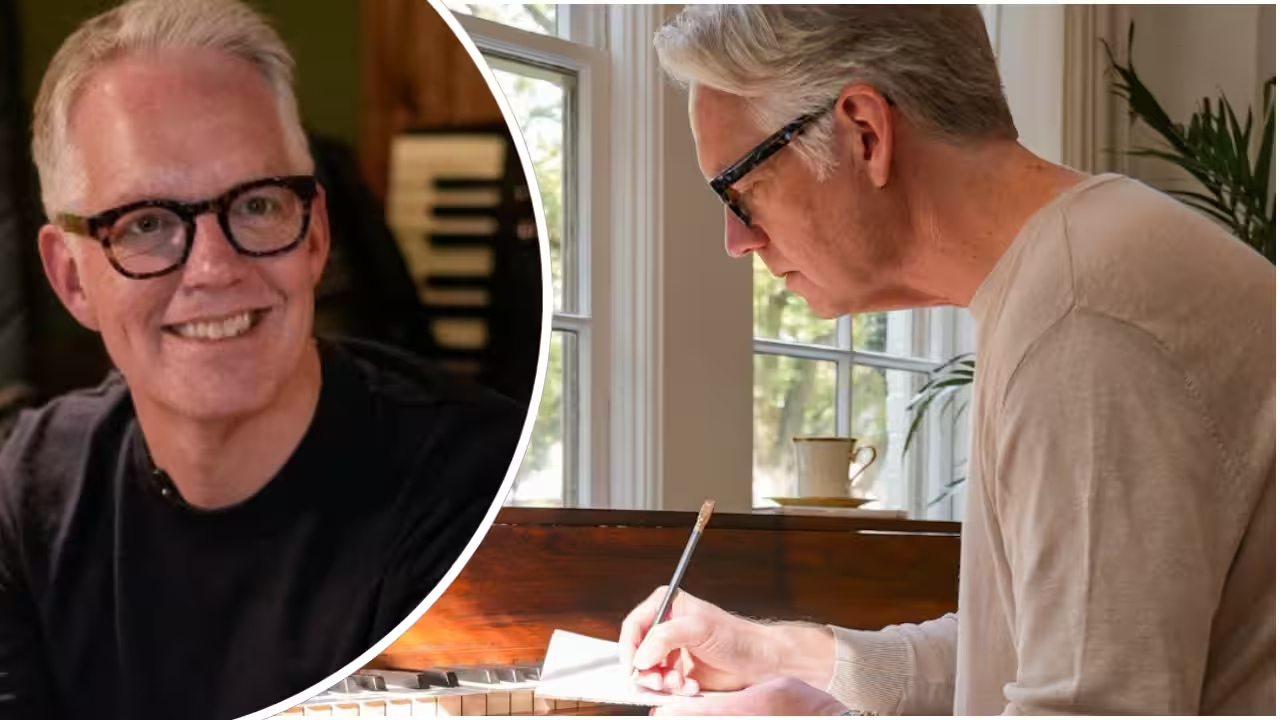
Music sure has a universal language, but its meaning is different for every musician. Recently, during an exclusive conversation with the American pianist and composer Chad Lawson, we learnt that for him, music is about exploration of stillness, presence and the spaces that exist between notes. With his latest album, ‘Awakening: The Stillness Within,’ he has tried to expand that musical language by bringing together Western piano, Indian classical instruments, mantras and healing frequencies.Chad Lawson on discovering his own musical language while bringing Western piano together with Indian classical instruments and healing frequencies“I think the biggest discovery was realising I didn't need to make the piano sound more Indian. I could let it remain a piano and become a more engaged listener myself. And while there are frequencies around this work that I find beautiful, I'm careful not to pretend I understand centuries of tradition because I spent some time recording in India. Part of respecting that tradition, for me, was also respecting the limits of my instrument,” he said while speaking to us.He added, “A bansuri can slide between two notes and live inside that space for a while. A piano can't. There are moments where I'll play two neighbouring notes, letting one arrive just before the other and releasing it a little sooner, almost trying to create the feeling of a bend. But the piano is still a fixed voice.”“That’s taught me that not everything has to become something else. Sometimes the beauty is in letting an instrument be exactly what it is. So I started paying more attention to what the piano could do naturally. Letting a note ring and fade. Playing something, leaving space around it, and waiting to hear what came back. The listening became more important than the talking,” she shared.Chad Lawson believes that respect starts with knowing what isn’t yoursOn incorporating elements of Indian classical music while respecting its cultural and musical significance, the artist said, “For me, respect starts with knowing what isn’t mine. I actually love knowing there’s something I don’t know yet.”He continued, “A raga isn't just a collection of notes you learn and then suddenly understand. Musicians can devote their entire lives to this music and still consider themselves students. I studied, listened, studied more, listened more before even landing in India, but I still walked into the studio as a beginner.”“So I wasn’t interested in trying to make their tradition fit inside what I already knew. I wanted to listen to the people who had spent their lives with it. With Purbayan Chatterjee, there is so much history and understanding behind what you're hearing. The interesting part for me wasn't trying to imitate that or tell him what I thought it should sound like. It was hearing what happened when his musical language met mine. And I couldn't stop smiling. That really became the approach throughout the record. I listened, tried to leave enough room, and trusted the musicians to bring what they knew into the music,” he mentioned.He then highlighted another very important element and said, “Credit matters too. So much of what you hear was discovered in the moment, and there are passages on this album that simply wouldn't exist without what Rasika, Purbayan, Nush and Paayal brought to it.That was the part I loved most. We could each stay ourselves completely and still make something none of us would have made alone.”Chad Lawson says healing isn't always peacefulPeople always correlate peace and healing. However, one hardly talks about the less-discussed, uncomfortable, or silent aspects of healing. Chiming in on this subject, Chad shared, “I really appreciate this question because stillness, let alone healing, isn't always peaceful. You sit down, turn everything off, and suddenly the thing you were too busy to think about all day feels like it's tapping you on the forehead. It could be grief. It could be worry. It could be something you haven't thought about in ten years. Give yourself enough quiet and things may come up that you weren't expecting.”He elaborated further with anecdotes from his own life and said, “I've meditated for years, and some mornings it's twenty minutes of thinking about groceries or what I'm doing later that day. The meditation can almost feel like a miss. But then I get up, go about my day, and that evening I do my twenty minutes again. I think that's an important part of healing. Some days nothing happens at all. But you still show up for it.”“Sometimes the uncomfortable part of healing is realizing that feeling better doesn't always mean feeling good. Sometimes you have to spend a little time with the thing you'd rather avoid. That may be part of it too,” he concluded.Get the latest Bollywood & Entertainment News, and more. Download the TOI app.Give your child the gift of confidence! Claim your exclusive TOI Masterclass spot today!
Topics in this story
Gathered from external sources. Rights to this text belong to whoever originally published it.