There was only one Dolly Parton. See her remarkable life in photos.
Parton was the purest kind of pop icon, with an image and a sound that was universally beloved yet entirely her own.
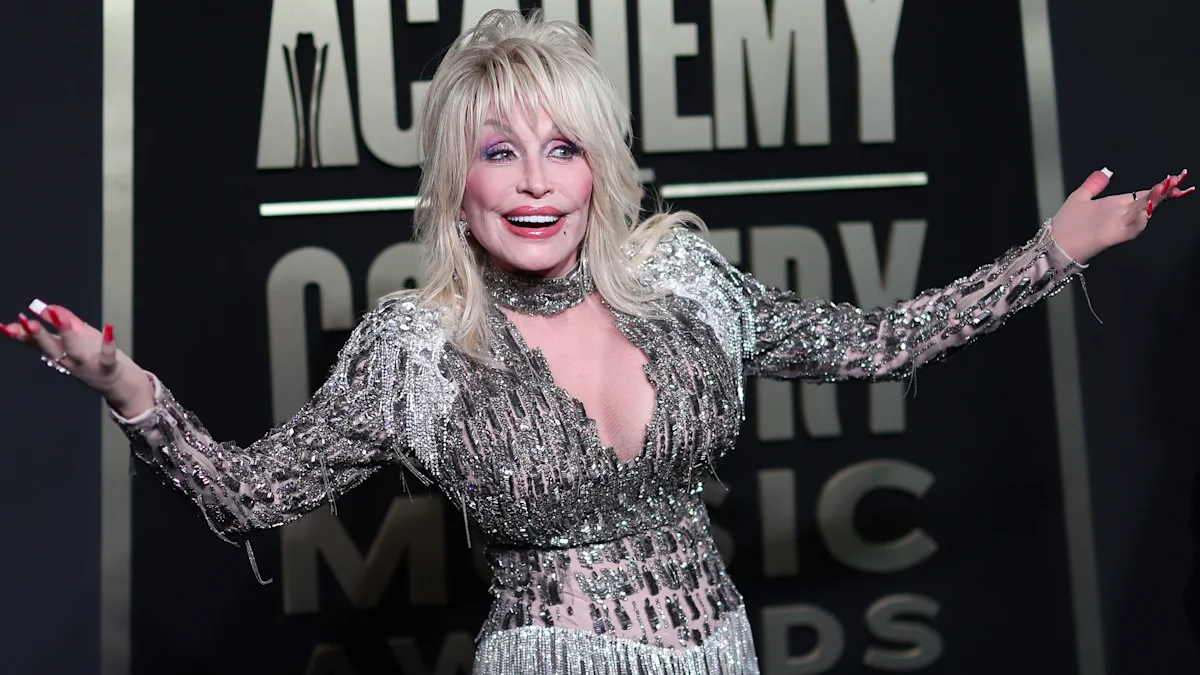
Dolly Parton died in Nashville on Tuesday at the age of 80 , but her outsize legacy will live on. Over a peerless six-decade career as a country singer, songwriter, entertainer and entrepreneur, Parton transmuted her hardscrabble roots as the daughter of an illiterate Tennessee sharecropper into the purest kind of pop iconography: an image and a sound that was universally beloved yet entirely her own.
In 2019, the New York Times ran a story with the headline "Is There Anything We Can All Agree On?" The answer? "Yes: Dolly Parton."
Among the things that everyone agreed on was Parton's prodigious talent. A child performer on local radio and television programs, she first broke through, in 1966, with a single called "Dumb Blonde." "Just because I'm blonde, don't think I'm dumb," Parton sang in the chorus. "'Cause this dumb blonde ain't nobody's fool."
The song was written by someone else, but the sentiment would come to define Parton's layered public persona: a voluptuous, rhinestone-studded, bouffant-bewigged " Backwoods Barbie " who happened to be the shrewdest of businesswomen, the sharpest of lyricists and the most generous of philanthropists.
"I've created this and played it up — the makeup, the whole persona," Parton said in a 2002 interview . "But this isn't all I am. It's not even most of what I am. Hopefully people can see beneath the hair to know there's a brain, beneath the boobs to know there's a heart and behind all the other stuff to know there's some talent."
Parton penned most of her subsequent hits herself. She found early success duetting with fellow country singer Porter Wagoner, but struck out on her own in the mid-1970s after a string of solo singles — " Joshua ," " Coat of Many Colors ," " Touch Your Woman ," My Tennessee Mountain Home ," "Travelin' Man," "Jolene" — made the country Top 20.
In 1974, Parton wrote "I Will Always Love You" about her professional split from Wagoner; the song was a hit for Parton multiple times (1974, 1982, 1995), and eventually topped the charts for 14 weeks when Whitney Houston covered it for The Bodyguard soundtrack in 1992.
All told, Parton was the top-ranking female singer on country radio from 1967 to 1993, with a total of 25 No. 1 country singles. She published 3,000 songs in her lifetime, blazing a trail for other women along the way. "I can't imagine anybody, especially in country, who doesn't try to emulate Dolly in some way," singer-songwriter Emmylou Harris said in 2006.
The fact that Parton accomplished so much in music while also challenging cultural stereotypes, starring in movies, opening a theme park, funding education programs and emphasizing hope, resilience, empathy and acceptance, both on stage and off — it all made her easy to agree on. It's hard to imagine that anyone else could have pulled it off, or will ever come close again.
Topics in this story
Gathered from external sources. Rights to this text belong to whoever originally published it.