In 1967, Marlon Brando acquired a Polynesian atoll; his vision for the island lives on through conservation efforts
Marlon Brando stood among the defining actors of the twentieth century, a performer whose intensity and naturalism reshaped American film.
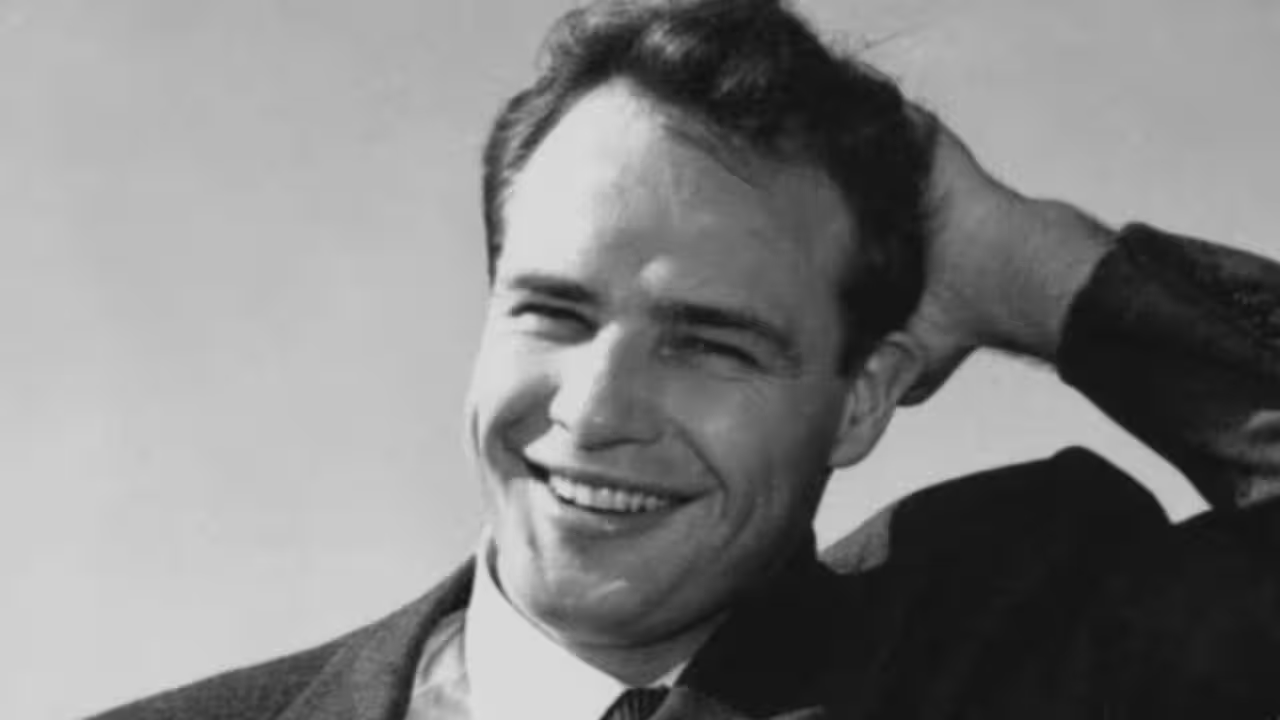
Marlon Brando stood among the defining actors of the twentieth century, a performer whose intensity and naturalism reshaped American film. Roles in A Streetcar Named Desire, On the Waterfront and later The Godfather made him a global figure, yet the glare of that fame often left him restless. He looked for places where the noise of Hollywood could not follow, and he found one during the filming of Mutiny on the Bounty. The quiet ring of islets known as Tetiaroa offered the distance and beauty he craved, turning a personal escape into a lasting vision for protection and careful living that still guides the atoll today.The clear lagoon, the small coral islets known as motus, and the simple beauty of the place—it all stayed with him. A few years later, in 1966, he secured the rights to the atoll, a roughly 1,445-acre ring of twelve islets about thirty miles north of Tahiti.What began as a personal escape from Hollywood fame turned into something bigger: a lifelong wish to keep the place wild, to study it, and to show that people could live lightly on the land. Decades after his death in 2004, that wish is still unfolding through careful conservation work, scientific research, and a low-impact resort that carries his name.A personal refuge that grew into lasting protectionBrando first saw Tetiaroa during location scouting and was struck by its isolation and the shifting blues of the lagoon. “For Marlon, Tetiaroa was his paradise,” said Mike Medavoy, who was the actor’s friend and co-executor of his estate, in an interview with The Hollywood Reporter.As reported by Yahoo Travel, after marrying his Tahitian co-star Tarita Teriipaia and starting a family, he negotiated a long-term arrangement for the atoll, often described as a 99-year lease rather than outright ownership in the usual sense and treated it as a private haven.Marlon did not want heavy development. The decision to keep most of the atoll untouched was a broader part of his plan. He wanted Tetiaroa to become an ecologically responsible tropical resort, a nature preserve, an open-air experimental science laboratory—a “university of the sea,” as reported by the Los Angeles Times. It created the foundation for everything that followed, giving wildlife and the natural shoreline room to recover instead of being pushed aside.A vision for science and learning on the waterBrando imagined scientists and students coming together to study the lagoon, the reefs, and Polynesian culture, while testing practical ideas for living more gently, such as solar power, waste handling, and ways to protect fragile island ecosystems.Marlon subscribed to science magazines and technical journals. He vividly studied Tetiaroa's water tables, the quality of the soil, and the flora and fauna of the region. In the early days, he applied himself hands-on to Tetiaroa’s plumbing challenges.In his later years, any plumber called to the Mulholland Drive house would find himself followed around by Marlon, who’d also peer underneath the sinks alongside him and ask about torque wrench brands and hose bib fits.Showing that careful tourism can support natureBrando hoped the atoll could welcome visitors without spoiling what made it special. He wanted an ecological model where tourism, conservation, and local culture worked together. That idea took shape after his death. His estate worked with Pacific Beachcomber to open The Brando in 2014, a 35-villa eco-friendly resort that doubles as a nature preserve.It was a small luxury resort that opened in 2014 on one motu. Buildings sit back among the trees so lights do not disturb nesting turtles. The resort uses seawater air-conditioning, solar power, and careful waste systems, and a large share of its support goes to the Tetiaroa Society’s work.Guests can learn about the island’s history and ecology while the rest of the atoll stays largely undisturbed, proving that limited, thoughtful access can fund protection rather than threaten it.Wildlife recovery that keeps the original promiseThe clearest sign that Brando’s vision continues is the return of the animals. Teams from the Tetiaroa Society and research partners such as Te mana o te moana monitor green sea turtles every season. Teams recorded more than 15,600 hatchlings emerging from roughly 161 nests in a single season, according to Upworthy.According to the National Oceanic and Atmospheric Administration (NOAA), the green sea turtle, known as honu in Tahitian, is the world’s largest hard-shelled sea turtle, which is central to that vision. The atoll is one of the region’s major nesting sites for the endangered species, and protecting the turtles is a core activity of the atoll’s on-site Ecostation research hub.Today Tetiaroa remains private and carefully managed. The combination of research, limited tourism, and hands-on protection means Brando’s early hope—that the atoll could serve the planet as well as the people who visit or study it—has not faded. It lives on in the turtles crossing the sand, the scientists at the eco-station, and the quiet decision to leave most of the motus wild.Get the latest Bollywood & Entertainment News, and more. Download the TOI app.Give your child the gift of confidence! Claim your exclusive TOI Masterclass spot today!
Topics in this story
Gathered from external sources. Rights to this text belong to whoever originally published it.