Here’s What Netflix’s“ Unabomber” Got Right and Wrong About the Disturbing Real-Life Events
The Netflix film, which premiered Sept. 25, sees Jacob Tremblay portray real-life domestic terrorist Ted Kaczynski
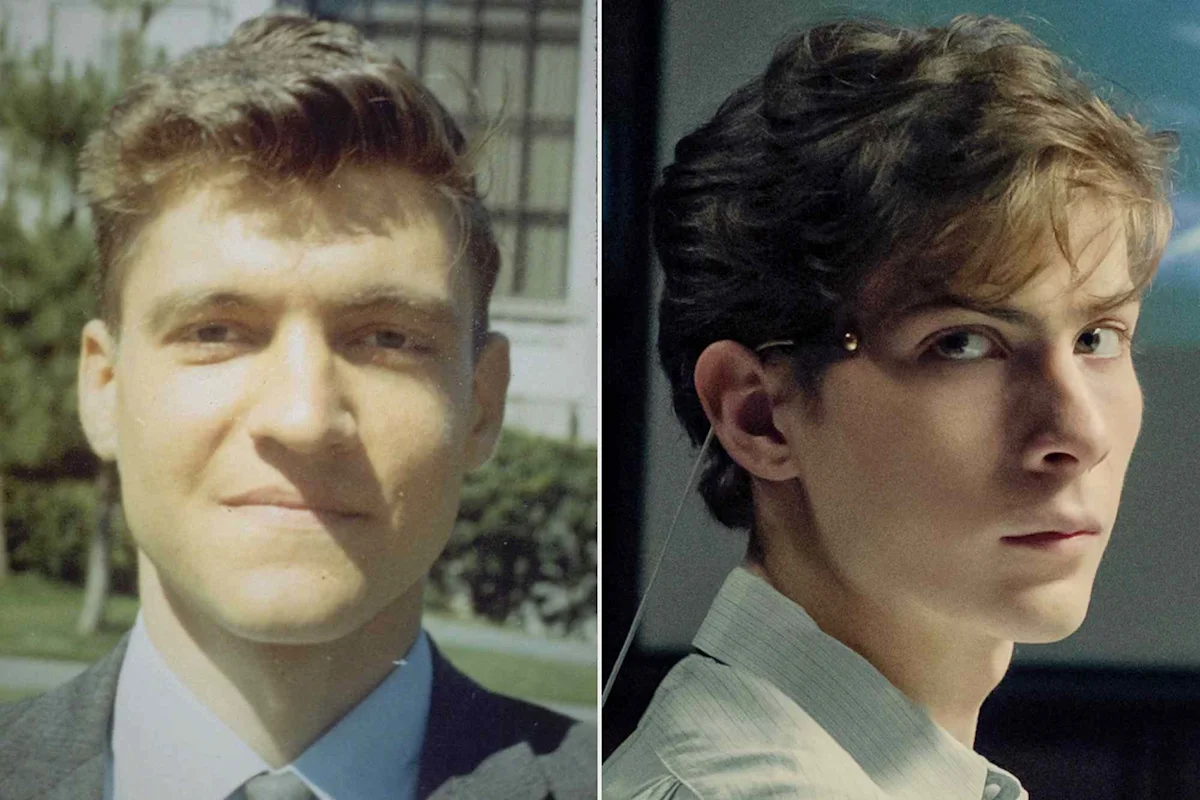
Unabomber was released on Netflix on Sept. 25
The film combines fact and fiction in its depiction of terrorist Ted Kaczynski and his crimes
The FBI did use linguistic analysis of Kaczynski's manifesto to identify him, but Shailene Woodley's character's involvement in these findings is fictional
The Netflix film Unabomber shows how Theodore "Ted" Kaczynski went from an unassuming, introverted math prodigy to a domestic terrorist who killed three people and injured more than 20 others with 16 homemade bombs over the course of 17 years.
With Jacob Tremblay portraying Kaczynski, the movie focuses largely on Kaczynski's adolescence and coming of age at Harvard University, where he participated in controversial psychological experiments led by Dr. Henry A. Murray ( Russell Crowe ) and Christiana Morgan ( Annabelle Wallis ). In the movie, the experiments were part of what eventually drove Kaczynski to become the Unabomber, a moniker that came from the FBI's code name for the case, UNABOM (University and Airline Bombing).
Kaczynski planted some of his homemade explosives and sent others to victims and targets in the mail until the FBI caught him in April 1996, ending what became one of the longest and most expensive manhunts in the agency's history, per History.com .
Below, here's what Netflix's Unabomber got right and wrong about the real-life events.
Was Ted Kaczynski really a mathematical genius?
As portrayed in the Netflix film, Kaczynski was considered a child prodigy , reportedly scoring 167 on an I.Q. test in fifth grade, per The Atlantic . He was so advanced in mathematics that he skipped sixth and 11th grades, going on to enroll at Harvard University on a scholarship at 16 years old, per The Washington Post .
Kaczynski graduated from Harvard in 1962, then earned his master's and doctoral degrees from the University of Michigan. In 1967, Kaczynski, then 25, became an assistant mathematics professor at University of California, Berkeley.
Did Ted Kaczynski really not get along with other students?
Kaczynski's brother, David, previously told PEOPLE that Kaczynski only had a few friends in high school and none in college.
In May 2012, one of Kaczynski's Harvard suitemates, Patrick S. McIntosh, told The Harvard Crimson that Kaczynski was withdrawn, never spoke to any of his classmates and ate alone in the dining hall, even when others tried to engage with him. McIntosh also recalled Kaczynski's room smelling of "piles of books and uneaten sandwiches."
Another student named John V. Federico, however, said that while Kaczynski was "on the shy side," he was "certainly friendly" when he was included in discussions.
Was Ted Kaczsynski really part of a Harvard psychology experiment?
Yes, Kaczynski really was part of a Harvard psychology experiment under Murray and Morgan.
Murray received graduate degrees in medicine and biology from Columbia University, as well as a Ph.D in biochemistry from the University of Cambridge, per his Harvard University bio . He was considered a pioneer in the field of psychoanalysis, having worked to improve the Thematic Apperception Test, or TAT, much like in the Netflix film. He also was, in real life as in the film, a scholar of Herman Melville and a fan of Moby-Dick , per The New York Times .
According to The Guardian , the experiment in which Kaczynski and 21 other undergraduates were told they'd debate another student was actually intended to measure how people react under stress. Per the outlet, the experiment resulted in the participants being subjected to what Murray described as "vehement, sweeping, and personally abusive" interrogations.
Former philosophy professor Alston Chase wrote in The Guardian that it's "clear" Murray's experiment "deeply affected at least some of its subjects." However, experts have noted that the study's actual impacts on Kaczynski's life and mental health, if any, were never proven, and could be considered "coincidental."
There is also no evidence that Kaczynski ever walked in on Murray and Morgan being intimate, though the colleagues were romantically involved, per The New York Times .
Did Henry A. Murray really work with the CIA?
It is true that Murray worked with the CIA, as was briefly depicted in Unabomber . The New York Times reported that Murray began working with the Office of Strategic Services (which would later become the CIA) in 1943 to use psychology to help select undercover agents. (Years earlier, the U.S. government had recruited him to create a psychological profile of Adolph Hitler , per his Harvard University bio.)
According to The Washington Post , some of Murray's experiments may have been part of the CIA's MKUltra program , which was inspired by the use of mind-control techniques on U.S. prisoners of war in Korea by the Soviet Union, China and North Korea.
Was Ted Kaczynski really estranged from his parents?
As briefly explained in the movie, Kaczynski became estranged from his parents, homemaker Wanda and sausage maker Theodore Richard .
David previously told PEOPLE that Kaczynski resented Theodore and Wanda and believed that they only ever valued his career and intellect and never loved him as a person. David also recalled that after their father was diagnosed with terminal cancer and died by suicide in 1990, Kaczynski didn't attend the funeral, and rather called his mother on the day of the memorial.
Did Ted Kaczynski really build his own cabin in the woods?
Kaczynski and David, who was living in a Montana apartment at the time, pooled their resources and bought 1.4 acres of land together in Lincoln, Mont., in 1971, David previously told PEOPLE.
There, Kaczynski built his cabin, which lacked electricity and running water, per The New York Times . Kaczynski lived in the cabin for more than two decades until his arrest. Federal authorities reported finding bomb-making equipment, a live bomb, a draft of an anti-technology manifesto sent to news organizations by the Unabomber and a typewriter inside the cabin, per CNN .
Did newspapers really publish the "Unabomber Manifesto"?
In 1995, Kaczynski, still known anonymously as the Unabomber at the time, sent a copy of Industrial Society and Its Future — the 35,000-word anti-tech essay that would become known as the "Unabomber Manifesto" — to both The New York Times and The Washington Post , per The National Archives Foundation .
He threatened to send a bomb to an unspecified destination "with intent to kill" unless one of the newspapers published the manuscript in full, per The Washington Post .
On Sept. 19, 1995, under advisement from the FBI and then-Attorney General Janet Reno, The Washington Post published Kaczynski's manifesto under the byline FC, which stood for "Freedom Club."
Did Ted Kaczynski really harass a woman he went on a date with?
Though it's only mentioned briefly in the Unabomber film, Kaczynski did harass a woman with whom he and David worked at a foam rubber factory in 1978.
The woman, who was a supervisor, told SFGate she and Kaczynski went on one dinner date and baked an apple pie, after which she declined to see him again because they didn't have much in common "socially." She denied their relationship ever having gotten to a romantic stage.
After she rejected him, Kaczynski began writing profane poems and messages about the woman and leaving them around the factory before he was fired by his brother.
She also emphasized that she had no idea he was the Unabomber at the time, describing Kaczynski as "quiet" and "intelligent."
Did Joanne Miller really help catch Ted Kaczynski?
In the movie, Kaczynski's ostracization at Harvard is paralleled with that of an underestimated FBI agent named Joanne Miller ( Shailene Woodley ) whose linguistic expertise leads to Kaczynski's capture.
Miller is entirely fictional. However, Woodley's character's focus on linguistics was a key component in capturing Kaczynski in real life.
FBI criminal profiler James R. Fitzgerald began working on the Unabomber case in July 1995, but it wasn't until after Kaczynski's manifesto was published that September that investigators got a clearer picture of his identity, per NPR .
Fitzgerald said that because the initial bombings had a focus on college campuses and universities, investigators pegged the Unabomber as someone who was around ages 18-23 until the manifesto's language helped them correct their course.
"I'm picking up on some unusual language characteristics, like some archaic terms like 'broad' and 'chick' to denote women," Fitzgerald told NPR. "He uses the word 'negro' to refer to African-Americans. And this is 1995, and these words were almost like Frank Sinatra language, or something you'd hear from a '50s movie or something. And right away, that helped me age the author."
Did Ted Kaczynski's brother really turn him in?
After the "Unabomber Manifesto" was published, David and his wife Linda recognized a specific phrase, "cool-headed logician," that matched letters David had from Kaczynski. "I had never heard anyone else use that phrase," David previously told PEOPLE.
They presented the letters to one of Linda's friends, who was a private investigator, who then showed the letters to a linguistics expert. The linguistics specialist told them that there was an 80% chance that the manifesto writer also wrote the letter, and David and Patrick found a way to then contact the FBI.
Did CBS really get Ted Kaczynski's name before he was arrested?
In the movie, the Unabomber's identity is leaked to CBS before they have a chance to apprehend him, putting their plan at risk until Miller strikes a deal with them: If they wait to publish his name, they can have the exclusive information that it was Kaczynski's own brother who turned him in.
In real life, though, it wasn't just Kaczynski's identity that was leaked to CBS News ahead of his arrest — David's cooperation with the FBI leaked to the media as well, despite the FBI assuring him he would stay anonymous, per Time .
According to the Los Angeles Times , CBS reported that a search was imminent on the "best suspect" in the years-long investigation. As a result, the FBI said that the broadcast forced them to move in on Kaczynski in his cabin earlier than they'd originally planned.
In the aftermath, FBI officials disagreed over whether the agency had to move prematurely with their raid because of the CBS broadcast. However, the FBI issued a statement at the time praising CBS for temporarily holding their broadcast at the FBI's request, saying that the media organization's decision allowed them to carry out the arrest with no injuries, per the Los Angeles Times .
According to The Record , Lane Venardos, who was vice president of CBS at the time, said that they had already held the story for two days at the FBI's request, only broadcasting it when they feared other networks were about to break the story instead. He said they had been in contact with a senior FBI official 15 minutes before the report was aired and that no objections were raised, adding that they wouldn't have put the investigation or the agents at any risk.
Did Ted Kaczynski really have schizophrenia?
In the movie, Murray tells Kaczynski that he believes he has schizophrenia. In real life, however, a court-appointed psychiatrist diagnosed Kaczynski with schizophrenia amid his trial, per The New York Times .
Those close to Kaczynski, including David, believed he was mentally ill for a long time, but Kaczynski insisted he was not, even trying to fire his legal team to stop them from using that argument as a defense, per Time . Some experts also rejected the claims of Kaczynski's mental illness, including forensic psychiatrist Dr. Park Dietz, who told The New Yorker in March 1998 that the results of Kaczynski's evaluation and his journals "scream geek, not schizophrenic."
Shortly after his diagnosis, Kaczynski agreed to plead guilty to avoid the death penalty in exchange for multiple life sentences without a chance of parole, per The New York Times .
Kaczynski served his sentence in a super-max prison in Florence, Colo., Time reported, but was later transferred to Federal Medical Center in North Carolina due to health issues. In March 2021, he was diagnosed with rectal cancer, per NBC News . Kaczynski died by suicide at age 81 in June 2023.
If you or someone you know is struggling with mental health challenges, emotional distress, substance use problems, or just needs to talk, call or text 988, or chat at 988lifeline.org 24/7.
Topics in this story
Gathered from external sources. Rights to this text belong to whoever originally published it.