The Diya we light every day: A soldier’s Diwali
Diwali arrives each year with its customary familiar glow—lamps and lights flickering all over the houses, the air thick with the flavour of sweets, and
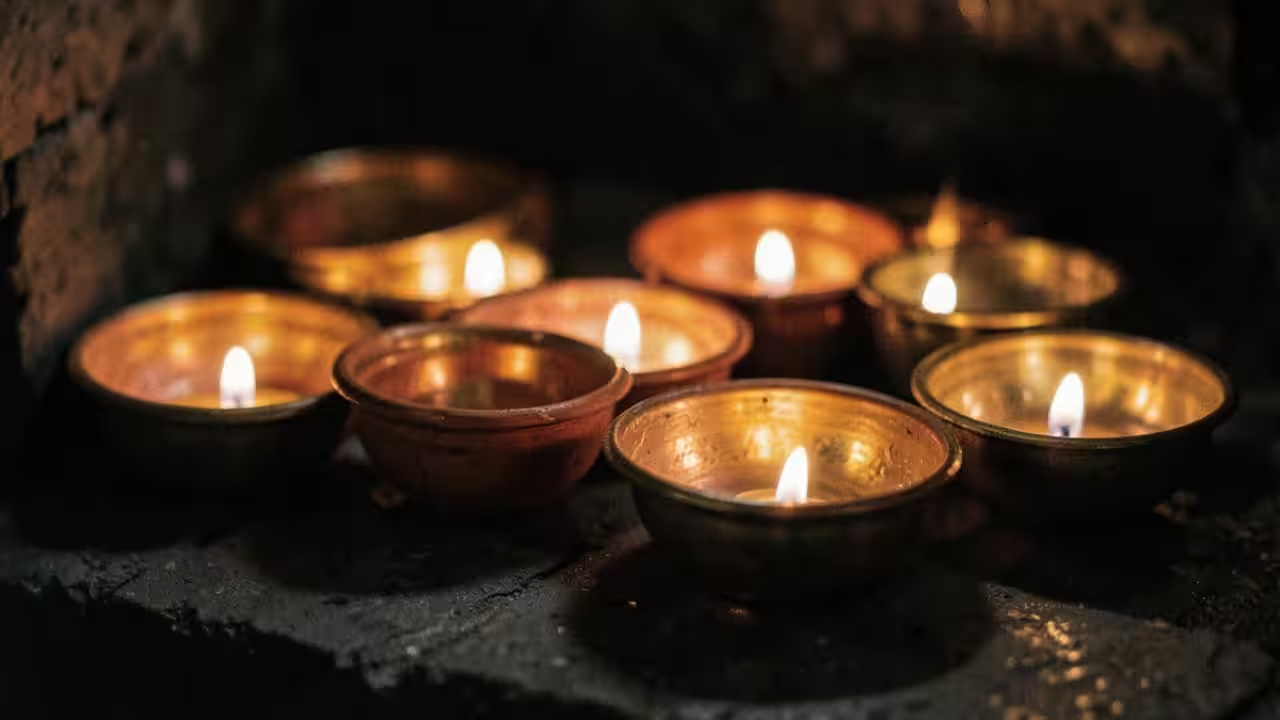
Diwali arrives each year with its customary familiar glow—lamps and lights flickering all over the houses, the air thick with the flavour of sweets, and fragrance of flowers. Families gather to mark the celebration of triumph of light over darkness, good over evil, knowledge over ignorance with prayers to the goddess for peace and prosperity.The festival is an affirmation of hope across India. Yet even as homes light up, another set of lights remains deliberately different: the barracks, the police stations, the border posts and the emergency rooms where men and women in uniform continue duties of their vigil. For them the festival is not a pause but a duty, one that has become more crucial with every passing year.It has become a pattern. Festivals that should symbolise peace are treated by those hostile to the country’s prosperity as occasions to test its resolve. On the roads, thousands of policemen stay on duty so that markets remain safe. Along the borders, soldiers maintain their positions so that the celebrations inland can proceed without interruption. Their presence is the quiet condition on which the rest of the country’s joy rests. When attempts to disturb that joy are thwarted, the credit rarely travels far beyond official statements. The ordinary citizen lights a diya and moves on; the uniformed citizen simply turns to the next shift.Beyond the security forces, an entire unseen workforce keeps the festival from turning tragic. Fire-brigade crews stand ready for the inescapable accidents that sometimes accompany fireworks. Hospital staff clear wards and prepare for burns and trauma cases. Emergency-service operators answer calls that peak precisely when most families are at their most relaxed moments. These are not glamorous roles, yet without them the public’s celebration would carry a far higher cost. They too forgo the gathering of relatives, the shared meal, the photograph that will later appear on social media.For those of us who wear the uniform, the notion of “going home for Diwali” has long since acquired a different meaning. When family members press for a visit, the request can feel oddly distant. The men and women with whom one has shared tents, police posts; night watches and the particular silences of service become the immediate circle. They are the ones who will notice if a colleague is missing from the mess or the duty roster; they are the ones who delight in the presence of their officers and colleagues. That expectation is not written in any regulation, yet it binds more tightly than most formal obligations. After decades in uniform one realises that the fauji family is not a substitute for the household one left behind; it is simply the household one has chosen to keep, year after year, when the calendar says everyone else should be elsewhere.This choice maybe awkwardly against the prevailing mood of the present. Social media amplifies the idea that the highest goal of life is the prioritisation of self and immediate family, that true living consists in the careful curation of personal moments. Against that backdrop the decision to remain with one’s unit and in police lines can appear almost anachronistic, even self-denying. Yet the motivation that sustains it is neither abstract patriotism nor institutional discipline alone. It is the quieter satisfaction of seeing ordinary people move through their day without fear - the child who can burst a cracker without looking over his shoulder, the shopkeeper who can keep his shutter open past dusk, the family that can finish its puja undisturbed. That visible ease is what replenishes resolve when the hours are long and the festival elsewhere is loud.Life in uniform does not pause for the festivals. Each day carries its own small task of keeping the larger peace intact, of lighting. In effect, a diya that is not decorative but functional. The work is often routine, occasionally dangerous, rarely celebrated. Over time one comes to accept that the colour of such a life lies in the joy of people we serve. It is a life worth living precisely because it measures its success by the uninterrupted happiness of those who do not have to think about the conditions of their safety.In recent years the Prime Minister Narendra Modi’s decision to spend Diwali with soldiers at forward posts and this year at Bastar in CRPF camp, the force which has eliminated menace of naxalism; has given public form to a gratitude that was always present but seldom articulated. The gesture is more than symbolism. It acknowledges that the festival’s meaning is incomplete if those who secure it remain outside its circle. When the head of government chooses to mark the day among troops rather than in a purely civilian setting, he converts a private sense of duty into a collective recognition. For the soldier on the ground the moment is brief; the message is larger and it endures—that the nation’s celebration includes, rather than overlooks, those who make the celebration possible.What could be more proud moments for CRPF which has been fighting against the naxal violence for almost five decades than PM Modi acknowledging it in their barracks amidst them. It has brightened up the mood in of soldiers of CRPF and other forces.In India, the lamps will be lit tonight in millions of homes, and rightly so. Somewhere else, for those of us who have spent years in the company of troops, distinction has long ceased to feel like a sacrifice. It feels, simply, like the life we have chosen—and one that continues to light something essential in the lives of others, day after ordinary day.Disclaimer: Views expressed above are the author's own.
Topics in this story
Gathered from external sources. Rights to this text belong to whoever originally published it.