“Good Morning America’”s Will Reeve Reveals Testicular Cancer Diagnosis: ‘I’ve Been Reminded What Means The Most To Me’
The ABC News correspondent, 34, says he was inspired by his parents’ example to share his story in hopes of helping others
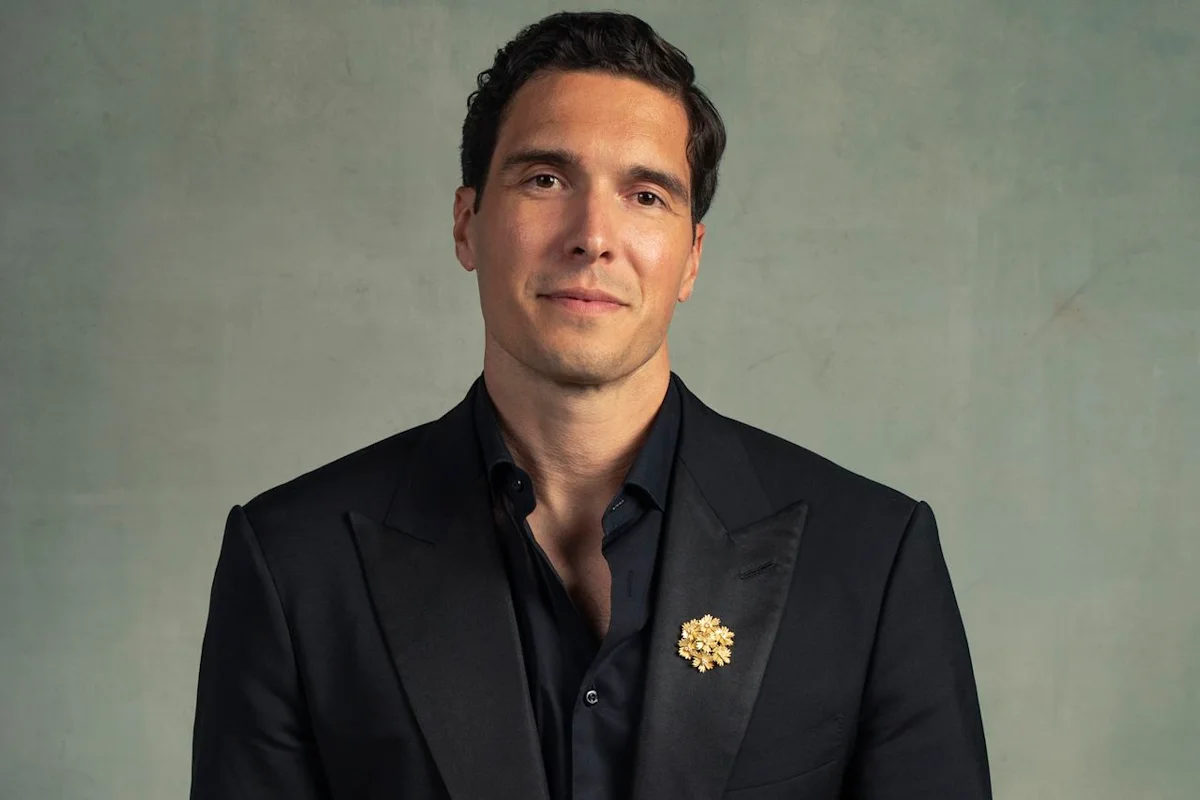
Will Reeve opens up about his testicular cancer diagnosis and treatment, sharing his story for the first time
He credits his wife Amanda, whom he married in January, for encouraging him to seek medical attention early, which led to successful treatment
Following the example of his parents, Christopher and Dana Reeve, he says, "I was raised to share one's struggles if, in doing so, that might help others."
"I was raised to share one's struggles if, in doing so, that might help others," says ABC News national correspondent Will Reeve .
Just two years old when his father, Superman actor Christopher Reeve , was thrown from a horse and became paralyzed from the neck down, Reeve grew up watching his dad and mom, Dana Reeve , fight for spinal-cord-injury awareness and research and launch The Christopher & Dana Reeve Foundation . Two years after his father died in 2004 at age 52, his mom died from lung cancer at 44.
"Watching my parents up close take the adversity they faced in their lives and repurpose it into something hopeful left a major impact on my life and how I try to live it," Reeve says.
That lesson took on new meaning this past spring after Reeve, 34, was diagnosed with testicular cancer, which then spread to the lymph nodes in his abdomen.
Currently cancer-free (as of a checkup on Sept. 8) and inspired by his parents' example, he's sharing his own cancer story now, for the first time. "I have felt so loved and supported and rooted for by family, friends and strangers alike for my entire life," says Reeve, who was 13 when his mom died and was then raised by the parents of his best friend, who lived across the street. "And that's a big part of why I wanted to speak about this. I'm going to be fine. But this was a heck of a chapter."
Reeve first noticed a tender lump on one of his testicles in the shower this past April. "I assumed it was nothing or would go away," he says. But his wife of three months, wedding and event planner, Amanda Dubin Reeve, 30, urged him to get an ultrasound ("It's probably nothing," she told him, "but what if it's something?") "I was stunned," says Reeve. In early May, he underwent an orchiectomy to remove the cancerous testicle, the standard surgical procedure for testicular cancer.
"I hadn't had surgery since I got my tonsils out at 5," says Reeve, who took a few days off work to recover. "So I was more nervous about the unknown of the surgery rather than the overwhelming realization that I would be losing an essential part of my body forever."
He credits Amanda with encouraging — and persuading — him to get checked. "We talk about 'in sickness and in health," he says. "We got an early test of our vows, just a few months in."
Adds Amanda: "The silver lining was that we had validation early in the marriage that we are well-equipped to tackle anything." He also did sperm banking, "because we do want to start a family," he notes. "And while an orchiectomy doesn't prevent natural conception, you never know, so you want to be safe."
They'd hoped it would all be just "a momentary blip in an otherwise great time in my life," recalls Reeve. But further test results revealed that 95 percent of the testicular cancer found was embryonal carcinoma, an aggressive form of the disease, leading to a six-hour surgery on June 10 to remove some dozens of lymph nodes in his abdomen.
Three of those tested positive for testicular cancer, dictating two rounds of chemotherapy. "Every doctor I saw along the way was using what I call the good C-word—'cure,'" says Reeve, who took two and a half weeks off from GMA to recover.
Still, the symmetry with his own family's history was striking.
"The irony is not lost on me that 20 years after my mom died of lung cancer at Memorial Sloan Kettering, there I was in the same building getting treated for cancer," he says. "I was experiencing life as each of my parents at the same time. Because I was a cancer patient at Memorial Sloan Kettering, I was getting a firsthand experience at what my mother went through. Simultaneously, I was learning more about what it was like to be my dad in the final nine years of his life, where he had my mom and our family taking care of him. And there I was with my wife, who, since the day I met her, has reminded me in so many ways of my mom, now playing the role of wife and caregiver."
During chemo sessions he'd head from the studios at GMA , where he's a frequent contributor, to the hospital, where he also did cold-capping to keep his hair. The helmet "looked like the under side of a manta ray," he says with a laugh. With the help of anti-nausea drugs, "I never really felt sick at all," he says, even though "some of the after effects [24-hour headaches, bone pain] felt like a bit of ailment whack-a-mole."
He finished his second round on July 31, taking a few days off after each to recover. "My colleagues at ABC are like family to me and have been with me every step of the way," he says. "I'm fortunate that I caught this early. Yes, I had to jump through some flaming hoops to get to the other side, but it could have been much worse had I ignored it or delayed going to the doctor."
Take PEOPLE with you! Subscribe to PEOPLE magazine to get the latest details on celebrity news, exclusive royal updates, how-it-happened true crime stories and more — right to your mailbox.
"The experience has taught me to pay attention to my body," says Reeve, who will initially have scans and bloodwork three to four times a year to monitor for any chance of recurrence and decrease from there. "And lean on your people," he adds. "That started for me with Amanda, but it extends to my siblings [Alexandra, 42, and Matthew Reeve, 46, from his dad's earlier relationship with Gae Exton], family, close friends and colleagues who helped carry me through."
He's also learned to "live even more intentionally and simply," as he puts it. "It's easy to get caught up in the madness of modern life and forget what's most important."
Looking back, he says, "I've had a lot happen in my life. But none of it until now had happened to me in a way. My dad got injured and then the next nine years a lot of our focus was taking care of him and making sure that we had as full and happy a life as possible, while also facing the realities of my dad being paralyzed and in a wheelchair, unable to move or breathe on his own. And then he died, and I had to learn what grief was. And shortly after that, my mom, who had never smoked, gets sick with lung cancer and then dies, and I learned grief all over again at a different level."
The loss forged an emotional connection between Reeve and the public that moves him to this day. "For all the people who care about me, I'm so grateful and also ask that any sympathy one might have be channeled into love and care for those closest to them, because we all need to love and care for the people in our lives." •
Topics in this story
Gathered from external sources. Rights to this text belong to whoever originally published it.