‘ER’ creator’s estate can sue over ‘The Pitt’ similarities, appeals court rules
An appeals court ruled Wednesday that “ER” is similar enough to HBO’s “The Pitt” for Michael Crichton’s estate to continue its lawsuit against the Emmy Award-winning show.
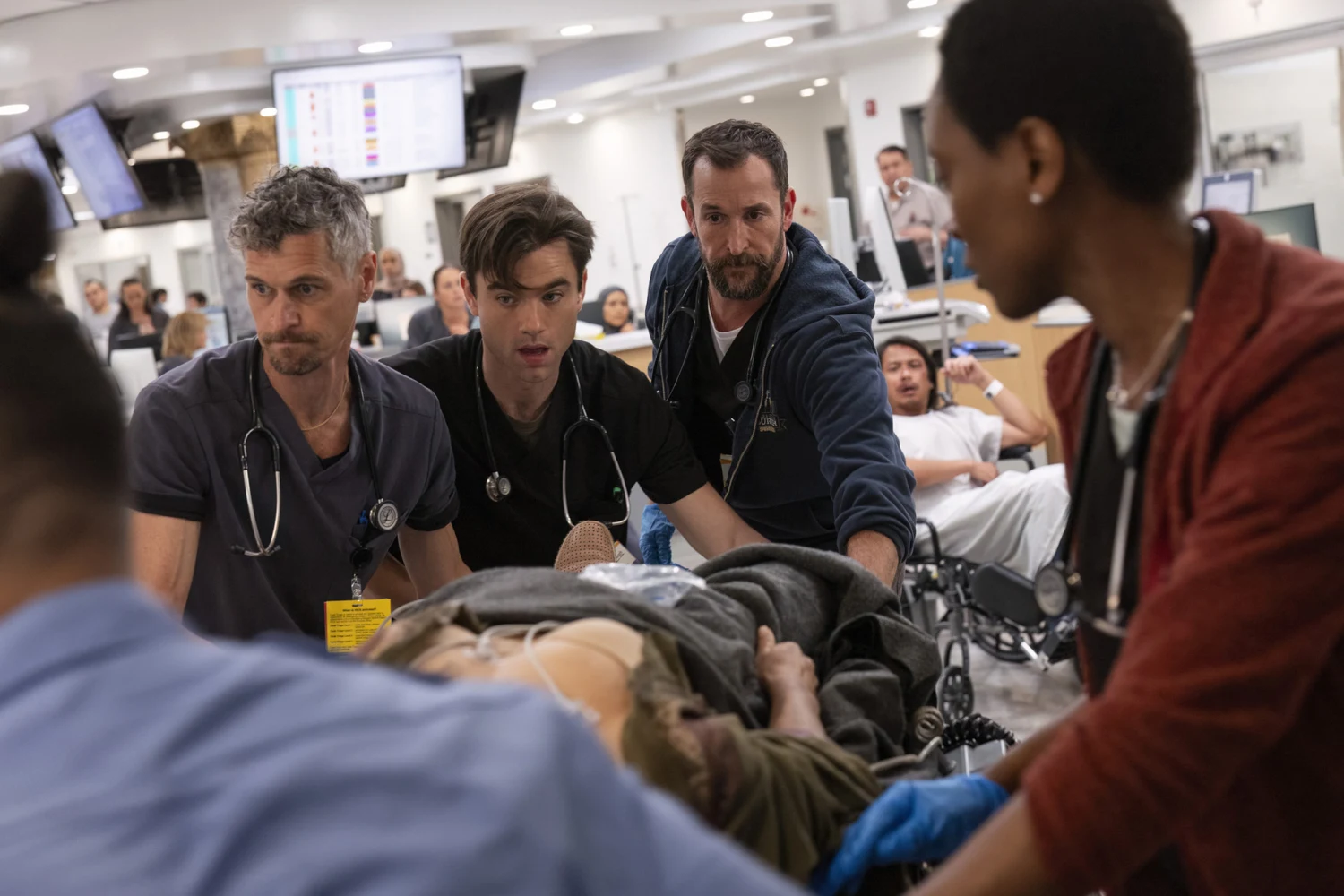
An appeals court ruled Wednesday that “ER” is similar enough to HBO’s “The Pitt” for Michael Crichton’s estate to continue its lawsuit against the Emmy Award-winning show. Sherri Crichton controls the estate of her husband, one of the creators of “ER” who died in 2008. She filed a lawsuit against Warner Bros. Television and the creators of “The Pitt” in August 2024, alleging the team behind the new hit TV series was creating an unauthorized reboot of her husband’s show. According to Wednesday’s filing, Crichton and Warner Bros. entered into an agreement in 1994 that the studio would not make any new material derivative of “ER” without his — or his estate’s — permission. In the initial lawsuit, Sherri Crichton said she could not reach an agreement with “The Pitt” showrunners to create a reboot of “ER,” which aired on NBC from 1994 to 2009 and earned nearly two dozen Emmy Awards. She alleged in the suit that Warner Bros. began developing the reboot in 2020 without her knowledge and that she didn’t learn of the plans until 2022. In 2022, she said she engaged in negotiations with the studio, but that the terms were revoked, halting those negotiations. In the lawsuit, she alleged they should also have halted production of “The Pitt.” Warner Bros. filed a motion to dismiss Sherri Crichton’s case in August 2025, citing California’s anti-SLAPP law, which aims to protect citizens from lawsuits that target free speech. A judge denied the motion, allowing the suit to move forward. The defendants — who also include star Noah Wyle, “The Pitt” executive producer John Wells and showrunner Scott Gemmill — then took it to a California appeals court, which again sided with Sherri Crichton on Wednesday. “There are clear and numerous similarities between ‘The Pitt’ and ‘ER’; where those similarities lie, on a ladder of abstraction protecting only the more specific expressions, is a matter of ‘degree,’” the three-judge panel wrote. “Making favorable inferences in Roadrunner’s favor, as we must, we find the details here suffice for a prima facie case.” Both “The Pitt” and “ER” follow the personal and professional lives of a close-knit group of fictionalized doctors and take place in an emergency room. Wyle, an Emmy Award winner, also stars in both series. Wyle, Wells and Gemmill were all involved in “ER” and now serve as part of the team behind “The Pitt.” The shows’ main difference, however, is that “ER” is set in Chicago, while “The Pitt” moved east to Pittsburgh. Sherri Crichton did not immediately answer a request for comment. Warner Bros., Wyle, Wells and Gemmill also did not immediately answer requests for comment. From the outset, it was rumored that “The Pitt” would be a remake of the beloved “ER.” But before it aired in January 2025, the show’s creators made it clear that the new hospital-based drama would take its own path. Its first two seasons have already racked up 11 Emmy Awards, including two best actor wins for Wyle. Wyle, who also executive produces the show, recently spoke about his team’s decision to pivot from the initial idea to reboot “ER.” “We were going to start down an ‘ER’ reboot road that didn’t come to pass, but we sort of set a table of expectation for a medical show from us that we were then allowed to really fast-track the development process through because of that vacuum that we’d created from the near-miss,” Wyle told Amy Poehler on the Oct. 27 episode of her podcast, “Good Hang.” He continued: “And so, this just happened so quickly that it seemed like there was a larger force behind it, and we just needed to stay on the surfboard and let it push us.” Poehler then asked whether anything from those early stages of production made it into what eventually became “The Pitt.” “Well, I’m sorry to say for all the ‘ER’ fans, but once we uncoupled ourselves from that IP, it suddenly liberated the storytelling,” Wyle said. “It wasn’t about, ‘Who do we see again and what have they been up to?’ It’s, ‘What are the issues of the day and what’s the most cogent way to put them across?’” he added. “So it, in a lot of ways, it kind of liberated the narrative for us and allowed us to reframe and kind of modernize it and not have to pay any homage to traveled road.”
Topics in this story
Gathered from external sources. Rights to this text belong to whoever originally published it.