Stella Lefty has an inescapable hit song and a billionaire dad. Music's nepo baby boom is getting harder to ignore
Stella Lefty says she understands the chatter about her father's wealth. As more nepo babies climb the charts, that conversation is only getting louder.
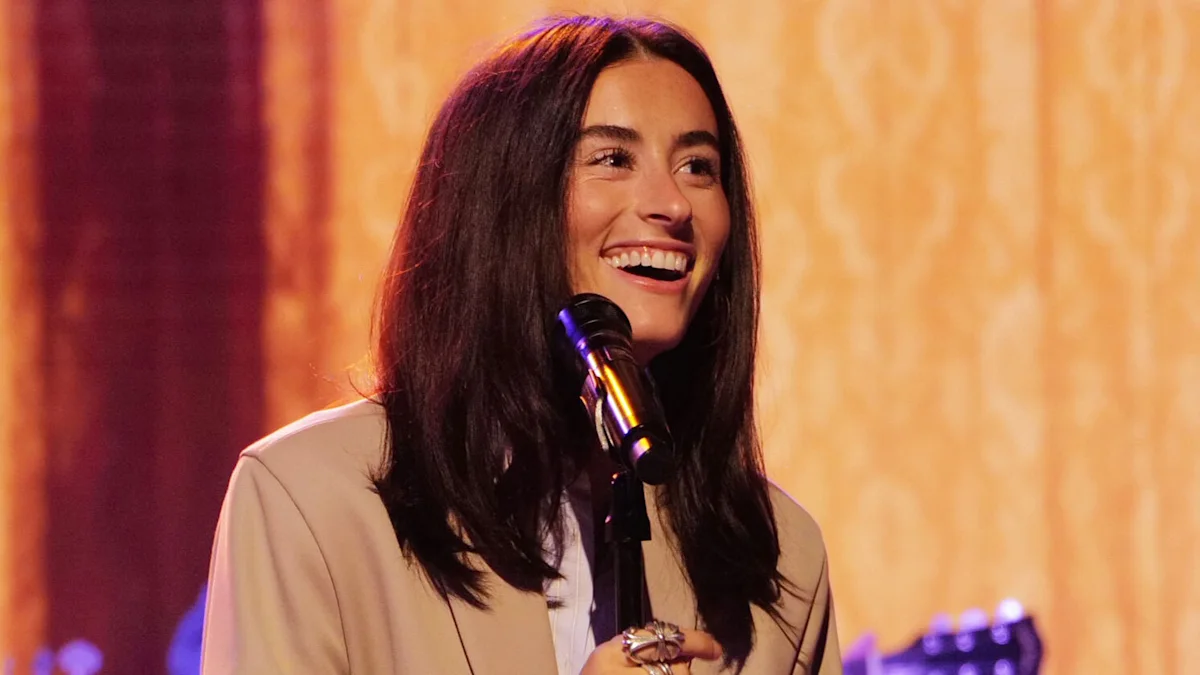
Maybe you've heard it on the radio recently or come by it by way of your Spotify algorithm: A raspy pop-country song about taking a train back to Boston and a budding relationship, from an emerging artist who seemed to come out of nowhere earlier this year. Her name is Stella Lefty.
Her monthly listeners on Spotify nearly doubled to 15 million in May, when her breakout song "Boston" made the cover of the platform's Hot Country playlist. In addition to the single climbing the Hot 100, the 24-year-old Chicago native just nabbed two VMA nominations and released a new album, Long Way Home , on Aug. 21 — altogether a massive summer for someone who wasn't signed by a major label until earlier this year.
But there's a fact about Lefty that I can't stop thinking about every time I hear her song, which is often: She's the daughter of a billionaire.
Lefty's dad is Eric Lefkofsky, the founder of Groupon and Tempus AI. He's worth an estimated $4.8 billion, per Forbes , which makes him one of the 1,000 richest people in the world. Does that make her rise — and the rise of the many other nepo babies breaking out in music right now — any less exciting?
A scroll through the charts at the moment will yield you a list of artists with successful parents, varying from those who simply have some industry connections to those who are undeniable household names. There's Audrey Hobert, the star of NPR's latest Tiny Desk whose dad is a writer and producer known for Scrubs and The Middle ; Malcolm Todd, Hobert's brother who just scored a Gap ad and a VMA nod; Gracie Abrams, daughter of blockbuster writer-director JJ Abrams; and VMA nominee Magnus Ferrell , son of comedian Will Ferrell. Being related to someone well-connected in the industry is hot right now.
"If a family connection gets you a meeting, I can't call that a scandal. It's natural for a parent to open any door they can for their child. Most of us would do the same," Jay Siegan, a longtime music executive, tells Yahoo.
It's the most surefire way to skip past the pesky "unknown" phase of stardom and get access to resources that artists with day jobs don't have. But Siegan notes that "the door only stays open once. The audience is the great equalizer, and either someone resonates, or they don't."
The boom in stars with famous lineage isn't entirely new. What's different now, compared to the past when nepo artists like Ziggy Marley, Hank Williams Jr. and Rosanne Cash were developing their own careers with a boost from their parents' coattails, is just how much we're talking about it. Nepotism has become an obsession in the 2020s, in a world where people are constantly suspicious that there are unseen influences everywhere. It's hard not to resent the people who seem to have been born with a leg up in life .
Multiple music industry publicists tell Yahoo that it's best to be upfront about nepotism status from the beginning, because it'll inevitably become something the public fixates on. Maxwell James, who works in entertainment publicity, says he'd recommend "acknowledging the advantage without making it the center of the artist's identity."
No matter how hard you try to downplay it, audiences can tell when artists have benefitted from access, resources, relationships and early exposure, James explains. They'll need to prove themselves with their talent, showing that they belong at the upper echelon just as much as someone who's gifted but didn't get a head start.
In a recent interview with Vanity Fair, Lefty says it's obvious to her that there's going to be chatter about her father's wealth, "which I totally understand." "Me and my dad have spoken about this a lot since I even started music. He was like, 'The truth will set you free,'" she says. The interview didn't reveal any more of her thoughts on how her parentage affected her career, though.
There's really no denying that nepo babies have opportunities that other artists don't. For instance, Magnus Ferrell got an instant boost in fame when his dad played a snippet of his song on Michelle Obama's podcast this summer, though he wasn't necessarily an overnight success. Many of them also had parents rich enough that they never had to approach "starving artist" territory. Not needing a day job while you plug away at your craft is a massive luxury.
James says the worst thing a nepo baby can do is appear defensive about whether they "deserve" their success. Gracie Abrams was praised for acknowledging in an interview with the New York Times' Popcast that she has "privilege" and a "safety net" afforded to her by her parents' status in Hollywood — and their wealth. "That allowed me the ability to experiment and to concentrate and I had the gift of time to dedicate to doing this thing I loved. I wasn't growing up afraid financially, and that's the biggest deal," she says.
That may elide, nevertheless, what really matters: connections. Those contacts could be vaguely in entertainment, where a meeting can go a long way, or it could be specifically within the opaque music industry. There's a difference between Billie Eilish's parents , who were working actors, and Clairo's dad, who was a high-level marketing exec with label connections. That sparked debate about which artists might be industry plants , a common concern among music fans worried that an up-and-coming star might be "planted" on the charts by record labels, rendering them inauthentic and unworthy of their success.
Nepotism doesn't guarantee success, of course. Plenty of celebrity and industry children try and fail, while random singers take off on TikTok all the time. Though let's be honest — any breakout success on an algorithm-driven platform, be it a streaming service or a social media site, can always have paid promotion behind it. As I type this, there's a massive ad for Lefty's album dominating my Spotify homepage.
Nickie Robinson, a music marketer, notes that a lot of these nepo babies honed their talent in the first place because they could afford tutoring and lessons from a young age. She sees it as a gift, but one that should be acknowledged by the beneficiary.
"Remember, labels only care about numbers, and most nepo babies have a substantial following from their parents and associated proximity bias. Why not leverage it?" she says, admitting they sometimes get on her nerves when she notices how plainly their parents can open doors for them. But, just like everyone else, they have the option to ignore the haters and just keep working.
"In this industry, you cannot care what people think. They will always have something to say, regardless," she says. Might as well let them.
Topics in this story
Gathered from external sources. Rights to this text belong to whoever originally published it.