Brands lean into human creativity as handcrafted art becomes more of a luxury in the age of AI
Artists say brands are embracing traditional art forms and making a point to show off the human labor behind their campaigns.
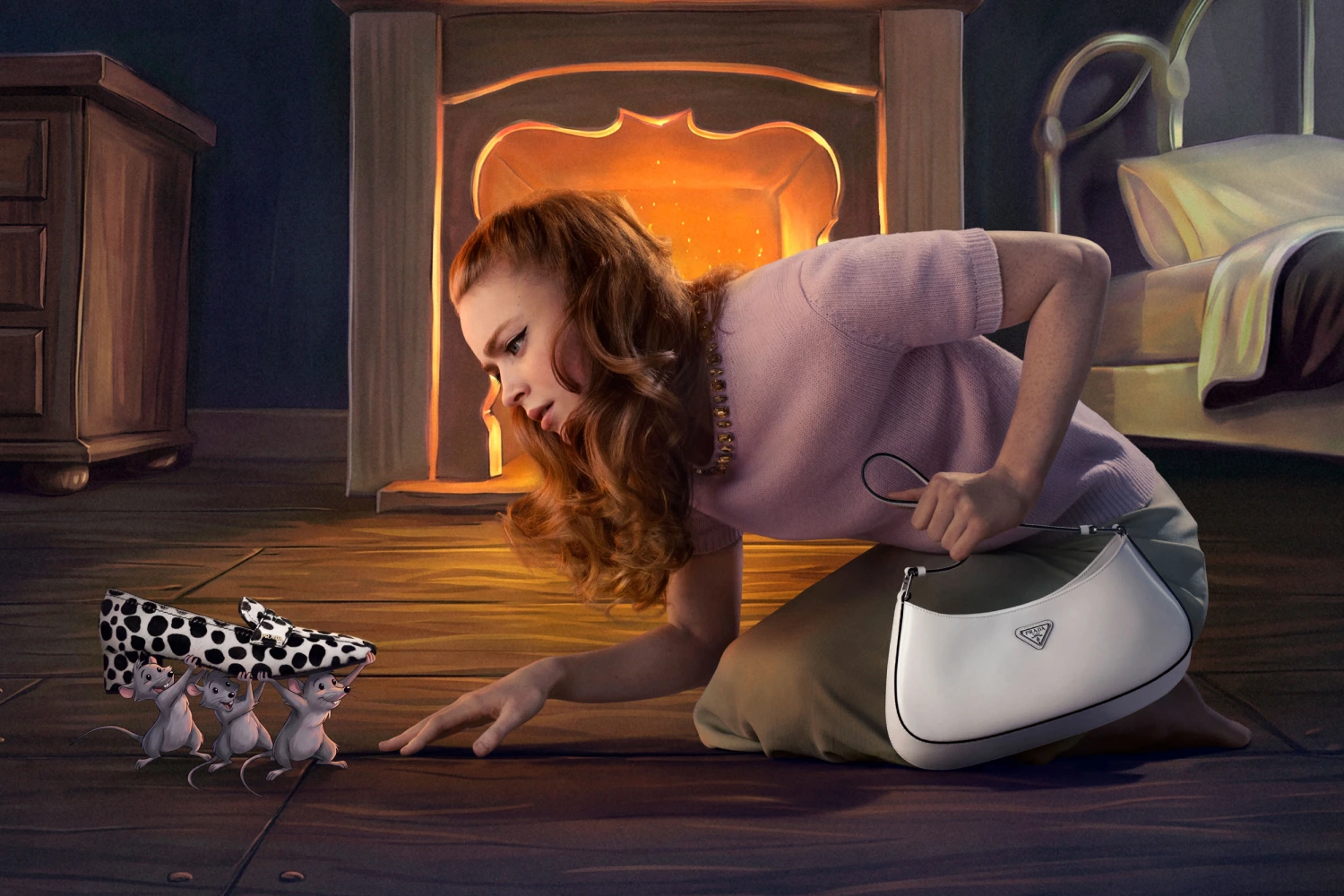
The sound of pencil putting lines to paper. The geometric shapes of a cartoon animal before it comes to life on the page. Those were the opening shots of a teaser for Prada’s 2026 holiday campaign, which introduced a series of films made “using the anachronistic craft of hand-drawn animation,” working with longtime Disney animator John Pomeroy. “I learned my craft with pencil and paper, old-school analog drawing with pencil and paper,” Pomeroy, who left Disney in 2003, says in the teaser video. It’s that kind of skill that some artists say has become a greater asset than ever. In the age of widespread and accessible AI, artists say they’ve noticed more brands leaning into handcrafted art as a selling point. In recent weeks, the luxury fashion houses Prada and Hermès touted their human-made art projects in social media campaigns — even tagging the artists behind the work to showcase their authenticity. Alina Golovlova, a stop-motion artist in Prague, said that recently, she has felt that her work is actually “appreciated more than in previous years” as brands try to separate themselves from the AI content flooding the internet. “In previous years, I felt like I was just some hired content creator. No one really cared to tag me or make a [collaborative post],” Golovlova said. “And I think now for brands, it becomes valuable to bring the artists together with the brand to show that they are working with real people.” Golovlova directed a short film for Anthropologie last month, featuring a needle-felted bunny, embroidered stars and stop-motion movements — all designed and put together entirely by hand by a team of artists. And the choice proved to be an effective marketing strategy, as support rolled in from commenters online. “Beautiful! Love the creativity and seeing something human made and NOT AI 👏❤️,” a user wrote on Anthropologie’s post, accruing thousands of likes. “AI = Broke, cheap, lazy,” another user posted in response to Prada’s campaign. “Art from human hands = High-end, luxurious, high quality.” Animator Jon Densk, who worked on the hand-drawn Prada campaign under Pomeroy, said that while he suspects AI still has a way to go before it can be used successfully in animation, he has seen signs of it in commercials. Coca-Cola, he said, comes to mind as a major company that has leaned into AI for its advertisements. “After the first one I saw two years ago, I was like, I’m not buying Coke until they stop it. I still haven’t bought a Coke in two years,” Densk said. “So having a stance against [AI], I think, is a smart move for brands.” Coca-Cola’s use of AI stirred some controversy, as attitudes about the technology remain divided over labor and environmental concerns, as well as fatigue over the swath of mass-produced content commonly described as “AI slop.” Still, Densk said he wasn’t expecting the explosion of support that Prada’s hand-drawn campaign would attract online. “I think people that see people like us who are still drawing things, and even people working in CG animation, as true craftsmen, because that stuff really does take hours and hours and hours of practicing to get to a proficient level,” Densk said. He said it’s nice to see a resurgence of appreciation for that craft, saying the response to Pomeroy’s project with Prada shows that a company is still rewarded when it puts money and time into individual human artists. French woodworker Thibaut Malet said he has also noticed more and more brands commissioning such work. Last month, Hermès approached him to create a miniature wooden reproduction of the flagship store at its historic Paris location. “During our initial discussions,” Malet wrote, “Hermès explained its approach to collaborating with artists and its commitment to defending craftsmanship, traditional know-how and métiers d’art in response to the growing influence of artificial intelligence.” His creation was showcased on the company’s social media pages, drawing support from many online who explicitly commented about their opposition to AI. Malet said that craftsmanship has always been associated with luxury and quality but that the arrival of AI will make the distinction between human-made creations and artificial production even more important as brands try to distinguish themselves. Yet some, like Densk, find it peculiar that handmade art could grow to be viewed as a “luxury.” “The funny thing about art is it’s so intrinsically human to do that. I mean, my daughter learned how to hold a pencil and make a line before she learned how to walk,” he said. “It’s something that you can do at any point in your life, whether it’s a little stick figure or a Monet painting.”
Topics in this story
Gathered from external sources. Rights to this text belong to whoever originally published it.