Make Every Data Center a Power Hub
America is debating data centers as though technological leadership and affordable electricity are competing goals. That framing misses the opportunity.
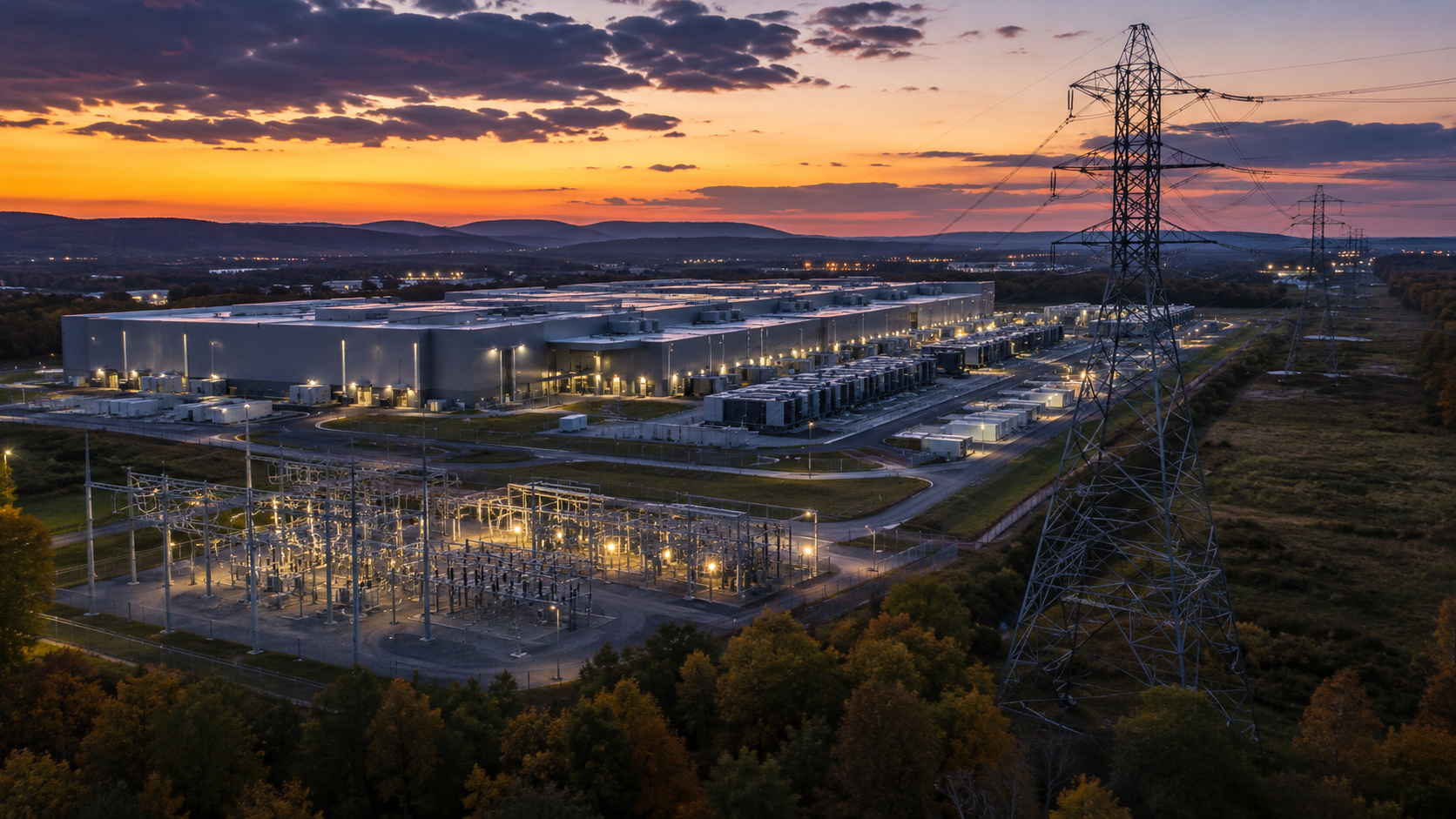
America is debating data centers as though technological leadership and affordable electricity are competing goals. That framing misses the opportunity. Hyperscale campuses should enter the grid as integrated energy projects that add generation, storage, flexibility, and resilience, not merely as large loads.An April 2026 Pew Research Center analysis found more than 3,000 operating U.S. data centers and more than 1,500 in development, with 67% of planned facilities in rural communities. Lawrence Berkeley National Laboratory projects data centers could consume 11.8% of U.S. electricity by 2030. Goldman Sachs projects demand could rise from 31 GW in 2025 to 66 GW in 2027.
Those figures demand a legal and regulatory model that rewards projects capable of solving the problems they create. Hyperscale facilities seeking expedited approval should bring enough new supply and flexibility to serve contracted demand, pay the infrastructure costs they cause, and provide enforceable grid support during emergencies.A 2025 executive order accelerated permitting for qualifying artificial intelligence (AI) data centers and supporting power infrastructure. The White House's 2026 Ratepayer Protection Pledge called on hyperscalers to bring new generation, pay grid costs, and protect existing customers.In October 2025, the Energy Secretary used Section 403 of the Department of Energy Organization Act to ask the Federal Energy Regulatory Commission (FERC) to consider reforms for loads generally exceeding 20 MW in Docket No. RM26-4-000 . FERC declined to impose one national process, instead opening separate Federal Power Act Section 206 proceedings in June 2026 for all six regional transmission organizations (RTOs) and independent system operators (ISOs), Docket Nos. EL26-67-000 through EL26-72-000 .The orders question whether existing tariffs are just and reasonable, and identify five reform areas: study procedures, cost-shifting protections, co-location and behind-the-meter generation, flexible transmission service, and generation serving nearby loads.
Texas has responded by requiring large-load customers to shoulder infrastructure costs and by developing curtailment and co-location rules under Senate Bill 6 . New York has paused certain hyperscale permits while it develops ratepayer, grid, water, and community protections. Both approaches point toward the same durable result: a power-positive approval pathway that converts legitimate public concerns into measurable design and operating obligations.Other states are building tariffs around that principle. Wisconsin extended its very-large-customer tariff to a 15-year minimum, lowered eligibility to 100 MW, and strengthened cost-shift protections. Long commitments, minimum-demand payments, security requirements, and exit charges are now central project economics.That makes the interconnection agreement co-equal with the engineering, procurement, and construction contract. Owners, utilities, developers, lenders, and contractors should align both documents before notice to proceed. The contract suite should identify who bears study-delay costs, network-upgrade overruns, tariff changes, security postings, curtailment losses, and schedule impacts if the approved service model changes.Change-in-law clauses should expressly address FERC orders, RTO or ISO tariff revisions, new state rate classes, revised environmental requirements, and changes to eligibility for incentives. Force-majeure provisions should distinguish physical grid emergencies from foreseeable regulatory developments, and state whether mandatory curtailment excuses performance, extends time, or triggers compensation. Delay provisions should account for equipment supply issues.Co-location agreements should define access to shared substations and fuel systems, dispatch priority, outage coordination, islanding capability, backup-generation obligations, metering boundaries, cybersecurity responsibilities, and remedies when one facility impairs the other. Where generation is dedicated to a campus but may be called upon during emergencies, contracts must specify who controls dispatch, how fuel and operating costs are reimbursed, and which party carries availability risk.Construction documents should address labor availability, wage escalation, supply-chain disruption, lien waivers, quality control, and consistent onboarding across large contractor networks. A standardized contract suite can reduce disputes, but only if it flows the interconnection, tariff, environmental, and community obligations down to every relevant subcontractor and supplier. FERC preserved state authority over generation siting and retail rates. States should use that authority to align definitions for advanced nuclear, qualifying renewable natural gas, clean hydrogen, thermal energy networks, storage, and other zero- and low-emission resources. Greater alignment would broaden viable project configurations and improve access to federal financing, incentives, and infrastructure funding.RTOs and ISOs should simultaneously create expedited tracks that study the load, dedicated generation, storage, and grid services as one project. The application should establish site control, readiness, demand, water use, milestones, community benefits, emergency capabilities, and responsibility for every major cost.The American Edge Project estimates nearly $3 trillion in U.S. AI infrastructure investment through 2030, while Federal Reserve Chair Kevin Warsh has tied accelerating business investment to data-center construction and AI equipment. Projects will reach operation faster when interconnection, cost allocation, regulatory change, construction risk, and operating control are resolved during procurement rather than litigated after construction begins.America should stop processing data centers as load applications and start contracting for them as power infrastructure. Turn demand into generation, convert objections into design requirements, protect ratepayers in the tariff and the contract, and make every data center a power hub. — David J. Pfeffer is chair of the Construction and Development Group at Tarter Krinsky & Drogin (TKD) LLP . Washington, D.C.-based TKD counsel William Mastrogiannis and law clerk Adam Resheff contributed to this report.
Topics in this story
Gathered from external sources. Rights to this text belong to whoever originally published it.