EVolve conclave: Policymakers, industry discuss what it will take to scale electric mobility
NEW DELHI: A policy conclave on electric mobility on Wednesday brought together government officials, regulators, industry representatives and researchers
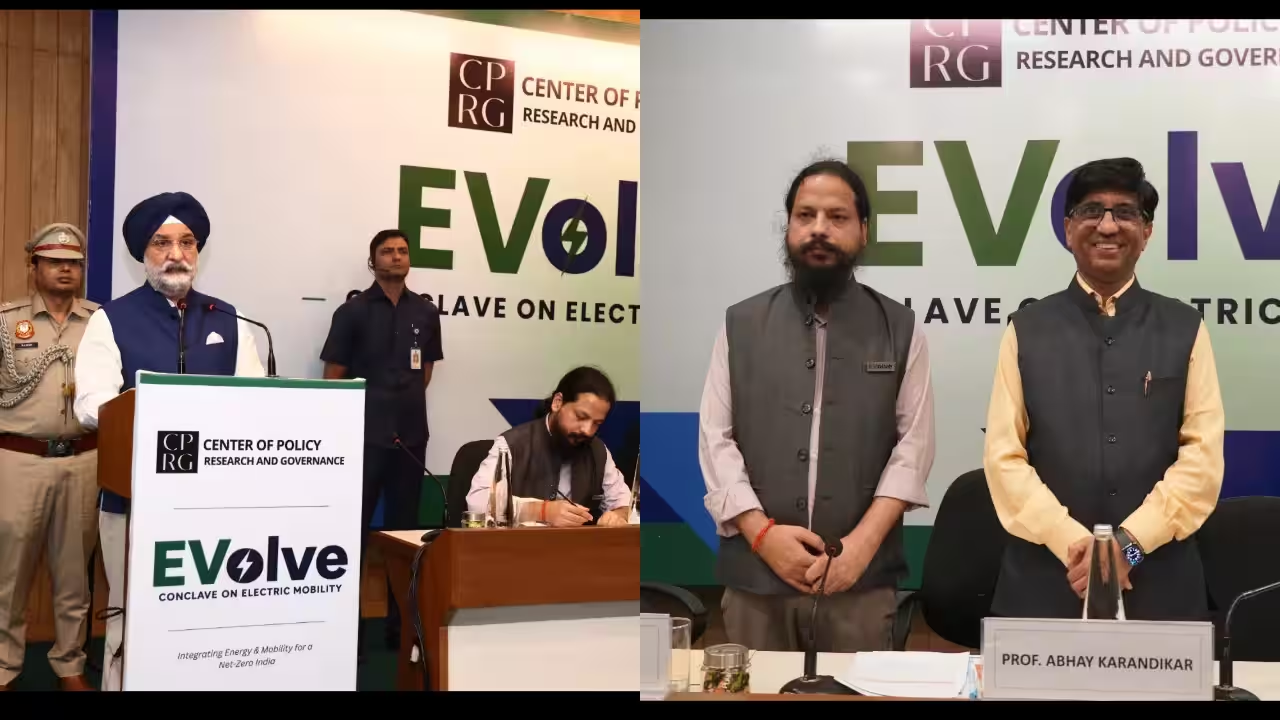
NEW DELHI: A policy conclave on electric mobility on Wednesday brought together government officials, regulators, industry representatives and researchers to discuss financing, regulation, charging infrastructure and domestic manufacturing as India seeks to scale up the adoption of electric vehicles.The Center of Policy Research and Governance (CPRG) organised the inaugural “EVolve: Conclave on Electric Mobility” at the India Habitat Centre in New Delhi, with discussions focusing on the economic and policy requirements for the transition to electric mobility.Delhi lieutenant governor Taranjit Singh Sandhu, who was the chief guest, said the transition should be measured not only by the number of electric vehicles on the road but also by whether citizens have access to cleaner and more efficient mobility.“Clean mobility powered by clean energy is the most powerful tool for addressing climate change,” Sandhu said. He added that the transition needed to be “citizen centric”, with convenient charging infrastructure playing a key role.The conclave also discussed the role of investment and startups in expanding the electric mobility ecosystem. Berjis Desai, member of the National Commission for Minorities and guest of honour at the event, said the transition required long-term investment across different stages of business growth.“Startups are central to driving innovation in electric mobility, and they need partners, not just capital,” Desai said.The first session focused on the economic strategy for electric mobility, including the policy and economic considerations behind India's green transition and the potential of electric mobility to improve air quality and reduce greenhouse gas emissions.A separate session examined green finance and partnerships, with participants discussing the need to mobilise capital across the wider EV ecosystem. The conclave also featured discussions on charging and battery infrastructure, domestic manufacturing capabilities, grid requirements and long-term energy and mobility security.Additional secretary in the ministry of heavy industries Hanif Qureshi and additional secretary (transport) in the ministry of road transport and highways Mahmood Ahmed highlighted the need for an ecosystem that can support electric mobility while keeping India's growth sustainable and reducing emissions from transport.The final thematic session focused on the challenges and opportunities associated with the transition, including the need for a more resilient charging network, stronger domestic capabilities and a cleaner and more flexible electricity grid.NITI Aayog member Abhay Karandikar said the future framework for electric mobility should rest on three areas: business scale and economics, technology and research and development, and technological sovereignty.“The way forward is to create a holistic e-mobility framework that rests on three pillars: business scale and economics, technology and R&D, and technological sovereignty,” Karandikar said.The conclave was organised by CPRG as a platform for discussions between policymakers, researchers and industry on the interaction between India's transport and energy systems.You use AI every day. Now get your AI Quotient. Take the AIQ test.
Topics in this story
Gathered from external sources. Rights to this text belong to whoever originally published it.