Is Western Digital Stock Underperforming the Nasdaq?
Western Digital’s recent dip contrasts with its broader gains, while analyst confidence continues to lend support to the bigger picture.
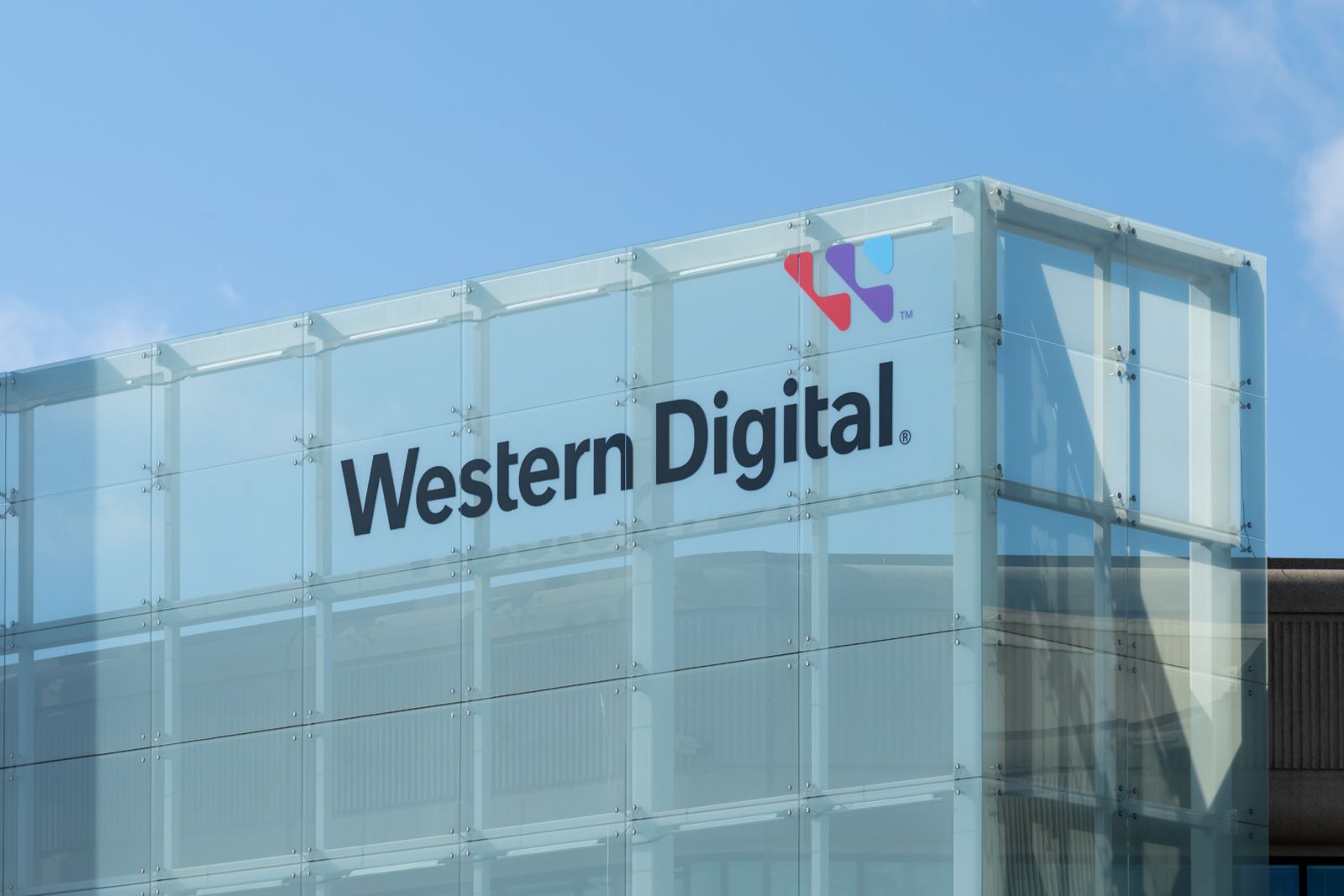
Western Digital Corporation (WDC) is a data storage technology company that develops, manufactures, and sells hard disk drive (HDD)-based storage products and solutions. Its portfolio spans internal and data-center drives, external and portable storage, network-attached storage (NAS) devices, and related accessories.
The San Jose, California-based firm also collaborates on quantum error-correction technology to advance reliable quantum computing. Such a substantial operating footprint has helped the firm reach a market cap of nearly $147.2 billion, placing it above the $10 billion threshold used to define large-cap stocks.
Despite that scale, Western Digital's recent stock performance has been considerably weaker. The shares are currently trading 48.5% below their 52-week high of $799.87, which was reached in June. Also, over the past three months, WDC stock has fallen roughly 37%, while the Nasdaq Composite ($NASX) declined only 2.6% during the period.
The picture changes dramatically when the time frame is extended. Over the past 52 weeks, WDC stock has surged 302.3%, compared with an approximately 16.3% gain for the index. The year-to-date (YTD) comparison is similarly striking, as WDC stock is up 139.1%, while the benchmark has gained roughly 11.8% in the same stretch.
From a technical perspective, Western Digital has maintained a position above its 200-day moving average of $381.88 since October 2025. The stock also traded mostly above its 50-day moving average from October 2025 onward, before slipping below it in July. Since then, WDC stock has remained below its 50-day moving average of $489.27.
The HDD maker's long-term rally reflects stronger demand for data storage, particularly from cloud infrastructure and artificial intelligence (AI) workloads. Its HDD business has benefited from rising demand for high-capacity drives, while the separation of its flash business allowed the company to focus on its core storage operations and improve capital allocation.
Topics in this story
Gathered from external sources. Rights to this text belong to whoever originally published it.