Tier-2 cities outpace metros in digital credit use, trust remains hurdle: Report
Tier-2 cities lead India’s digital credit use, with 60% using BNPL vs 45% in metros; report flags trust, transparency and settlement delays as key hurdles.
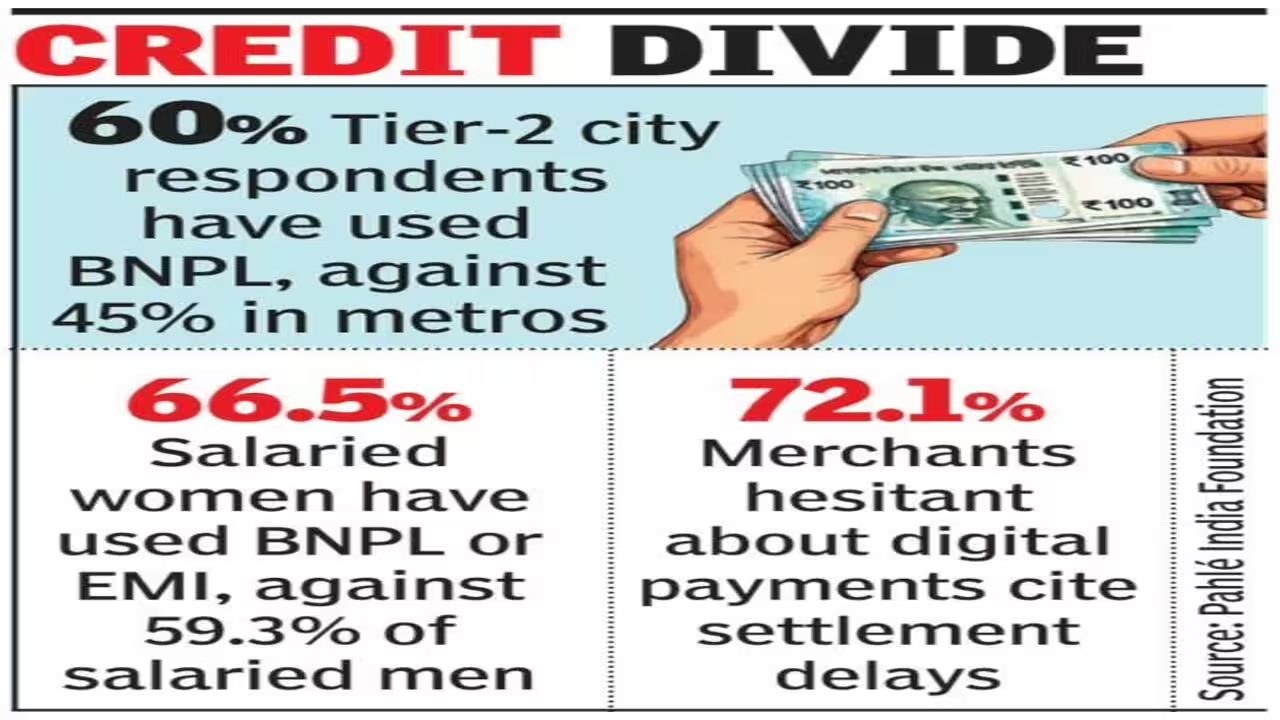
BENGALURU: India’s smaller cities are emerging as bigger users of digital credit than metros, even as consumers remain far more comfortable using payment apps to make payments than to borrow money, a new study has found.About 60% of respondents in Tier-2 cities have used Buy Now, Pay Later (BNPL) services, compared with 45% in metros and 52% in Tier-3 cities. Yet, 64% of urban respondents have never formally applied for digital credit through an app, pointing to a gap between the growing use of checkout financing and formal digital borrowing.The findings are part of the third edition of How Urban India Pays, a study by Pahlé India Foundation in partnership with Amazon Pay. The study surveyed 5,149 consumers across 100 cities and 1,054 merchants across 20 states.Rajiv Kumar, chairman of Pahlé India Foundation, attributed the higher adoption in smaller cities to unmet demand for formal credit. Traditional borrowing channels remain harder to access in these markets, particularly for consumers who lack the documentation required by banks, he said.“There is a demand for credit, unfulfilled demand for credit which digital credit is actually filling in,” Kumar told TOI.Vikas Bansal, CEO of Amazon Pay India, said rising aspirations among younger consumers were also driving borrowing in smaller cities. Digital platforms, he said, were reaching people who had previously had limited access to credit.Another finding was the higher adoption among salaried women. About 66.5% of salaried women surveyed had used BNPL or EMI products, compared with 59.3% of salaried men. Bansal described this as an encouraging sign of credit reaching segments that have historically been underserved.The study also challenged the perception that digital borrowing is largely driven by discretionary consumption. Around 27% of respondents said they had used digital credit to purchase work equipment or tools, 24% to start or expand a business or side income, and 22% for education or skilling.However, trust continues to constrain adoption. While awareness of digital credit products averaged 88%, usage averaged just 31% across the five products studied. Consumers rated their payment apps 3.98 out of five for making payments, but only 3.10 for borrowing.Bansal said the industry needed to simplify lending terms, improve transparency and strengthen consumer protection. “What I see is what I get,” he said, describing the assurance borrowers should have about interest rates, repayment conditions and other charges.He said the industry must also improve grievance redressal so that consumers become as comfortable borrowing digitally as they are making payments.The report also examined the merchant side of digital payments. While 80.6% of surveyed merchants expressed openness to digital payments, 72.1% of those reporting hesitation cited settlement delays as a concern.He also described the ongoing festive season as “historic” for Amazon Pay, saying Pay Later users and EMI transactions had doubled, while credit card activity was six times its usual run rate.You use AI every day. Now get your AI Quotient. Take the AIQ test.
Topics in this story
Gathered from external sources. Rights to this text belong to whoever originally published it.