IRS announces 2027 income tax brackets. Here's what's changing.
Find out how much you'll owe when you file your 2026 and 2027 tax returns, and learn how to pay less by reducing your taxable income.
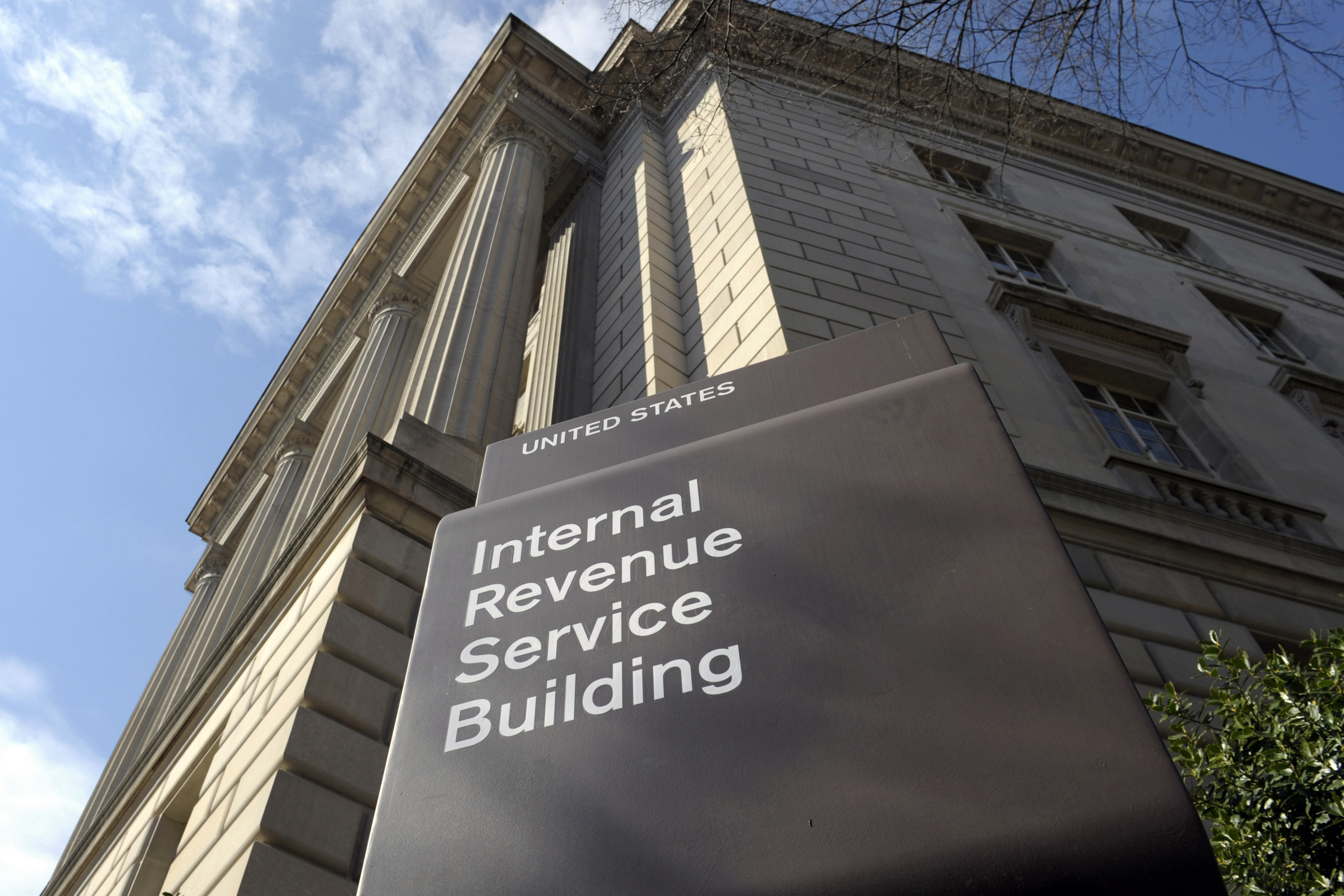
Your tax rate is the percentage of income you pay in taxes, but it isn't the same for all the money you earn. Different portions of the income you earn are taxed at specific rates called tax brackets. Every year, the Internal Revenue Service makes annual adjustments to account for inflation.
The IRS announced the 2027 annual inflation adjustments for taxpayers, including increases across all seven federal tax brackets, as well as increases to the maximum capital gains rate, estate tax exclusions, and the child tax credit.
For 2027, the top tax rate remains 37% for single filers with incomes above $661,375 or $793,650 for married couples filing jointly. The other rates are: 10%, 12%, 22%, 24%, 32%, and 35%.
These income brackets apply to tax returns filed in 2028.
The U.S. has a progressive tax system. That means that as your income rises, the total individual income tax you pay is also supposed to increase.
Because Americans with higher incomes are taxed at a higher rate, some taxpayers worry that getting a pay raise will put them in a higher tax bracket. However, this concern reflects a common misconception about how tax brackets and tax rates work.
There are two basic types of tax rates: marginal and effective .
Marginal tax rate: Your marginal tax rate is the percentage of income tax you owe on the last dollar earned.
Effective tax rate: The percentage of your income that you actually pay to the IRS in taxes.
Your marginal tax rate is different from your effective tax rate because your income is taxed at different rates. Think of tax brackets as a series of buckets. When one bucket reaches the tipping point, the extra amount flows over into the next.
For example, suppose you're a single taxpayer who has taxable income of $40,000 in 2027. As you can see from the federal income tax brackets, your marginal tax rate would be 12%.
Calculating your effective tax rate is a little more complicated. Here's how your income would be taxed according to 2027 brackets:
You'd owe 10% in taxes on the first $12,800 you earned, or $1,280.
You'd owe 12% in taxes on the next 27,200 (40,000-$12,800) you earned, or $3,264.
Your total tax bill would be $4,544. Since your total income is $40,000, your effective tax rate is 11.36%.
Now imagine your boss gives you a $15,000 pay raise, bringing your income to $55,000. Your marginal rate would shoot up to 22%, which sounds like a pretty steep hike. But since different portions of your income are taxed at different rates, the impact isn't so bad. Here's how your tax bill would break down:
You'd owe 12% in taxes on the next $39,225 ($52,025-$12,800) you earned, or about $4,707.
You'd owe 22% in taxes on the remaining $2,975 ($55,000-$52,025) you earned, or about $654.50.
Your total tax liability is $6,641.50, which is an effective tax rate of about 12.08%. Even though you're in a higher tax bracket, your effective tax rate increases only slightly because a small portion of your income is subject to the higher tax rate.
Of course, the example above is a bit oversimplified because federal income taxes aren't the only taxes you pay. Most people pay the first 7.65% of their income toward Social Security and Medicare taxes — or 15.3% if you're self-employed. It also doesn't account for state and local taxes, sales taxes, or property taxes.
But the bottom line is, even if you're pushed into a higher federal tax bracket, it's not a bad thing. You may owe more in taxes, but you'll get even more extra money in your paycheck.
How to get into a lower bracket and reduce your taxes
No one likes paying taxes, so you generally want your taxable income to be as low as possible. Here are some steps you can take to lower your tax liability.
Weigh the standard deduction vs. itemized deductions
When you file your taxes, you'll need to figure out whether the standard deduction or itemized deductions will provide a larger reduction to your taxable income.
The standard deduction is $16,600 for single filers, $33,200 if you're married filing jointly, and $24,925 for heads of households in tax year 2027. If you opt for the standard deduction, you can subtract the full deduction for your tax filing status from your taxable income.
But itemizing could yield greater tax savings if you paid substantial mortgage interest, made large charitable contributions, or had unreimbursed medical expenses exceeding 7.5% of your adjusted gross income.
Consult with a tax professional to determine which option is best for your situation.
You can lower your taxable income if you contribute to a workplace retirement account like a 401(k) or 403(b).
Note that only contributions to pre-tax accounts will reduce your taxes, and withdrawals will be taxed as ordinary income later on. If you contribute to a Roth account, you won't get a tax break for the current year, but you can take tax-free withdrawals in retirement.
A tax deduction lowers your taxable income. Some tax deductions are known as above-the-line deductions, which means you can take them even if you don't itemize your return. Some common above-the-line deductions you can take include:
Traditional IRA contributions: You may be able to deduct contributions to a traditional IRA , though income thresholds apply if you or your spouse are covered by a retirement plan at work. You have until Tax Day to fund an IRA for any given tax year, so funding a traditional IRA before April 15, 2027, could lower your 2026 tax bill.
Student loan interest: If you paid interest on your student loans , you can deduct up to $2,500 of interest payments, though income limits apply.
Health savings account (HSA) contributions: You can deduct HSA contributions even if you don't itemize your return. Your withdrawals will never be taxable either, as long as you use them for qualifying medical expenses. As with IRA contributions, you can make a contribution until Tax Day, so you can still make 2026 HSA contributions up until April 15, 2027.
If you're self-employed, you may be eligible for additional tax deductions for small business owners .
Tax credits are even more valuable than tax deductions because they reduce the amount you owe in taxes dollar-for-dollar. If the credit is refundable, you can get any amount that exceeds your tax liability as a tax refund. Here are some popular tax credits you could qualify for this upcoming tax season:
Child tax credit: For 2026, the child tax credit is worth up to $2,200 per qualifying dependent child under age 17. There's a refundable portion of the credit called the additional child tax credit that's worth up to $1,700. That increases to $2,300, with $1,800 refundable in 2027.
Child and dependent care credit: If you paid someone to care for your child younger than 13 or a qualifying tax dependent who was unable to care for themselves — and you needed to do so because you were working or looking for work — you could qualify for the child and dependent care credit . The credit is worth between 20% and 50% of your expenses, with a cap of $3,000 for one dependent or $6,000 for two or more dependents.
Earned income tax credit: The earned income tax credit (EITC) provides a tax break to lower- and middle-income families who earned money from working during the year. The maximum value for the 2026 tax year ranges from $664 for those with no qualifying children to $8,231 for families with three or more qualifying children.
Education tax credits: If you paid for higher education expenses for yourself or your dependent, you may be able to take one of two education tax credits : the American Opportunity Tax Credit, worth up to $2,500 per qualifying student, or the Lifetime Learning Credit, worth up to $2,000 per income tax return. You can claim both on the same return, but you can only claim one for the same student or expense.
Saver's credit: The saver's credit is available to low- and middle-income workers who save for their retirement in an account like a 401(k) or an IRA. The maximum credit is $1,000 for single filers or $2,000 for married couples filing jointly.
What tax bracket am I in? How to figure it out.
To figure out what tax bracket you're in, you'll need to know your tax filing status and your taxable income . If you have a traditional job, your starting place for calculating your taxable income is to look at Box 1 of your W-2. If you're self-employed, you'll need to look at the Forms 1099-NEC you've received. You may need to account for other sources of taxable income, like interest, capital gains, or Social Security.
Once you know your taxable income, look at the IRS tax bracket charts to see which range your income falls into. Your tax bracket is your marginal tax rate, or the rate you're taxed on the last dollar you earned. But your effective tax rate, or the percentage of income you pay in taxes, will be lower because your income is taxed at different rates that gradually get higher as you earn more.
Note that you won't be able to calculate your tax brackets for 2026 or 2027 until you've received all your tax forms for either year. Employers are required to send W-2 forms by Jan. 31 for the previous year, so you'll have the numbers you need to calculate your 2026 tax bracket around Jan. 31, 2027. But you may be able to use a recent pay stub to estimate your taxable income and tax bracket.
Is taxable income the same as gross income?
No, but gross income is the starting point for determining taxable income . You take your gross income and subtract any above-the-line deductions, like pre-tax retirement contributions and student loan payments, to arrive at your adjusted gross income. Then, you apply either the standard deduction or your itemized deduction, which gives you your taxable income.
To get in a lower tax bracket, contribute as much as you can to tax-advantaged accounts like 401(k)s, IRAs, and HSAs, and look for any tax deductions and credits you may qualify for. Check with your tax preparer about whether you'll save more from itemizing or claiming the standard deduction.
According to TurboTax, the states with the highest taxes in 2025 were California, Hawaii, New York, New Jersey, and Oregon.
Topics in this story
Gathered from external sources. Rights to this text belong to whoever originally published it.