Federal Reserve chief faces pivotal moment in Jackson Hole
Federal Reserve Chair Kevin Warsh is under the microscope as he heads to Jackson Hole for the Wyoming town’s signature economic symposium Friday, where eagle-eyed investors will be searching for any clue about the central bank’s plans for grappling with sticky inflation and an increasingly jittery bond market. Warsh, who has opted for a less-is-more…
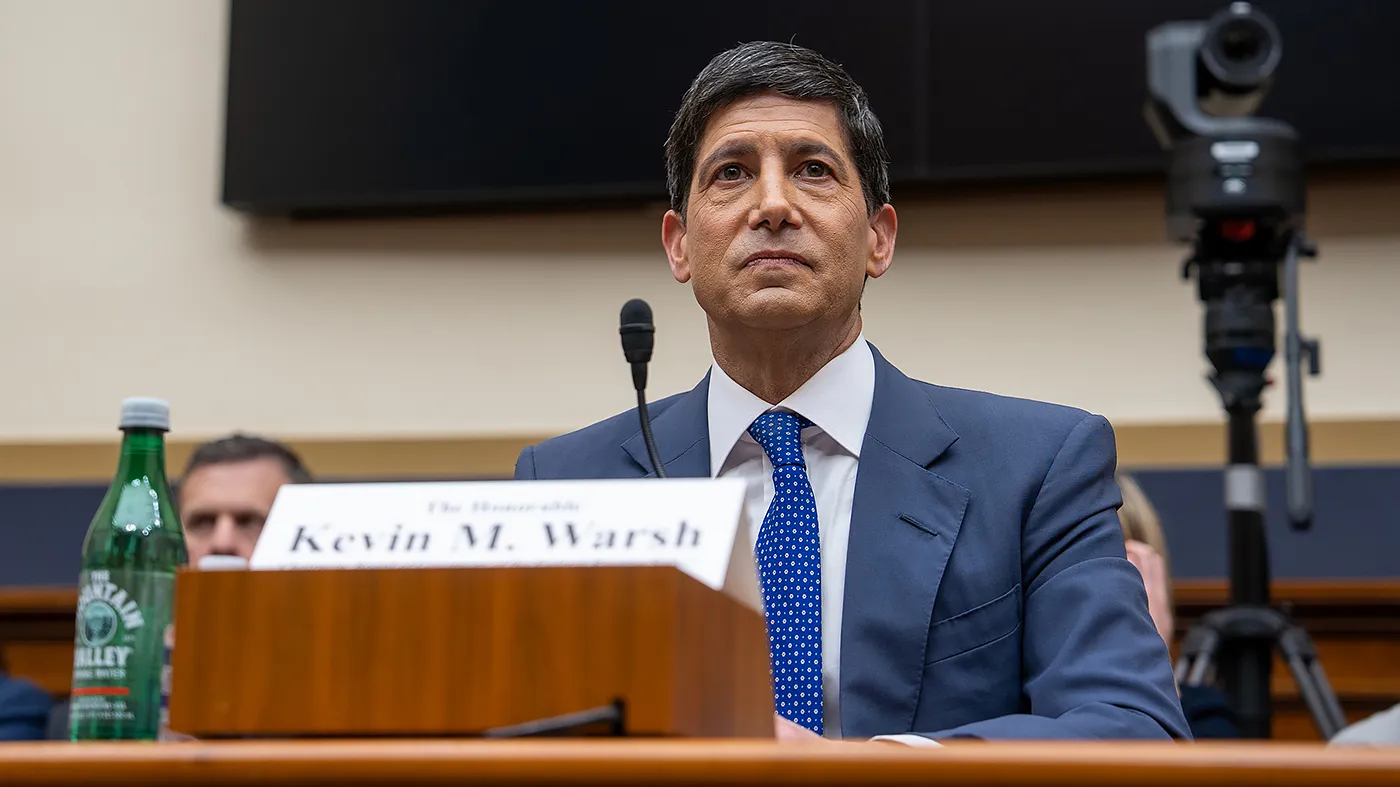
Federal Reserve Chair Kevin Warsh is under the microscope as he heads to Jackson Hole for the Wyoming town’s signature economic symposium Friday, where eagle-eyed investors will be searching for any clue about the central bank’s plans for grappling with sticky inflation and an increasingly jittery bond market.
Warsh, who has opted for a less-is-more approach to communication in his first few months as Fed chair, is set to give remarks at the annual gathering of central bankers Friday morning.
His speech at Jackson Hole, a long-standing tradition for the head of the Fed, comes at a moment when persistent inflation has complicated its calculus on interest rates — even as President Trump keeps up the drumbeat for rate cuts.
“Historically, Jackson Hole has been looked at as this kind of utopic platform where the chairman has the opportunity to announce notable changes or new directives and policy,” Lindsey Piegza, Stifel Financial’s chief economist, told The Hill.
“But now we’re talking about Chair Warsh,” she said. “And he has shied away from offering any forward guidance and limiting Fed communication overall.”
Since taking the reins of the Fed in late May, Warsh has sought to distinguish himself from his predecessor by stemming the flow of commentary coming out of the central bank and moving away from the practice of signaling the Fed’s future moves.
This has left investors, used to a steady diet of communication from prior Fed chiefs, scrambling to find purchase in Warsh’s often sparse remarks and putting a spotlight on Jackson Hole.
“Considering how clear Fed Chairman Kevin Warsh has been about how much he wants to say little, his upcoming speech at the Jackson Hole conference is getting a lot of attention,” Ian Katz, managing director at Capital Alpha Partners, wrote in a note Monday.
“Investors are concerned that lack of clarity from Warsh on Friday could further rattle the bond market,” he continued.
The bond market has recently put Wall Street and Washington on edge. The yield on the 30-year Treasury bond hit a 19-year high last week , surpassing 5.3 percent for the first time since 2007.
It ticked down briefly after Treasury Secretary Scott Bessent announced plans to intervene , doubling the maximum amount of its long-term debt the government can buy back, before spiking again. As of Thursday afternoon, the 30-year yield sat at 5.18 percent.
“It’s not so much that investors expect clear signals from Warsh, but they would like to get some idea of the Fed’s reaction function – how it would respond to changing economic conditions,” Katz added.
Beyond the jitters in the bond market, the Fed is grappling with inflation that remains stubbornly above its target rate of 2 percent.
The central bank’s preferred measure of inflation, the personal consumption expenditures (PCE) price index, remained unchanged in July, according to data from the Bureau of Economic Analysis released Wednesday.
Prices were up 3.7 percent year-over-year — the same annual rate of inflation as June. This represented a dip from May’s three-year high of 4.1 percent.
Inflation eased in June following a brief pause in hostilities between the U.S. and Iran. But the two sides have since resumed strikes, and the Trump administration is now seeking to ratchet up economic pressure on Tehran with its financial “D-Day.”
Meanwhile, the July jobs report came in weaker than expected, with the U.S. economy shedding 23,000 roles. Economic growth, as measured by U.S. gross domestic product (GDP), also slowed to a sluggish 1.5 percent in the second quarter.
“The data is so uneven and so cuspy, if you will, that it would be so beneficial to have a better understanding of what the chairman is viewing and his interpretation of the data,” Piegza said.
As inflation remains above target, Warsh and the Fed have faced growing pressure to raise rates. At July’s meeting, three officials dissented from the central bank’s decision to hold rates steady, voting instead for a quarter-point hike.
The Fed is largely expected to maintain rates at their current level again at September’s meeting, with traders pricing in a 66 percent chance that rates remain unchanged and a 34 percent chance of a hike, according to CME’s FedWatch tool.
While few see lower rates on the horizon, Trump has continued to champion cuts. The president, who frequently feuded with Warsh’s predecessor Jerome Powell over rates, argued last week that they should be lower.
He refrained from placing blame on Warsh, saying his Fed pick is “doing a great job,” and instead took aim at the “political board” with “people put in by Obama, Biden, and me.”
Toomas Laarits, an assistant finance professor at New York University’s Stern School of Business, told The Hill he expects Warsh to continue his approach at Jackson Hole of “emphasizing price stability in the long run and being somewhat vague or meticulously, studiedly vague on the particularities in the near term.”
Piegza similarly suggested the Fed chief is unlikely to offer a “window into what he views as the appropriate pathway for policy, let alone a concrete sort of direction or commitment for rates.”
“It’s not the effective handholding, inside baseball, whatever you want to call it, that investors really need at this point, particularly given the incredible amount of voltatility in the marketplace,” she added.
Topics in this story
Gathered from external sources. Rights to this text belong to whoever originally published it.