AI’s not taking all the jobs. Just ask your local hobby shop, garage band and crafts store
Young people are embracing “grandma hobbies” and flocking to in-person events at a time when artificial intelligence encroaches on many aspects of life.
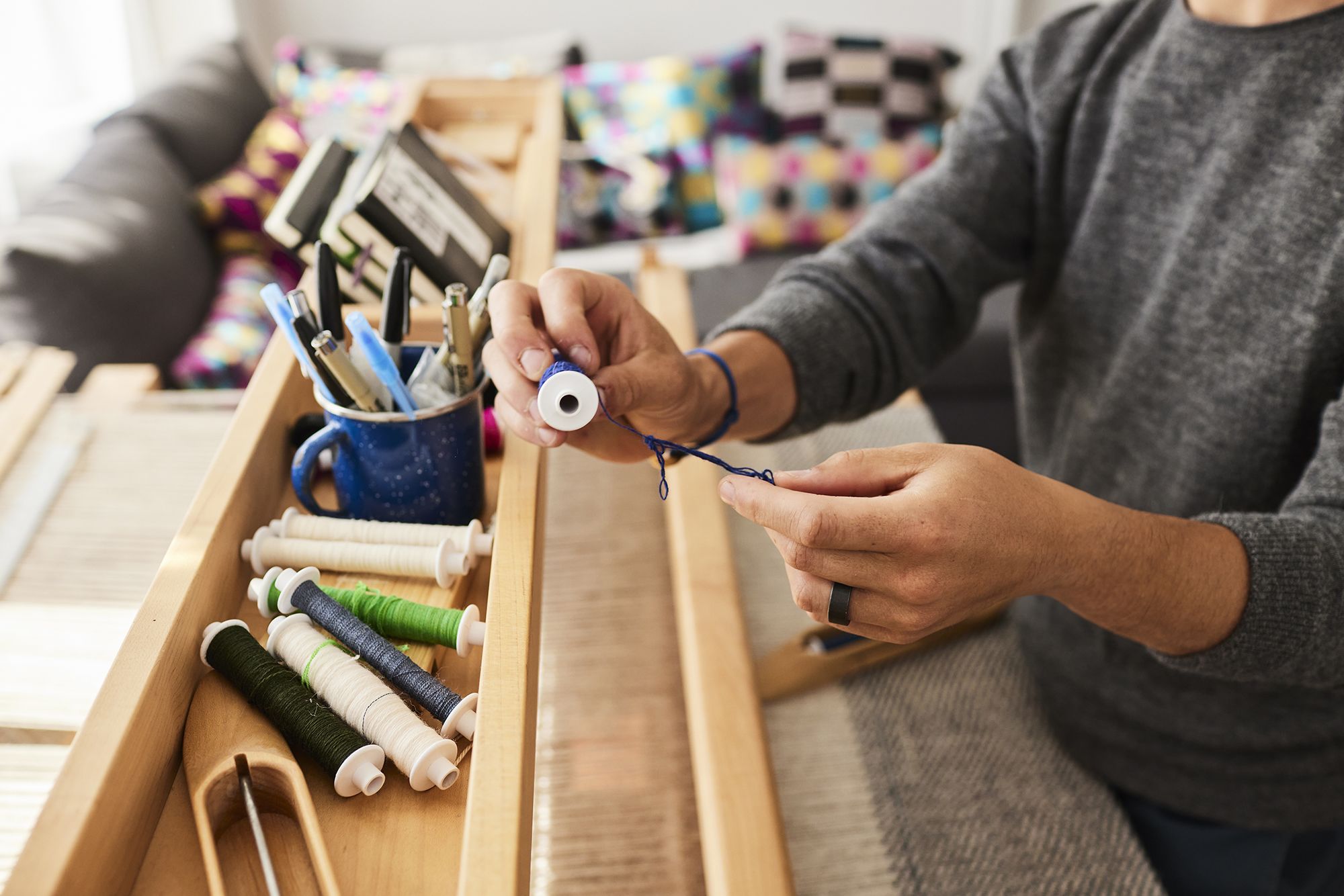
A former auto parts store in Minnesota. A two-car garage in Los Angeles. And two color-bathed shops – one in Seattle, another in Concord, New Hampshire. Welcome to the latest hotbeds of American job creation, fueled by a notable shift in how consumers are spending their discretionary dollars. They are home bases for creative enterprises – a community-focused game store, a rock band, a hand-dyed yarn business and an upstart fabric outfit. And they are brimming with creative energy (and sales) as more consumers seek “little treats,” after years of high inflation have compounded to push bigger purchases – including cars and homes – out of reach. The trend is helped as young people embrace “grandma hobbies” and flock to in-person events at a time when artificial intelligence encroaches on many aspects of life. As a result, hobby stores, musical artists and sewing shops have turned into mini job-generating engines within a lackluster labor market. These three categories saw the largest percentage employment gains respective to their individual labor forces during the 18 months ending in June, Bureau of Labor Statistics data shows. During that period, hobby, toy and game retailers added 35,000 jobs, a 29% increase; musical groups and artists added 9,000, a 25% increase; and sewing, needlework and piece goods retailers added 7,000 jobs, a 24% increase, according to BLS data. These creative businesses may make up just a whisper (0.15%) of the overall labor force, but they’re punching well above their weight: Their combined gains accounted for 9% of all jobs added across the labor market during the 18-month period. More hobby and toy shops In the former auto parts store in Bloomington, Minnesota, gone are the wiper blades, the motor oil, the batteries, the back stock. In their place are a trove of wares – board games, miniatures, collectibles, Pokémon cards – and a dozen tables for communal play. The bright and airy 5,000-square-foot shop opened in April and marked the second location for Tower Games, which has operated a smaller store in Minneapolis since 2007. The new shop has been years in the making, said Bob Seabold, who has owned Tower since 2015. “We really started to do well in 2019 and then Covid hit,” he said. “Not that I’d want to repeat it, but it turned out really good for (sales).” The money people were spending on travel went instead to areas such as in-home hobbies and games. “My thought was, ‘Will it stick? Is it a fad?’” he said. It stuck. Spending at hobby, toy and game stores was up 27% in July from a year ago, according to data provided to CNN by PNC Economic Research. A separate report from consumer analytics firm Circana showed that hobby-oriented categories (including the fast-growing sports and trading card business) drove growth for US toy industry sales, which hit a six-year high in the first half of this year. “People just want things that bring them joy and want a little break; they want to do things that are relaxing,” said Kristen McLean, Circana’s vice president of client insights. Beyond hobbies, games and collectibles, consumers have gravitated toward beauty, self-care, cookbooks, small appliances and home goods, she said. “People aren’t selling their house, so they’re investing in their house,” she said, referencing the deep chill running through the US housing industry. “It’s too expensive to go out, so there is this weird echo of the pandemic right now, but for different reasons.” As sales picked up at Tower, Seabold’s workforce has grown to 29 employees between the two locations. Brittany Steffen, a longtime vet tech, is one of the newest part-time additions. “At the beginning of the year, I had a friend pass away suddenly, and it just felt like life is too short,” said Steffen, 37, who works on the sales floor and runs a monthly painting competition. “I really want to do something that makes me happy and brings me joy and branch out and do different things.” More musicians and bands In a two-car garage in the Westchester neighborhood of L.A., Juan Kuschevatzky sat on a bargain Ashdown amp cabinet, using the vibrations to better hear his bass. Early last year, Kuschevatzky had just got back into playing music when he was approached by his high school buddies to form a band. The four teenagers wedged into a bandmate’s garage and fleshed out some riffs into pure, unfiltered, guitar-heavy rock reminiscent of tracks found on ’90s cassettes like Weezer’s debut album or Nirvana’s “Nevermind.” About a year ago, a couple of those riffs garnered a couple of million eyes and ears on TikTok: The notes were the building blocks of a song called “Restless” that went viral, landing in 2.4 million TikTok posts that have garnered 3.2 billion lifetime views as of today. The success of “Restless” helped their alt-rock band Untitled land a record deal, spots in festival circuits and a headline tour of their own in the UK. “Before ‘Restless’ blew up on TikTok, I was going to go to school for film at Santa Monica College – that’s where we were all pretty much going,” said Kuschevatzky, 18. “But I had told my music teacher that I was going to keep on creating, and I was going to keep on composing no matter where I ended up in life.” “And now, I have the possibility of pursuing this as a career,” he added. The ranks of musical groups and artists grew sizably during the past year and a half, and the industry even logged an 11-month stretch of consecutive employment gains, BLS data shows. (And the growth might be even more significant: Many musicians are self-employed, gig workers or independent contractors, and the BLS monthly data excludes these categories). Social media has played a critical role in knocking down barriers of entry for new artists like Untitled, said Kevin Zinger, a venerable music producer who cut his teeth in the early ’90s SoCal music scene promoting shows for bands such as Sublime, Blink-182 and Cypress Hill. Zinger’s Regime Music Group signed Untitled in February. While it’s much easier now for artists to get exposure, the same can’t be said for the economics of it all, Zinger said. Musicians sometimes are dredging “a river of nickels” from streaming, so other avenues (including touring) are still needed, he said. Fortunately, there’s been a resurgence in the live show business in recent years, he added. In 2025, consumers spent 9.5% more on live entertainment (excluding sporting events) than they did the year before, according to inflation-adjusted Commerce Department data. Excluding the post-pandemic explosion in experience spending, it was the highest annual growth rate seen since 2007. “It’s a gathering, it’s a connection, it’s where you go to meet other like-minded people,” Zinger said. “It’s always going to be around; it’s always going to thrive.” More sewing and fabric stores The Seattle chapter of Yarn Dragon’s origin story began eight years ago at a four-foot-long table in Pike Place Market, enveloped by the din of the historic waterfront public marketplace. Among that story’s most recent entries – logged in 2024 and 2025 – were the openings of not one but two brick-and-mortar locations filled with a kaleidoscopic collection of hand-dyed yarns. Jonathan Berner, who owns Yarn Dragon, sees the expansion of his business as a reflection of an evolution in human behavior. During the pandemic, many people picked up knitting from online resources. “Then they realized that there is a tremendous community around the fiber arts,” Berner said. Three thousand miles east in Concord, New Hampshire, Tyler Fish sees a similar trend at play. Eight months ago, Fish co-founded Concord Clothworks after the closure of the local Joann Fabrics store where she worked. Business has gone well thus far, and Fish’s fabric and crafts store is poised for an expansion in the coming months with a new classroom and workspace. “I feel like people are looking to make their own things, and we don’t have any ‘third spaces’ (gathering places outside home and work) anymore to hang out and meet like-minded people,” she said. The demand is there, PNC card data shows. Sales at craft shops and fabric stores are up 7% and 13.9%, respectively, in July from the year before. Yarn Dragon’s Berner sees the industry’s staying power as something that goes beyond the post-Covid crave for community. At a time when billions of dollars are feeding AI and its large language models, these little human-power hobbies and businesses remain a big draw. “There is a niche in today’s economy for in-person business, because that is something a computer cannot provide,” he said, “and that’s a real human need to connect with other people who care about what you care about; who love what you love; and who can show you that you are valuable as a human being to other people.”
Topics in this story
Gathered from external sources. Rights to this text belong to whoever originally published it.