Should You Buy SpaceX Stock Before Its Next Earnings Report?
SpaceX stock has rebounded nicely since its prior sell-off, but can the momentum last until its next earnings report?
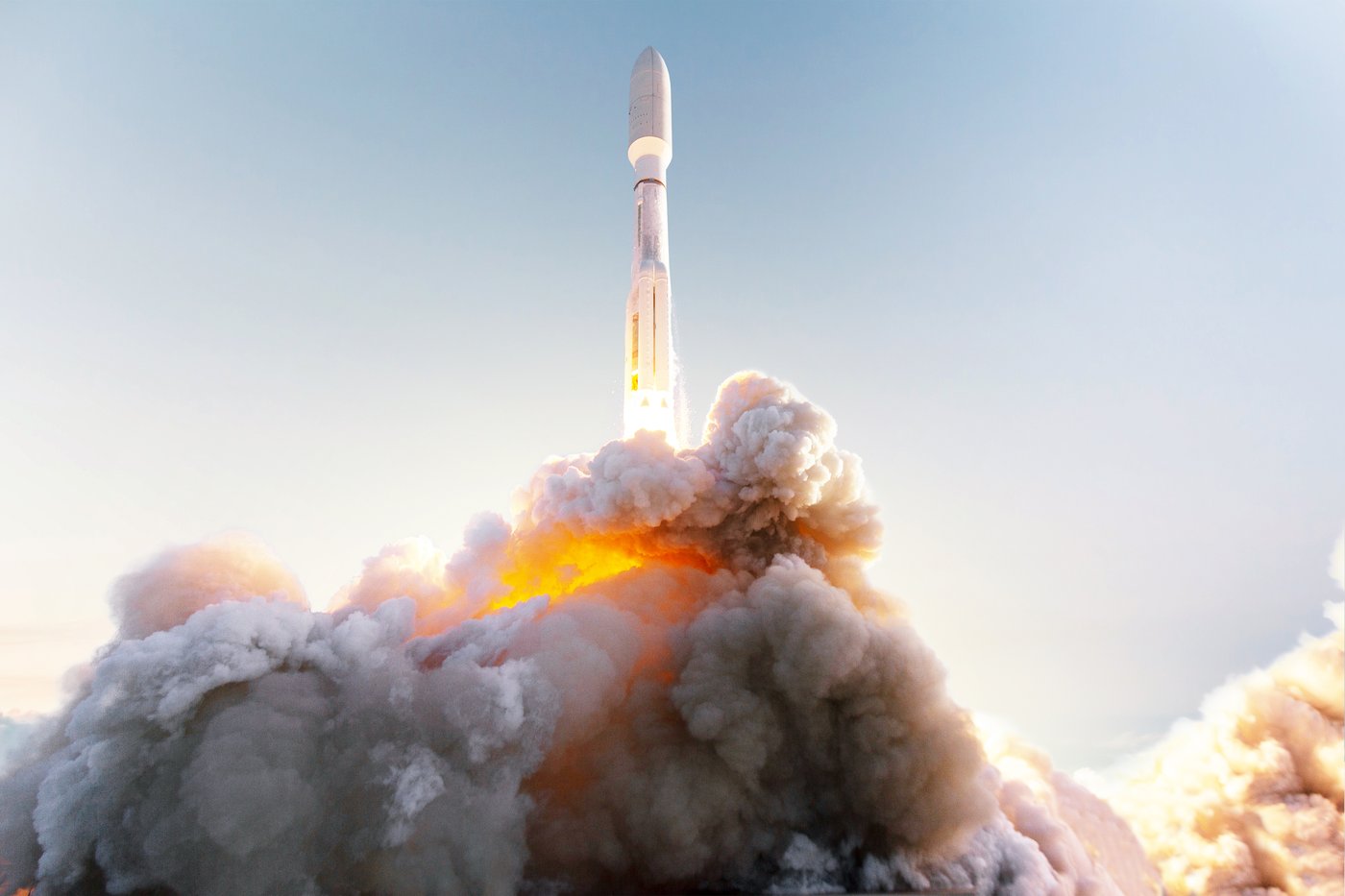
Since going public in June, Space Exploration Technologies (NASDAQ: SPCX) has already experienced a full market cycle. Although shares were priced at $135, SpaceX stock opened closer to $150. From there, Elon Musk's space empire witnessed extreme volatility, even for an IPO stock -- ripping to an all-time high of roughly $226 before sliding all the way to $105 and eventually bouncing back toward $155.
This opening pop, fade, and subsequent rebound perfectly capture what happens when a tiny float meets giant expectations. With SpaceX's third-quarter earnings report expected in November, the question smart investors are asking is whether this bounce is a setup or a trap.
Missed Nvidia in 2009? This Rare Signal Is Flashing Again. In 2009, a "Double Down" signal flashed for a little-known chipmaker called Nvidia. For the first time in years, that same "Total Conviction" signal is flashing for a company 1/100th the size of Nvidia. Continue »
SpaceX's S-1 displayed the company's different personalities
SpaceX disclosed first-quarter numbers in its S-1 filing ahead of the IPO. The company's business model is split into three categories: space, connectivity, and artificial intelligence (AI).
Total revenue came in around $4.7 billion, up 15% year over year. Connectivity carried the company, with Starlink generating $3.3 billion in sales and about $1.2 billion in operating income. The space side of the business looked more like a development shop, with launch revenue totaling $619 million and bleeding a $662 million operating loss as research and development (R&D) costs for Starship chewed through $930 million.
The AI segment is the newer part of SpaceX's story. During the first quarter, AI booked just $818 million -- barely half of which came from true AI infrastructure rather than advertising. Even worse, this division lost $2.5 billion from operations.
The number that investors need to keep an eye on is capital spending. AI capital expenditures (capex) reached $7.7 billion during the first quarter, on top of $1.05 billion for the space business and $1.3 billion for broadband. Capex is the real line item to watch heading into Q3 earnings, not whether Starlink keeps adding subscribers, but whether accelerating infrastructure costs stay ahead of contracted revenue.
In early August, investors got a thorough look at SpaceX for the first time as a public company. Admittedly, the company's acceleration looked real. Total revenue jumped 92% to $7.8 billion. Starlink reached 12 million subscribers while AI revenue nearly tripled to $2.6 billion as cloud hosting deals started showing up. Moreover, the company completed two Starship V3 tests in 90 days and completed Starship Flight 13 in July, which deployed 20 production V3 satellites.
Topics in this story
Gathered from external sources. Rights to this text belong to whoever originally published it.