Can you tell if your beef is a product of America?
The U.S. is allowing more imported beef into the food supply in an effort to lower prices.
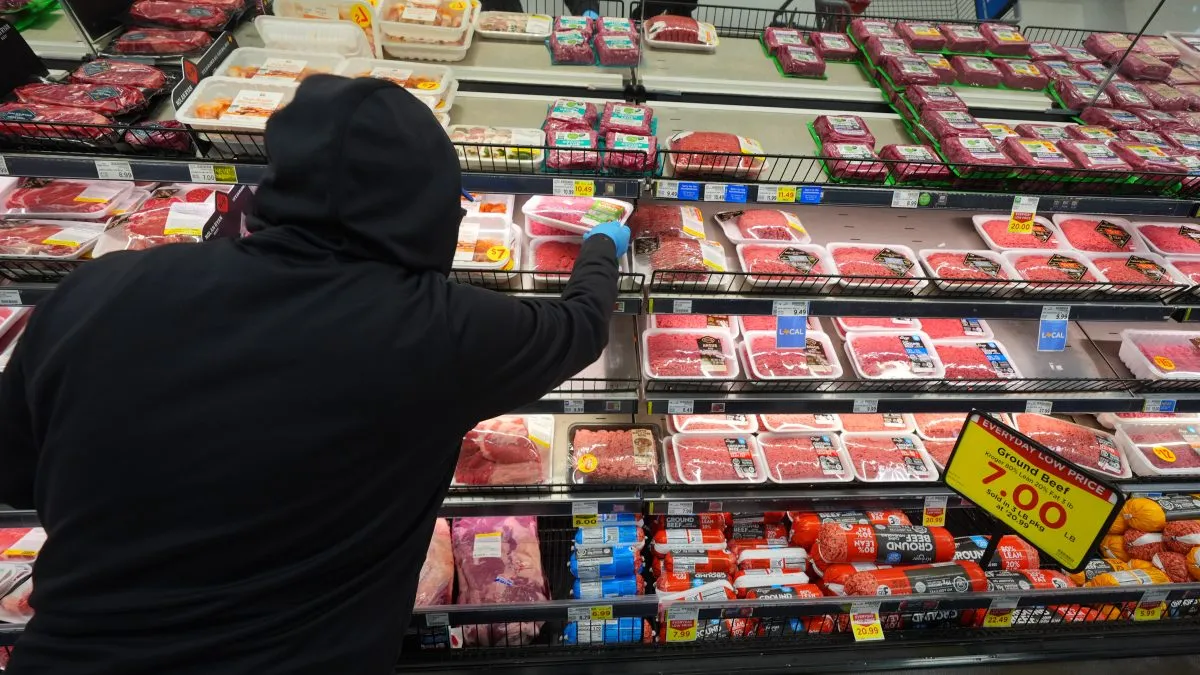
(NEXSTAR) – In an effort to lower beef prices, President Trump announced last month that thousands of additional tons of beef will be allowed into the U.S.
The deal, Trump said, allows up to 300,000 metric tons of ground beef to be imported into the U.S. for the next 90 days without activating an “out of quota” tariff, which is a tax that goes into effect once a certain quantity of that product enters the country. The president said on social media that he had committed to ensuring the imported beef would be sold at 25% below current market rates, making it cheaper for American consumers .
A White House official told The Associated Press that the beef in question is lean beef trimmings that are used for ground beef production.
Trump, however, did not specify where the imported beef is coming from, telling reporters in August that “there are a few countries” that will send the “highest quality beef.”
That may leave you wondering whether the beef you’re buying is American-made or not.
Most of the ground beef made from the imported trimmings will go to food service, specifically fast food restaurants, Dr. Derrell Peel, a professor of agricultural economics and the extension specialist for livestock marketing at Oklahoma State University, told Nexstar via email.
Imported beef generally doesn’t appear in grocery stores, “except when it is specifically labeled,” Peel added, explaining, as an example, that “beef from Mexico is sold and marketed in some grocery stores specifically for Hispanic markets.”
But beef producers can add a “Product of USA” label to their meat, to differentiate their products. To qualify, the animals the product is derived from must have been “exclusively born, raised, harvested, and processed in the United States,” according to the U.S. Department of Agriculture. It can’t include “imported livestock” nor “imported ingredients” if it is a single-ingredient product.
If there are multiple ingredients in the product, however, “every component except spices and flavorings must be sourced from the United States, and all preparation and processing steps must take place within the U.S.”
But, even if the products qualify, the “Product of USA” labels are voluntary, which can make it difficult to identify exclusively American meat from products that have been combined with imported beef.
Imported beef is not uncommon in the U.S. food supply, though. Beef from Canada and Mexico has been “part of our total beef supply for many years,” according to Peel.
This beef may appear in products with labeling that describes it as being “packed” or “processed” in the U.S. Some beef products may also explicitly note their country of origin on their labels.
Beef from Canada and Mexico, as well as Brazil, Australia and New Zealand, comprised of about 80% of the nation’s beef imports through the first half of 2026, Nexstar’s NewsNation reported last week.
The Associated Press contributed to this report.
Topics in this story
Gathered from external sources. Rights to this text belong to whoever originally published it.