Americans still feel worse about the economy than at almost any point in modern history
US consumer sentiment fell to its second-lowest level on record in September as high gas prices further soured Americans’ views of the economy.
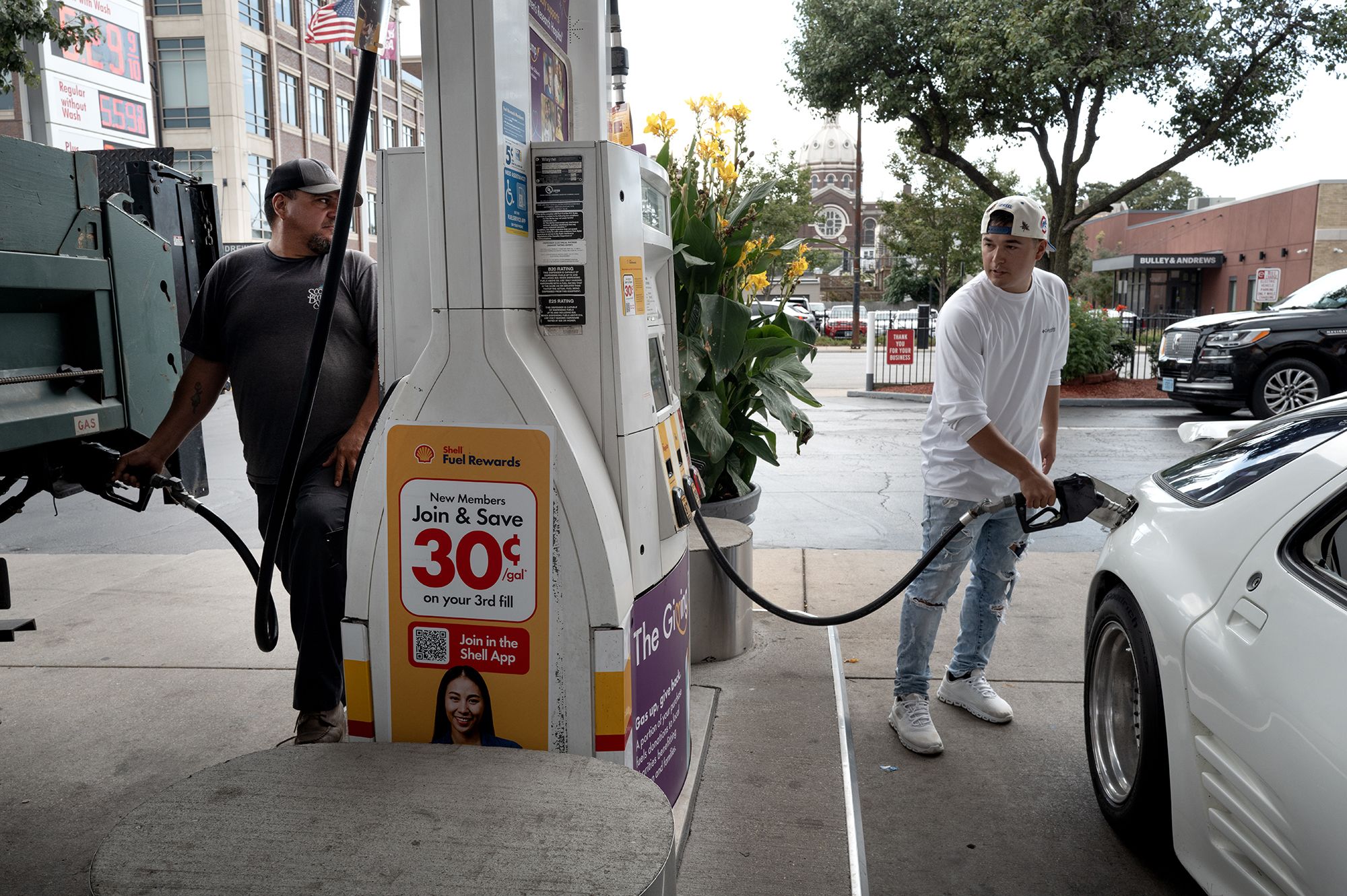
US consumer sentiment fell to its second-lowest level on record in September as high gas prices further soured Americans’ views of the economy. The University of Michigan’s consumer sentiment index for September dipped to 48.1, notching a 7% decline from August and a nearly 13% drop from a year ago, according to data released Friday. The survey dates back to 1952, meaning Americans are feeling worse now than they did during wars, the 1970s oil crisis, 9/11, the Great Recession, the Covid-19 pandemic and the inflation surge afterward. The four lowest-ever readings for the index all occurred within the past six months (with the record being set in May). The final reading for September did, however, mark a slight improvement from preliminary readings. The closely watched consumer sentiment gauge shows that Americans are deeply unhappy with the state of their personal finances and the broader economy. “Overall, interviews reveal broad agreement across the political spectrum that the outlook for the economy has weakened since the beginning of the year,” Joanne Hsu, director of the university’s Surveys of Consumers. “After particularly large declines in sentiment this month, Republican sentiment is now 20% lower than January 2026; Democrats are down 13% over the same period.” After navigating a once-in-a-century global pandemic, US households have had to contend with higher-than-normal inflation – and the compounding effects of fast-rising prices – for the past five and a half years. Those cost-of-living concerns only deepened this year as the US-Israeli war with Iran set off a monthslong conflict that negatively impacted the global supply of oil and escalated prices at the pump. “Obviously, the biggest factor is the higher gasoline prices and higher diesel prices,” Gus Faucher, chief economist at The PNC Financial Services Group, said in an interview with CNN. “People see that every day when they go to fill up their car.” And they also hear the news about how nominal record diesel prices have the potential to lead to more price hikes down the road, he added. “Inflation has picked up over the past year or so because of tariffs and now the conflict in Iran,” he said. “The end of the conflict does not appear imminent, and I think that people are feeling frustrated and concerned.” Friday’s survey also showed that consumers’ inflation expectations rose for this year and for five years from now. The year-ahead expectations shot to 4.6% from 4% in August, marking the highest reading since June. Before the start of the Middle East conflict, those year-ahead expectations were sitting at 3.4%. As of September, 3.4% is what consumers are expecting to see in the next five years. The “long-run” expectations moved up to 3.4%, ending three months in a row at 3.3% and above the 2024 range of 2.8%-3.2%. Consumers’ expectations about the pace of future price hikes are closely tracked by the Federal Reserve, which earlier this month hiked interest rates for the first time in three years. If people believe that prices will only continue to rise, they might spend more now and demand higher wages, and businesses might raise prices to accommodate higher demand and wages – thus raising inflation.
Topics in this story
Gathered from external sources. Rights to this text belong to whoever originally published it.