Fed’s Jefferson says AI build-out ‘exerting upward pressure’ on inflation
Federal Reserve Vice Chair Philip Jefferson said Thursday the artificial intelligence build-out is putting “upward pressure” on prices, while adding the technology could lower prices in the future by boosting productivity. During an International Monetary Fund and Central Bank of Brazil conference, Jefferson said AI is “likely to automate some tasks and augment others” in…
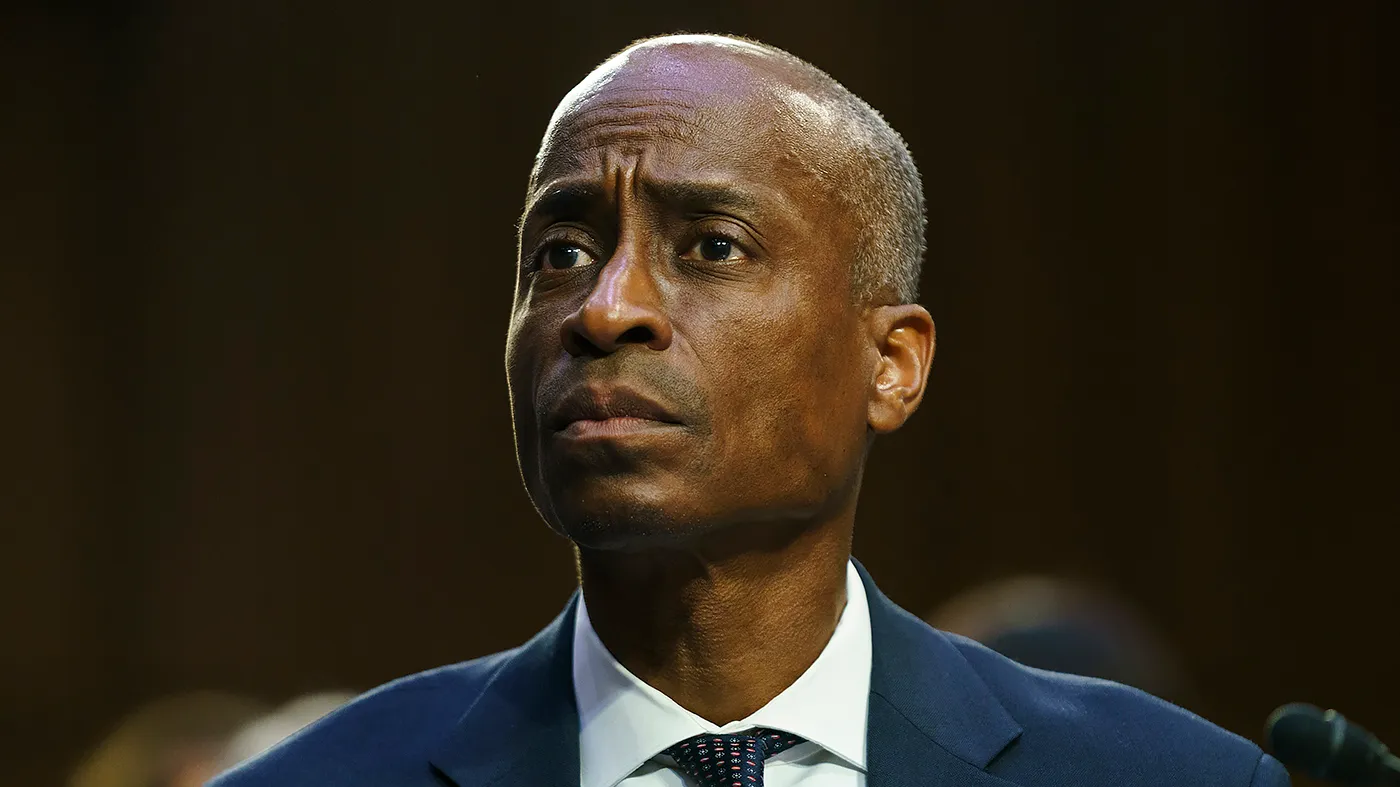
Federal Reserve Vice Chair Philip Jefferson said Thursday the artificial intelligence build-out is putting “upward pressure” on prices , while adding the technology could lower prices in the future by boosting productivity.
During an International Monetary Fund and Central Bank of Brazil conference, Jefferson said AI is “ likely to automate some tasks and augment others” in the long term.
“Currently, the AI build-out is exerting upward pressure on demand and inflation,” the Fed vice chair said.
“In the future, advancements in productivity could exert downward pressure on inflation while continuing to support growth,” he added.
Jefferson also noted energy price shocks from the nearly nine-month Iran war are contributing to inflation. While gas prices are down relative to a month ago, the average price of a gallon of regular gas is roughly 63 cents higher than it was a year ago, AAA reported Thursday .
Energy prices increased by 0.7 percent from September to October, after rising by 5.2 percent from August to September, according to data from the Bureau of Labor Statistics.
The increase in energy prices in the early months of the war contributed to overall inflation rising, as annual inflation remains above the Fed’s 2 percent target rate.
To combat persistent inflation , officials on the Federal Open Market Committee (FOMC) raised interest rates by a quarter point in September. In late October, the FOMC held rates steady at a range of 3.75 percent to 4 percent.
While Jefferson did not forecast his vote at the FOMC’s next meeting, set for Dec. 8-9, he warned about inflation risks “becoming unanchored.”
If that occurs, he argued a “stronger reaction” from the central bank is “warranted.”
Traders are pricing in a 96.4 percent chance of FOMC officials raising rates by a quarter point next month, according to the CME FedWatch tool .
Topics in this story
Gathered from external sources. Rights to this text belong to whoever originally published it.