Anthropic study suggests blue-collar workers have decades before robots take their jobs
Robots can already handle most physical tasks involved in American jobs — but mostly in controlled settings, and at a cost too high to replace human workers.
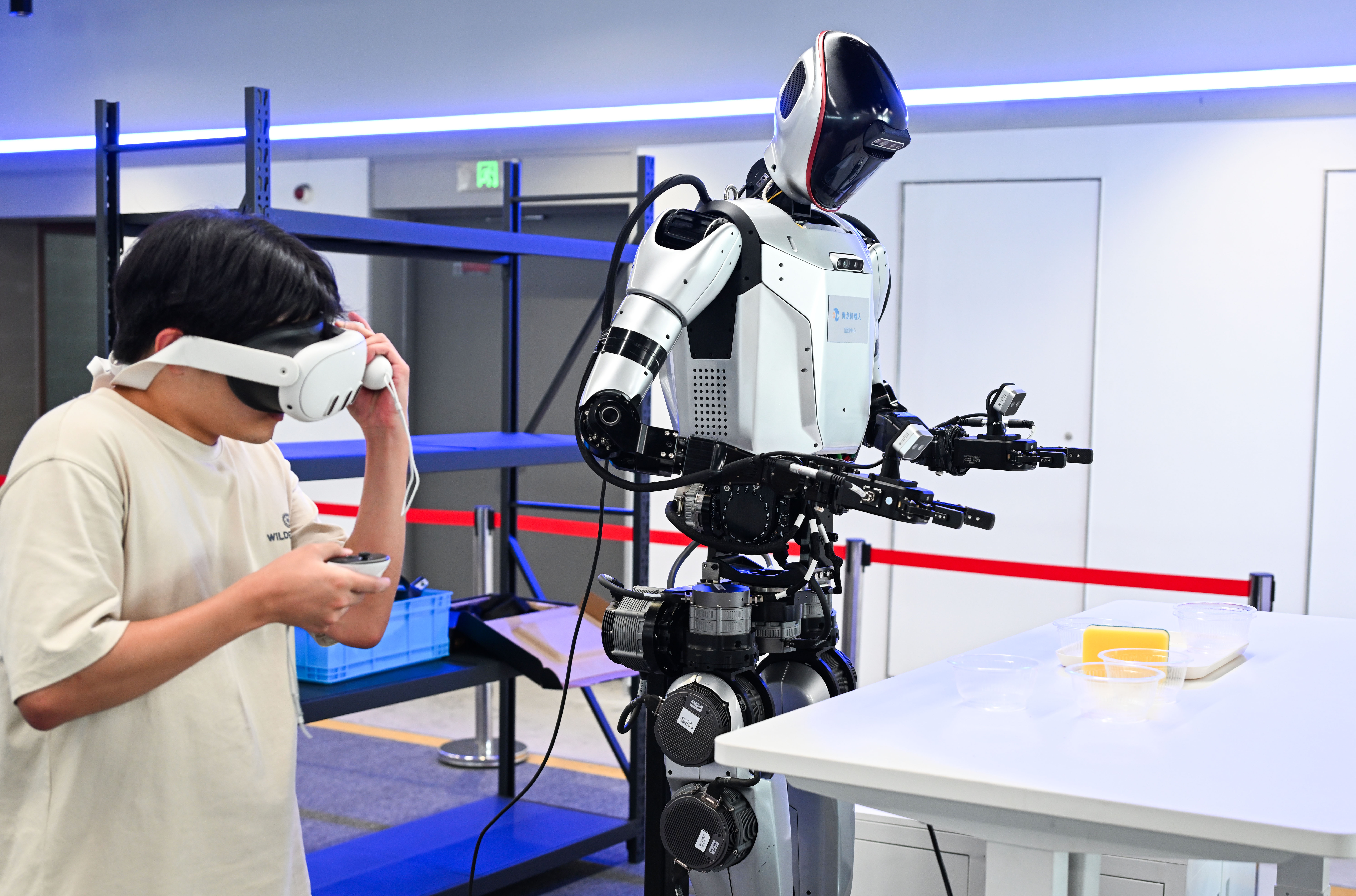
Robots can already handle most physical tasks involved in American jobs — but mostly in controlled settings and at a cost too high to replace human workers.
A new study from the AI company Anthropic ( ANTH.PVT ) suggests this could hold true for decades.
" What work can robots do? " found that robots can perform about three-quarters of physical job tasks in the US, making up 34% of all working hours. At the same time, however, there are "significant barriers to adoption: most robots require highly structured environments, and are cost-competitive with people for just 0.3% of work."
Robot prices have fallen about 3% a year since the 1990s. If that pace holds, the study estimates, it would take 40 years for robots to become cost-competitive for even 10% of US work.
The findings run counter to a wave of optimism about humanoid robots. At CES in January 2026, Nvidia ( NVDA ) CEO Jensen Huang predicted an imminent " ChatGPT moment " for robotics when detailing how the AI hardware giant is training robots. In May 2025, Morgan Stanley forecast a $5 trillion humanoid robot market by 2050.
Robotics bulls argue that AI and mass-produced humanoids could push prices down much faster. In the fast scenario modeled in the Anthropic study, costs fall up to four times faster than the historical rate, and robots learn new tasks twice as quickly. Even in that scenario, robots won't become cheaper than people for half of today's physical work until 2050.
"Robots would need to sustain record rates of price declines and quality improvements over the coming decades to enable rapid physical automation," the paper states.
After cost, the study found, the main barrier for robots is "capability, such as the dexterity needed to untangle wires. Human preferences and regulations further limit robot adoption for a significant share of tasks."
In an email note highlighting the paper, Apollo chief economist Torsten Sløk wrote that "even under aggressive projections, widespread physical labor displacement will take decades." (Disclosure: Yahoo is a portfolio company of funds managed by affiliates of Apollo Global Management.)
"Beyond economics," Sløk added, "severe bottlenecks in fine manipulation capabilities, regulatory constraints, and human preferences will continue to significantly slow near-term automation."
The picture is less clear for office workers, who are more exposed to large language models (LLMs) that help with non-physical labor.
Topics in this story
Gathered from external sources. Rights to this text belong to whoever originally published it.