The U.S. Power Play in Iraq That Moscow and Beijing Didn’t See Coming
Washington is moving aggressively to strengthen its position in Iraq’s oil sector, as Baghdad targets a massive increase in production to 8–10 million bpd wi...
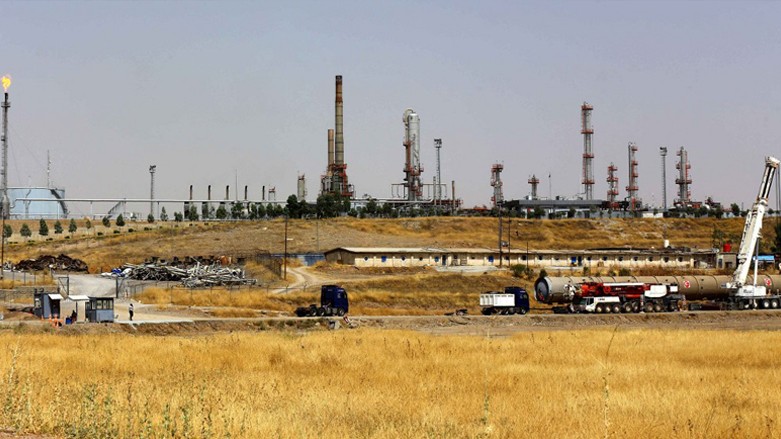
As Russia remains occupied with its war in Ukraine, Iran focuses on defending its territory against U.S. and Israeli attacks, and China maintains its involvement in both conflicts under the bar that would trigger direct conflict with America, Washington is leveraging its position in Iraq. These efforts by the U.S. and its allies have taken on further urgency as Iraqi Prime Minister Ali al-Zaidi announced last week that the country plans to raise oil production to between 8 million barrels per day (bpd) and 10 million bpd within six years -- so the U.S. and its allies want to be best positioned to benefit from that. So, what has Washington been up to in recent weeks and why?
Despite the recent damage done to its oil sector by the ongoing conflict in the Middle East, Iraq has four key qualities that all three global powers remain keen to use to their own advantage. First, it is still one of the biggest oil prizes in the world, with a very conservatively estimated 145 billion barrels of proved crude oil reserves (nearly 18% of the Middle East's total, and the fifth biggest on the planet), according to the Energy Information Administration. It is extremely likely that it holds much more oil than this, and the US$2-4 per barrel lifting cost is the joint lowest in the world, along with Iran and Saudi Arabia. Second, it occupies the geographical heart of the region, lying west of Iran, north of Saudi Arabia and Kuwait, east of Jordan and Syria (with its long Mediterranean coastline offering access to further critical sea routes), and south of Turkey (affording an entry into the European continent). Third, it remains a key member of the 'Shia Crescent of Power' geopolitical arc that stretches from Iran through Iraq, Syria, and Lebanon, where Shia communities and Iran-backed groups exert significant influence over regional politics, economics, and security. And fourth, it has for years been the key conduit through which Iran has been able to move its own sanctioned oil out into the world under the guise of non-sanctioned Iraqi oil, which has ensured its economic survival, despite swingeing international sanctions.
Following the U.S.'s unilateral withdrawal from the Joint Comprehensive Plan of Action (JCPOA, or colloquially 'the nuclear deal') in 2018, China and Russia moved quickly to exploit perceived American weakness across the Middle East. In Iraq's case, Russia had effectively seized control over the country's semi-autonomous Kurdistan Region in the north through three initiatives analysed in full in my latest book on the new global oil market order . China had done a similar job in the south of the country through two wide-ranging cooperation deals in 2019 and 2020 -- the ' Oil for Reconstruction and Investment' , which allowed Chinese firms to invest in infrastructure projects in Iraq in exchange for oil, and the equally all-encompassing 'Iraq-China Framework Agreement' , as also fully detailed in that book . The upshot of these strategies was that at the beginning of Donald Trump's second presidency in 2025, Russia held sway over much of northern Iraq's oil sector, while Chinese companies managed around 34% of Iraq's proven reserves and two-thirds of its full-capacity production. China was also busy linking together the individual pieces in southern Iraq's oil jigsaw that it had quietly established through dozens of low-key 'contract-only' deals by relatively unknown Beijing-directed firms into a full exploration-production-refinery-export hub infrastructure that threatened to leave the U.S. excluded from key future exploration and production decisions.
Topics in this story
Gathered from external sources. Rights to this text belong to whoever originally published it.