Warsh indicates Fed could raise rates to cool inflation
Federal Reserve Chair Kevin Warsh signaled on Friday the Federal Reserve is not ruling out an interest rate hike as inflation remains too high. “We must be confident that underlying inflation is moving to our objective, clearly and at sufficient speed. Otherwise, we have work to do,” Warsh said in a speech at the Fed’s…
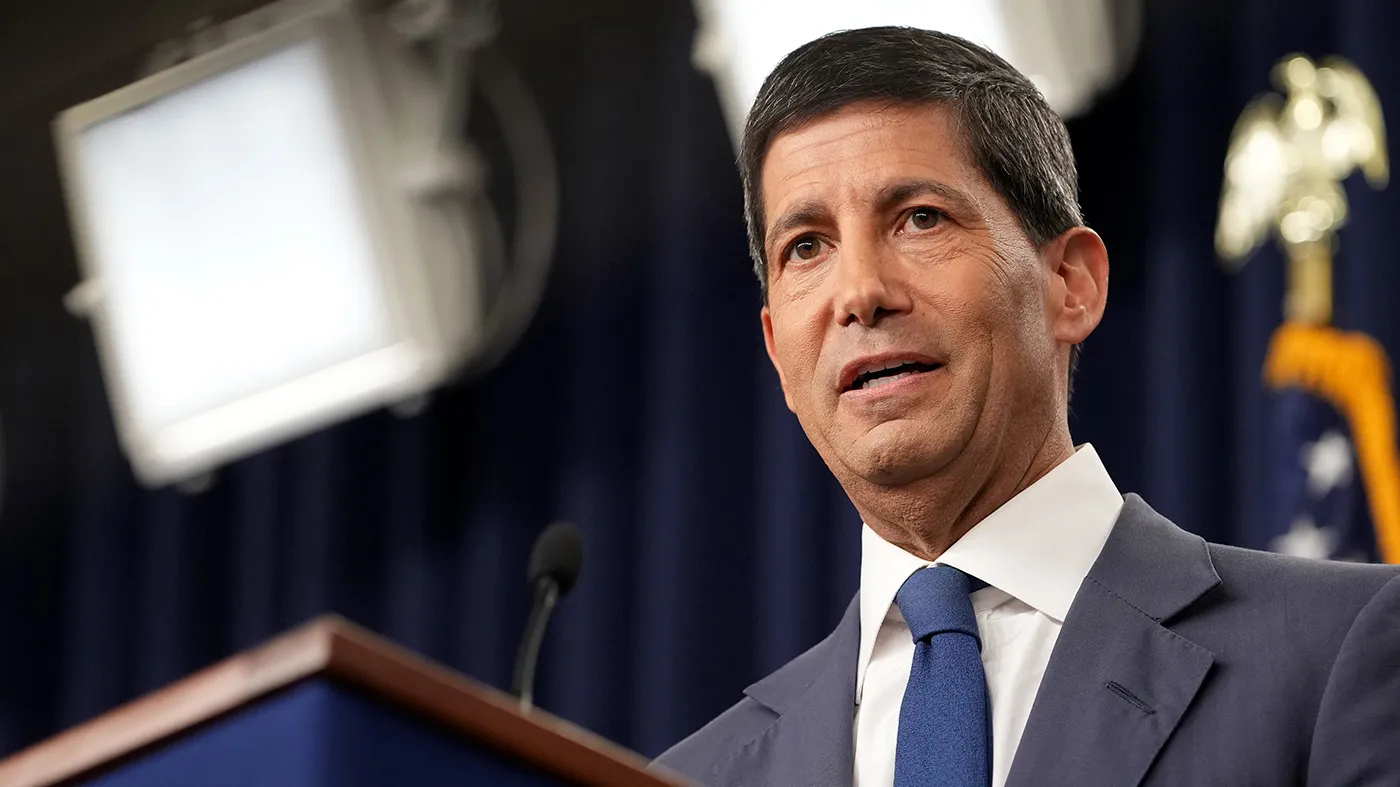
Federal Reserve Chair Kevin Warsh signaled on Friday the Federal Reserve is not ruling out an interest rate hike as inflation remains too high.
“We must be confident that underlying inflation is moving to our objective, clearly and at sufficient speed. Otherwise, we have work to do,” Warsh said in a speech at the Fed’s annual economic symposium in Wyoming.
He emphasized his commitment to not giving forward guidance but offered more clues than normal into the Federal Reserve board’s thinking amid sticky inflation. The speech marked Warsh’s first as Fed chair at the Jackson Hole symposium.
“There is one signal nobody can miss: The responsibility for 65 months of sustained, elevated inflation sits squarely with the central bank,” Warsh said. “And that is where it belongs.”
Inflation has remained stubbornly above its target rate of 2 percent over the past five years.
“It’s the Fed’s job to make sure that inflation expectations do not get unanchored,” Warsh said.
The remarks come just over a week since President Trump suggested frustration with the Fed’s lack of interest rate cuts and called the current rates “artificially” high.
While praising Warsh for doing a “great job” last week, Trump accused Fed officials of political bias.
“The problem is he has a board, and it’s a political board,” Trump told reporters . “People put in by Obama, Biden and me, and there are quite a few members still left, as you understand, and so they vote to raise interest rates. I don’t know if they’re doing it because they think they’re doing a good thing or because they like the politics of it.”
Trump repeatedly feuded with Warsh’s predecessor, Jerome Powell, often putting public pressure on the former chair to lower rates. While Warsh has replaced him as chair, Powell remains on the Fed board.
According to minutes of the Fed’s July meeting, released last week, multiple officials with the central bank “ noted the possibility that inflation might be more persistently elevated.”
At the conclusion of the meeting, the FOMC voted 9-3 to keep interest rates steady , at a range of 3.5 percent to 3.75 percent. It marked the fifth straight meeting at which the panel held rates.
CME’s FedWatch tool forecast quickly switched Friday morning, with the chance of an interest rate increase rising from 34 percent on Thursday to 57 percent following Warsh’s speech.
The Fed chief acknowledged the bank’s preferred measure of inflation, the personal consumption expenditures (PCE), and the consumer price index (CPI) were better than expected, but do not signal “underlying trends have meaningfully improved.”
Warsh notably did not directly discuss the increasingly jittery bond market. The yield on the 30-year Treasury bond hit a hit a 19-year high last week , surpassing 5.3 percent for the first time since 2007.
This prompted Treasury Secretary Scott Bessent to intervene , doubling the maximum amount of its long-term debt the government can buy back. The 30-year yield briefly decreased before ticking back up. As of Friday morning, the yield sat at 5.16 percent.
The Fed’s next meeting is Sept. 14, with a decision announcement the following day.
Warsh also touched upon the rise of artificial intelligence, and how the Fed is exploring if and when it could lead to a “significant, sustained rise in productivity” in the economy.
“Among the other yet unknowns is the resulting market structure,” Warsh said. “It’s not obvious where the returns on capital will land or on what timescale. Early on, how much of the surplus goes to owners of scarce assets—AI labs, chipmakers, energy producers, and cloud providers? Over time, how much of that value accrues to businesses and consumers?”
Warsh emphasized recommendations from the Fed on AI and its impact on markets will be released later and do not impact the central bank’s decisions.
Topics in this story
Gathered from external sources. Rights to this text belong to whoever originally published it.