Brent crude rises above $100 a barrel as Middle East conflict intensifies
By Anushree Mukherjee and Robert Harvey Sept 9 (Reuters) - Brent crude futures breached $100 a barrel on Wednesday for the first time since July 24, hitting...
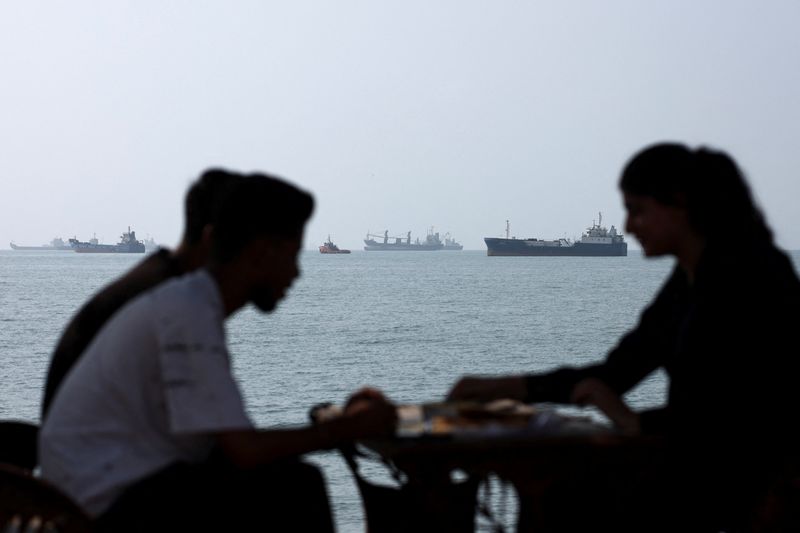
Sept 9 (Reuters) - Brent crude futures breached $100 a barrel on Wednesday for the first time since July 24, hitting a six-week high as the escalating Middle East conflict stoked concerns over oil supplies.
The move brought futures prices into line with physical crude and fuel markets, where prices have already been trading above the psychological threshold.
Brent crude futures were up $2.88, or 2.94%, at $100.80 a barrel by 1210 GMT, after earlier touching $100.95. U.S. West Texas Intermediate crude was up $2.57, or 2.76%, at $95.60 a barrel, its highest level since early June.
Since the Iran war began on February 28, Brent has surged as high as $126.41 a barrel, a peak reached on April 30.
"The move towards and back above $100 Brent is reflecting a market that increasingly has to change its view on how long the Middle East crisis will continue to curb supply from the region," said Ole Hansen, head of commodity strategy at Saxo Bank.
This week, attacks by Iran-backed Houthis on Saudi energy facilities set oil installations ablaze, threatening a significant expansion of the conflict.
The attacks also threaten crude shipments via the Red Sea, which has been a key alternative route to the crucial Strait of Hormuz, where oil flows have been severely curtailed.
In a sharp escalation of the six-month-old war, U.S. forces also hit multiple Iranian oil tankers and Iran targeted a U.S. base in Jordan and attacked ships.
"Market participants appear to be pricing in a more prolonged conflict in the Middle East as well as the risk that the latest escalation in military strikes disrupts oil flows from the Middle East," said Hamad Hussain, senior climate and commodities economist at Capital Economics.
"The key risk is whether the recent attacks on oil tankers lead to fewer ship-to-ship transfers taking place in the Gulf of Oman, which have so far played a key role in providing oil to global markets and keeping a lid on prices."
A tanker carrying about 2 million barrels of Iraqi fuel oil was struck by a drone in Iraqi territorial waters on Wednesday, port officials said, while UKMTO, a British navy-linked agency, reported that several merchant vessels in the Gulf had been hit by disabling fire overnight.
In the week before a resumption in fighting on August 30, roughly 8 million to 9 million barrels per day had flowed through Hormuz, double the previous week's volume, according to Rystad Energy's Chief Economist Claudio Galimberti. More recently, flows have fallen below 2 million bpd.
Topics in this story
Gathered from external sources. Rights to this text belong to whoever originally published it.