Applied Materials’ China Problem Is Getting Worse
China just unveiled domestic immersion DUV lithography systems, and semiconductor equipment stocks sold off hard, but the companies actually in the crosshair...
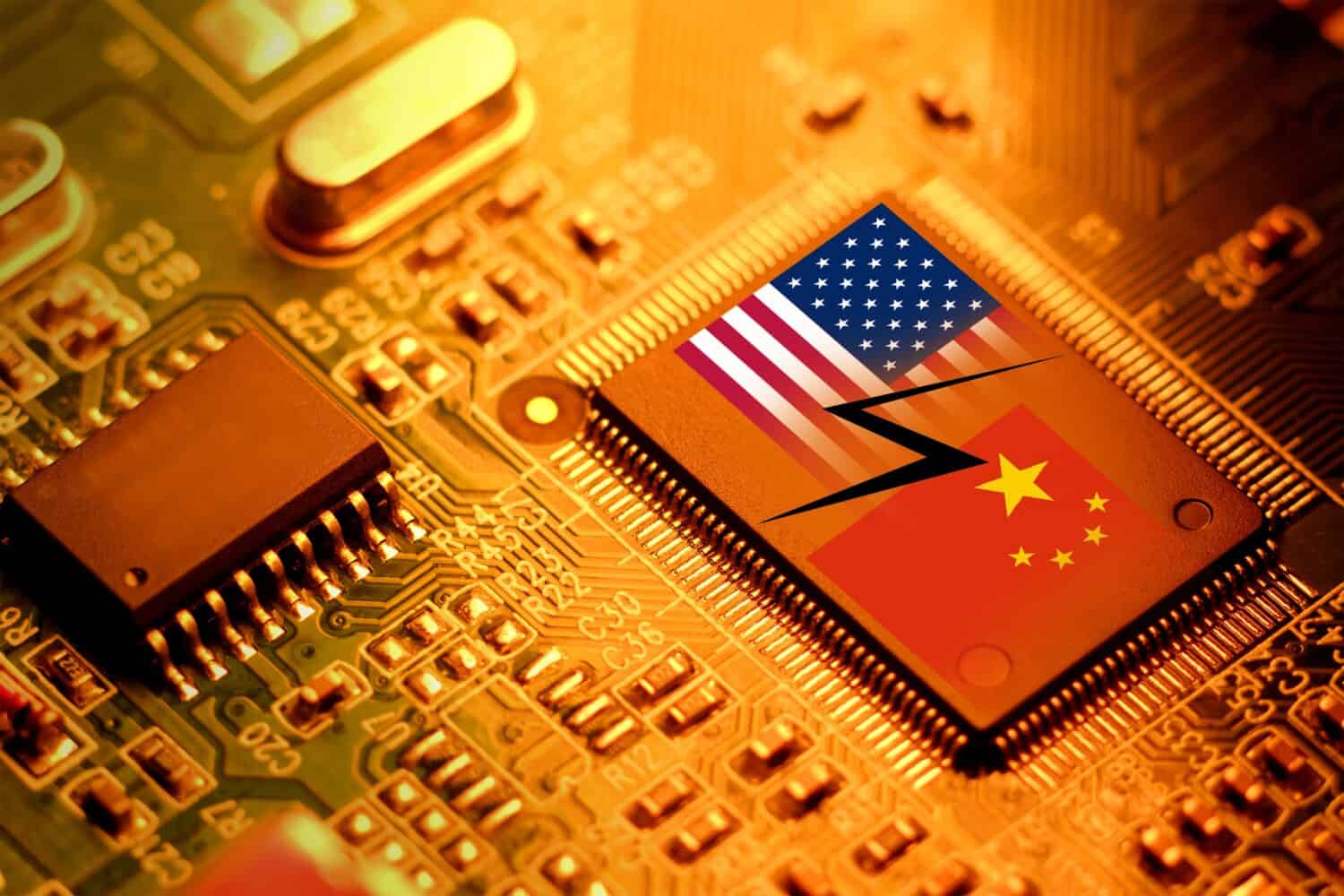
China's 50% domestic equipment mandate pressures AMAT's $4.2B annual China revenue, while new domestic DUV systems directly threaten ASML's installed base.
CXMT could surpass MU in physical wafer capacity by 2030, sourcing between 40 and 50 percent of tools from domestic suppliers including ACMR rather than AMAT.
Act now: the analyst who called NVIDIA in 2010 just named his top 10 AI stocks — and ASML didn't make the cut. Grab the names FREE today .
China has directed semiconductor manufacturers to use at least 50% domestically produced equipment when adding new capacity, according to a Reuters report citing people familiar with the policy. Fab projects that fail to meet that threshold are generally denied regulatory approval, although flexibility remains where no suitable Chinese tool is available. The requirement favors domestic equipment suppliers such as Naura Technology and AMEC over foreign companies and provides the context needed to understand China's newly announced immersion deep-ultraviolet lithography systems.
Reports that Shanghai Aishengna Electronic Technology Group has begun producing immersion DUV systems sent shares of ASML Holding ( ASML ) down sharply and contributed to weakness across semiconductor equipment stocks, including Applied Materials ( AMAT ). The initial reaction treated the development as evidence that China could begin replacing Western equipment across its semiconductor industry. That conclusion is directionally understandable, but the immediate effect on Applied Materials is being overstated.
Applied Materials does not manufacture lithography systems. A Chinese immersion DUV machine competes directly with ASML, not with Applied Materials' deposition, etch, thermal-processing, metrology, inspection and advanced-packaging systems. The greater risk is indirect and longer term: if domestic lithography becomes commercially usable, it fills one of the largest remaining holes in China's equipment supply chain and allows Chinese fabs to build production lines containing a higher percentage of domestic deposition, etch, cleaning and chemical mechanical planarization equipment.
For investors, the distinction matters. Five unproven Chinese DUV systems will not materially change Applied Materials' earnings in 2026. But the combination of China's 50% domestic-equipment requirement, rapidly growing local equipment companies, and expanding fabs at CXMT, SMIC and Hua Hong could reduce Applied Materials' addressable market in China over several years.
Topics in this story
Gathered from external sources. Rights to this text belong to whoever originally published it.