Trump has a ‘sledgehammer’ way to slash diesel prices. But it could boomerang back on the US
Diesel, the most important fuel on the planet, is so expensive that some Republicans want President Donald Trump to stop exporting it to friends and allies.
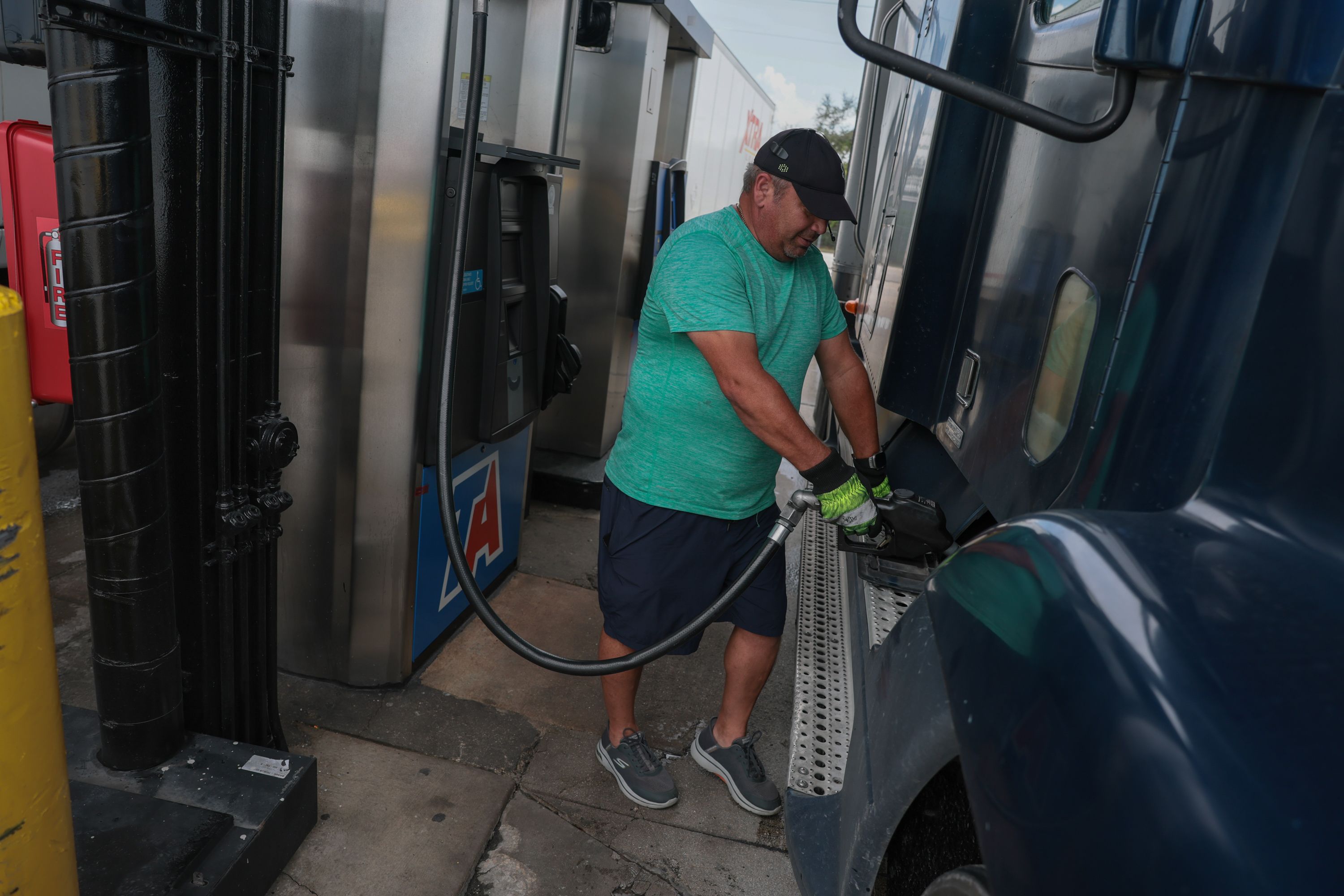
Diesel, the most important fuel on the planet, is so expensive that some Republicans want President Donald Trump to stop exporting it to friends and allies. “High diesel prices ARE KILLING FARMERS INCOME,” Republican Sen. Chuck Grassley posted on X last week, calling for an “embargo on diesel exports.” Rep. Tim Burchett, a Tennessee Republican, took to the House floor last week — flanked by a billboard declaring diesel prices are “out of control” —to introduce legislation that would ban diesel exports. Even Louisiana Gov. Jeff Landry, whose state is home to some of the biggest oil refineries in the world, has called for a 90-day ban on US diesel exports. Banning US diesel exports might be a tempting way for Trump to show he’s taking action to combat record-shattering diesel prices that are adding to surging costs for Americans. However, researchers warn that an export ban would likely only provide a temporary reprieve from sky-high diesel prices and would backfire in the medium and long run. They said a ban would likely raise prices on friends and allies, jack up gasoline prices, crush US refiners and damage America’s reputation as a reliable energy superpower. “This is taking a sledgehammer to the problem,” said Bob McNally, a former energy official in the George W. Bush administration and president of Rapidan Energy Group, this week. “It would be an authentic policy error, or what I call an ‘APE.’ In fact, this would be the king of the APEs.” The price of diesel — the workhorse fuel that powers the trucks, trains, tractors and ships at the heart of the modern economy — spiked above $6.50 a gallon over the weekend for the first time on record. It’s just pennies away from the highest inflation-adjusted price since 2008. Diesel prices have surged 83% so far this year, on track for what would easily be the biggest annual increase since AAA started tracking diesel prices in 2000. Prices have skyrocketed due to a toxic mix of factors: The Iran war has cut off diesel exports from the Middle East, one of the most important regions for diesel. Also, Ukrainian drone strikes have knocked out a series of refineries in Russia, the world’s No. 2 diesel exporter. As if that weren’t enough, both Russia and China have imposed export restrictions. A White House official told CNN on Monday that the administration is not considering an export ban or export restrictions at this time. Interior Secretary Doug Burgum told CNBC this month that he’s “not at all confident” an export ban would actually lower prices and cautioned it could “actually hurt Americans” in places dependent on imports. Still, McNally said he believes there is a significant chance the Trump administration will be “tempted” to reach for export restrictions because of high prices. ‘The coasts are screwed’ A diesel export ban could be quite effective at lowering prices — at least initially. But that relief wouldn’t be felt everywhere. McNally said diesel prices could plunge by dimes per gallon in the Gulf Coast and the Midwest because an export ban would trap diesel produced in those regions. But the East Coast and West Coast could experience sudden price hikes because those regions rely on imports and have less access to Gulf Coast fuel. “If he bans exports, the coasts are screwed,” McNally said. Where does US diesel go? Global diesel prices could skyrocket — hurting US customers in Europe and Latin America. Garrett Golding, assistant vice president at the Federal Reserve Bank of Dallas, said in a post on X on Monday that surging global prices for diesel “will boomerang back” onto the East Coast and, to a lesser extent, the West Coast. In other words, there’s no guarantee a US export ban even causes the national price of diesel to drop because steep declines in Texas would be offset by spikes in New York. However, it’s hard to say with certainty exactly how this would play out. Andy Lipow, president of Houston-based consulting firm Lipow Oil Associates, said he thinks the coasts could weather the storm with the help of Jones Act waivers, which would allow US ships to transport fuel from the Gulf Coast. Prices at the pump could go even higher But the real problem is what comes next. For months, US refiners have been the last man standing in the global refining shortage caused by war and export restrictions. But if Washington suddenly prevented refiners from selling to customers overseas, they would logically pull back on how much crude they process into fuel. That, in turn, would likely mean higher prices and less supply of all fuels — not just diesel, but jet fuel and gasoline, too. “The price of gasoline could soar,” Lipow said. “Do not ban diesel exports. You will have a whole rash of unintended consequences.” One big uncertainty is the response of US allies that rely on diesel to power their local economies. But it’s easy to see how some countries could try to retaliate by holding back supplies the United States needs. “The United States is the world’s biggest diesel exporter. Imagine the panic for the world’s most important fuel if the US bans exports. You would have a scramble,” McNally said. ‘Some refiners may not survive’ Tellingly, the push to ban US diesel exports has reached the point where the oil industry decided to respond directly. Mike Sommers, CEO of the American Petroleum Institute, warned in a post on X this week that an export ban would “make the problem worse, not better – for consumers, farmers and the broader US economy.” Refiners have been booming this year because of record-setting margins to turn oil into diesel. However, an export ban could put intense pressure on the industry by causing refiners to dial back production. “Some refiners may not survive,” Lipow said. Ironically, that would be the exact opposite of what the White House says Trump wants. After meeting with refining executives, a White House official said Trump and his team will support efforts to reopen shuttered refineries, expand the capacity of existing refineries and construct new ones. But a major new oil refinery hasn’t been built in the United States since 1977 — and banning diesel exports could be the worst way to convince the industry that now is the time to spend billions building a new one. Gregory Brew, senior analyst at the consulting firm Eurasia Group, said the export ban discussion is “reflective of the very uncomfortable dynamic this administration is trapped in.” “They are attempting a high-stakes game of chicken with the Islamic Republic of Iran and Iran’s almost entire strategy is built around exerting pressure on the US through energy prices,” Brew said. But researchers say the best way to drive down energy prices at home is to end the Iran war, not limiting exports. “Unless they are prepared to make a deal with Iran, they don’t have good options for lowering prices,” Brew said.
Topics in this story
Gathered from external sources. Rights to this text belong to whoever originally published it.