Why a 50% harvest collapse won't leave shelves short of Champagne
France’s Champagne region is facing an extraordinary harvest collapse. Yet consumers should not expect the number of bottles reaching shops to halve — at lea...
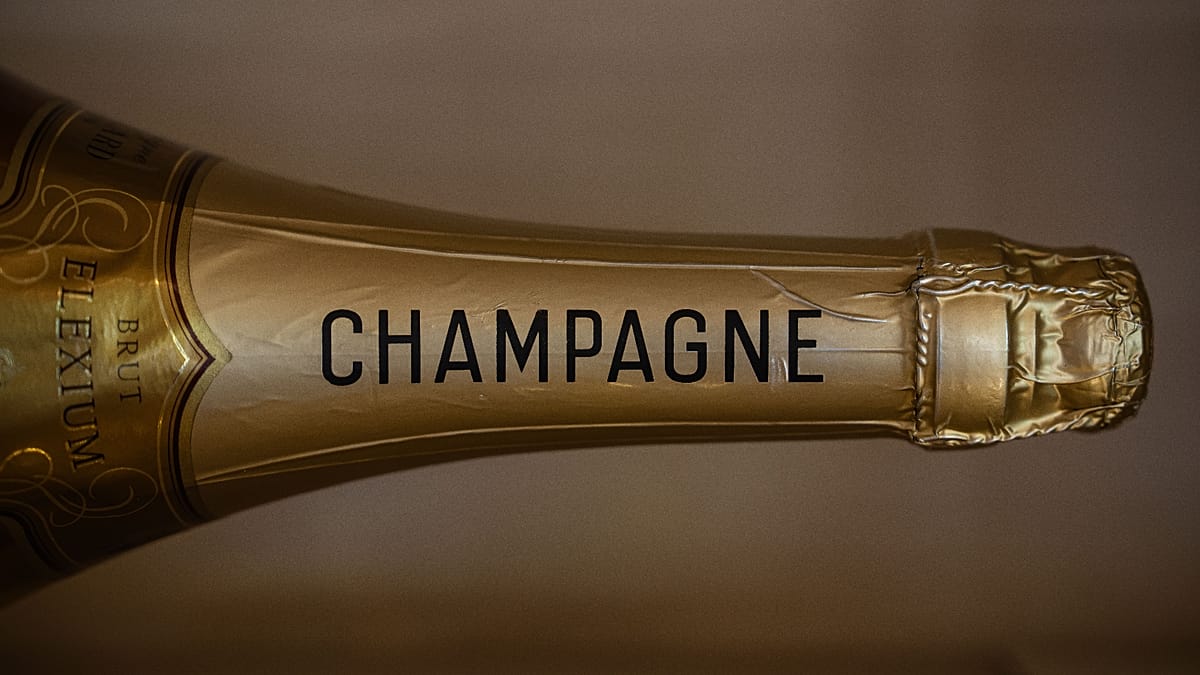
France's Champagne region is facing an extraordinary harvest collapse. Yet consumers should not expect the number of bottles reaching shops to halve — at least not yet.
The reason is that this year's harvest does not determine how many bottles can be sold immediately. Champagne takes several years to make, and producers hold substantial stocks and reserve wines from earlier harvests to help maintain supply when a crop is poor.
And across France, wine production is expected to reflect a very poor harvest this year. According to preliminary estimates from Agreste, the French Agriculture Ministry's statistics office, overall wine production is to fall to 3.39 billion litres in 2026.
That would be 6% less than in 2025 and 28% below the 4.72 billion litres produced in 2023.
If confirmed, it would also be France's smallest wine crop since 1957, when output stood at 3.25 billion litres, according to the International Organisation of Vine and Wine.
The decline partly reflects a 2.5% reduction in the area of French vineyards in production. But drought and repeated heatwaves have had the greater effect by reducing the amount of wine produced from each hectare.
"Evidence strongly suggests that heat and drought, through lower yields per hectare, are the dominant explanation for this year's exceptionally low harvest," Jean-Marie Cardebat, Professor at Bordeaux University and affiliated to INSEEC Business School, told Euronews Business.
The regional figures support this. Some of the steepest falls are in areas where relatively few vineyards have been removed.
Bordeaux and Languedoc-Roussillon, where large areas of vines have been uprooted, are expected to produce 10% and 5% more wine respectively than in 2025, although both remain below their recent averages.
Wine production from this year's harvest in the Champagne region is forecast to fall by 48%, from 2.57 million hectolitres in 2025 to 1.34 million this year.
For wine carrying the Champagne protected designation, the fall is slightly steeper. Output is expected to drop by 49% to 1.24 million hectolitres, 47% below the five-year average.
However, these figures refer to wine made from grapes harvested this year. Not the number of bottles of Champagne to be sold.
After Champagne, the worst affected regions are Jura, where production is forecast to fall by 36%, and Bourgogne-Beaujolais, where it is expected to decline by 33%. Losses for Burgundy Pinot Noir exceed 50%, according to Agreste.
In Champagne, harvesting began in mid-August and the grapes reached exceptional ripeness. But frost in the Aisne, hail and drought since March severely reduced the crop. The average weight of grape bunches fell to its lowest level in 20 years.
Topics in this story
Gathered from external sources. Rights to this text belong to whoever originally published it.