6 takeaways as Trump takes sledgehammer to power plant climate regs
The Trump administration on Monday gutted the rules governing the nation’s climate regulations for power plants. Here’s what you should know about the final rule from the Environmental Protection Agency (EPA): It axes most, but not all, power plant climate rules The rules, which have been announced but whose underlying text did not appear to…
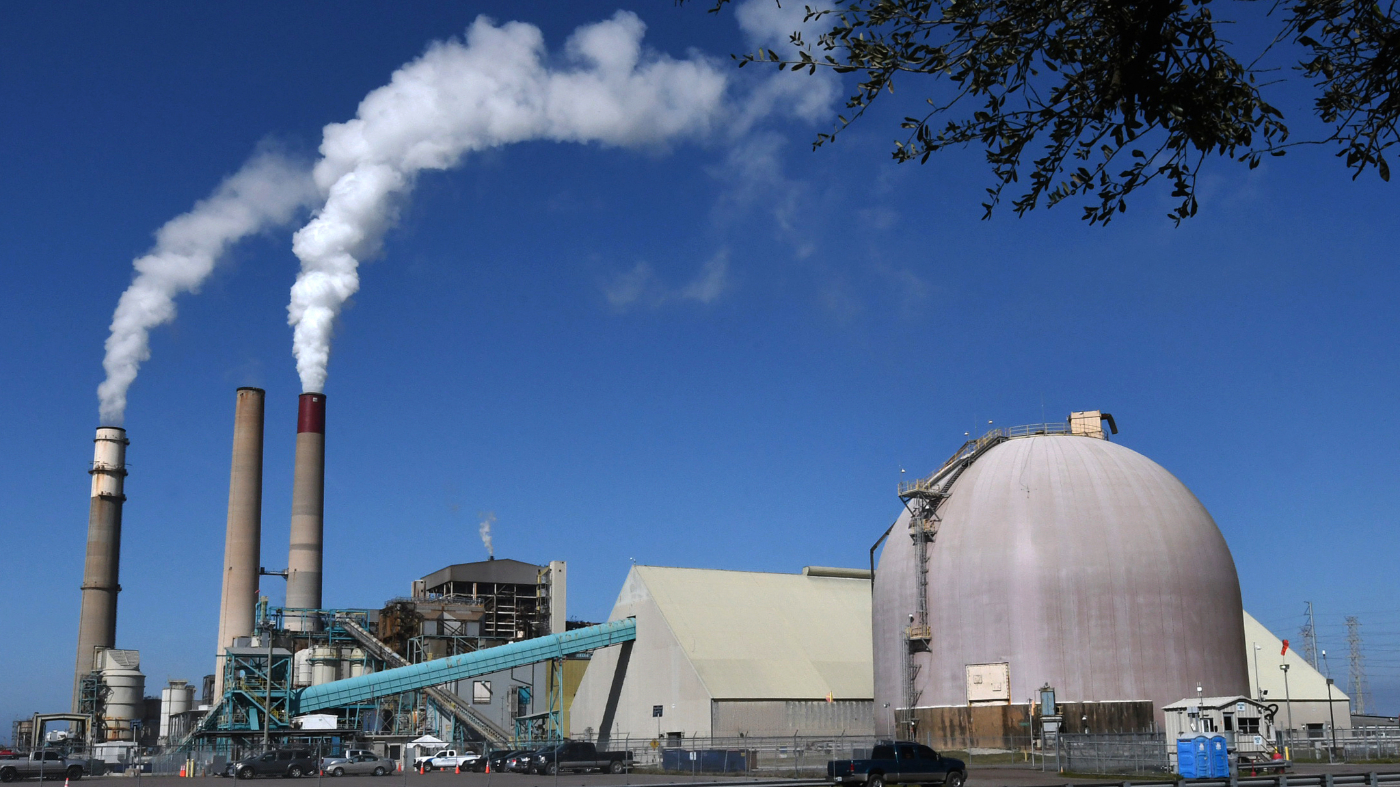
The Trump administration on Monday gutted the rules governing the nation’s climate regulations for power plants.
Here’s what you should know about the final rule from the Environmental Protection Agency (EPA):
It axes most, but not all, power plant climate rules
The rules, which have been announced but whose underlying text did not appear to be public at press time, are expected to ax most, but not all, of the climate regulations on the books for the power sector.
When the Trump administration first proposed to get rid of Biden-era power plant rules last year, it said it would eliminate all climate rules for the sector .
Monday’s move stops short of immediately doing that. It gets rid of major components of past regulations but does leave a few pieces in place.
In particular, EPA Assistant Administrator Aaron Szabo told reporters that new natural gas plants would still need to abide by 2015 standards and 2024 efficiency requirements.
It also leaves in place Obama-era regulations for new coal power plants, though few if any new coal plants are expected to be built in the years ahead.
It is joined by a proposal to eliminate all climate rules for the power sector in the future
The rule also comes with a supplemental proposal that, if finalized, would seek to repeal the agency’s authority to regulate power plants’ climate contributions entirely.
Szabo said the proposal would find that the Clean Air Act does not give the EPA the authority to regulate power plants’ planet-warming emissions.
In addition to axing the few regulations that remain, he said, the proposal could block future administrations from regulating power plants’ climate emissions.
If it’s finalized, a future administration could ultimately undo the maneuver, but in the meantime, it could act as a delay for future regulations.
“Administrations are always free to change their mind and reinterpret statutes based on the best reading and based on the evidence before them,” said Meredith Hankins, federal climate legal director at the Natural Resources Defense Council. “It certainly just delays action. Every year that we continue to send unregulated carbon up into the atmosphere, that CO2 is sticking around, and it’s going to continue affecting climate change. It’s going to continue making extreme weather disasters worse.”
“These standards … require lead time. They need to give utilities time to plan, and they need regulatory certainty to think through ‘OK, what is our electricity mix going to look like 10 years from now, 20 years from now?’ And by delaying action, it’s just pushing those potential timelines back further and further, and it’s making it harder and harder for utilities to plan,” she added.
It is expected to mean significantly more emissions, worsening climate change
The proposal is expected to allow for significantly more planet-heating emissions such as carbon dioxide to be released into the atmosphere, worsening climate change.
A regulatory analysis of the Trump administration’s proposal, which does differ from the final rule, said that it would have allowed an estimated 38 million additional metric tons of carbon dioxide in 2028, an additional 50 million metric tons in 2030, 123 million metric tons in 2035, 54 million metric tons in 2040 and 42 million metric tons in 2045.
The U.S. power sector is a major driver of planet-warming emissions, responsible for a quarter of total U.S. emissions.
A report from New York University School of Law’s Institute for Policy Integrity found that if the U.S. power sector were a country, it would be the world’s sixth-largest emitter, contributing more to climate change than the entirety of nations including Canada, Japan, Brazil and Mexico.
The report also said that the sector’s 2022 emissions alone will contribute to future climate change impacts that are expected to cause about 5,300 additional premature deaths in the U.S. due to heat and wildfire smoke.
“The public health and welfare toll of this deregulation is just going to be staggering,” said Jason Schwartz, one of the report’s authors and regulatory policy director at the Institute, told The Hill.
The Biden-era rule that is now mostly repealed would have required existing coal plants and new gas plants to prevent 90 percent of their carbon dioxide emissions from entering the atmosphere.
The Biden administration said that its rule would have prevented a total of 1.38 billion metric tons of carbon emissions through 2047, the equivalent of taking 328 million gas-powered cars off the road for a year.
It could have a modest impact on electricity prices
The change is expected to eventually lower electricity prices, but the changes may not be particularly dramatic.
An analysis based on the original proposal, from which the final rule slightly differs, found that in 2028 and 2030, the changes could actually increase average retail electricity prices by 0.7 percent and 0.5 percent, respectively.
In 2035, it would cause a 1.4 percent drop in electricity prices, as well as a 0.2 percent drop in 2040 and a 0.7 percent drop in 2045 compared to a baseline where the Biden-era regulation is not repealed.
Trump administration officials touted the rule as cutting down power prices.
“For over 15 years, the Obama and Biden administrations implemented a war on coal to destroy reliable and affordable energy. The Trump Administration has come in to protect American energy and to make sure you can afford to keep the lights on,” said EPA Administrator Lee Zeldin in a written statement.
“Americans will see a decrease in electricity prices, but this is just the beginning,” he added.
The rule is expected to be a win for the coal sector, an industry that has been on the decline as other fuel sources, particularly natural gas , have become increasingly dominant.
The analysis of last year’s proposal said that in 2028, coal production for use in the electric sector could be 6 percent higher than it otherwise would have been. By 2045, coal production would be expected to be 84 percent higher under last year’s proposal than it would have been if the Biden-era rules stayed in place.
In 2045, coal used by the power sector would have also been 32 percent more expensive under the proposal than it would have been under the Biden rule.
A trade group representing the coal industry celebrated the regulation.
Rich Nolan, president and CEO of the National Mining Association, said in a statement that the Trump rule “has averted what would have been a catastrophic collision of unlawful and unworkable Biden-era technology mandates with surging energy demands. “
“With today’s repeal, well-operating coal plants are no longer faced with the false choice between commercially unavailable and technically infeasible technologies, fuel-switching or closure. The administration’s action corrects the egregious misuse of the Clean Air Act as a political tool to end American coal generation and implements the law as Congress intended,” he added.
Opponents of the Trump administration’s move are expected to sue to try to block it.
“I would expect that the final repeal will be pretty immediately challenged,” said Dena Adler, senior attorney at the Institute for Policy Integrity.
Some groups are already indicating they could sue.
“The EPA has a legal obligation to protect us from climate pollution from power plants,” said Jill Tauber, vice president for climate and energy at Earthjustice, in a written statement. “Earthjustice and our partners will continue to defend climate protections and hold the Trump administration accountable.”
But, Adler said, it could take time before there’s any actual resolution.
“It will be interesting to see how the litigation progresses because EPA is simultaneously finalizing a rule that assumes it has the authority to regulate greenhouse gas emissions, while also proposing it has no authority to regulate greenhouse gas emissions,” she said.
“I think we’ll see immediate challenges, but I think we’re not going to necessarily get to the bottom of some of those legal claims until the intermediary question of EPA’s authority to regulate greenhouse gas emissions is addressed,” she added.
Topics in this story
Gathered from external sources. Rights to this text belong to whoever originally published it.