Oil prices fall after hitting over one-month high; traders weigh supply risks
By Anushree Mukherjee Sept 2 (Reuters) - Oil prices fell on Wednesday after climbing to more than one-month highs earlier in the session, with traders weighi...
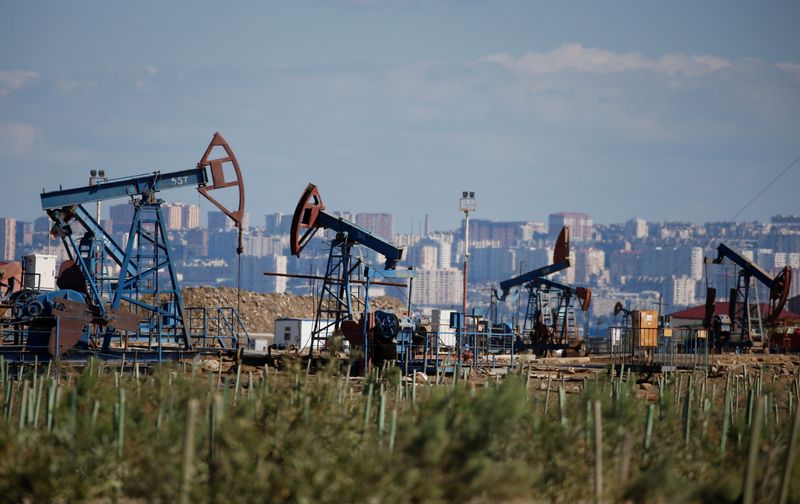
Sept 2 (Reuters) - Oil prices fell on Wednesday after climbing to more than one-month highs earlier in the session, with traders weighing the risk of supply disruptions following overnight strikes by the U.S. and Iran against signs that crude supplies continue to reach the market.
Brent crude futures fell 57 cents, or 0.60%, to $94.08 a barrel by 1135 GMT and U.S. West Texas Intermediate crude futures were down 72 cents, or 0.80%, to $89.50.
Brent crude and U.S. West Texas Intermediate crude earlier climbed to their highest levels since July 24, reaching session highs of $97.04 and $92.29 a barrel, respectively.
"The market is facing a binary risk," said Saxo Bank head of commodity strategy Ole Hansen.
"An announcement that a deal has been reached, or that progress is being made, could send prices tumbling, while any escalation would further undermine the prospect of a peace deal. That's why oil remains highly volatile, with a potential $5 move in either direction on fresh developments."
The U.S. and Iran were back on a war footing on Wednesday after the most significant exchange of fire in weeks, with Washington threatening more devastating strikes.
The Islamic Revolutionary Guard Corps said the U.S. attacks would further restrict traffic through the Strait of Hormuz, a critical waterway that carried about one-fifth of the global oil consumed before the conflict and which Iran has effectively closed to commercial shipping.
Two oil tankers hit sea mines and were disabled while attempting to transit the Strait of Hormuz, Iran's Revolutionary Guards said on Wednesday, in a statement shared by state media.
"Ship-to-ship transfers in recent weeks has meant that some oil has continued to be exported through the Strait of Hormuz, alleviating some of the pressure on the oil market. However, these flows are at high risk of being disrupted by military strikes," said Hamad Hussain, senior climate and commodities economist at Capital Economics.
U.S. Secretary of Energy Chris Wright said on Tuesday that 17 million barrels of oil transited the Strait of Hormuz on Monday, saying it marked the highest level of crude oil to pass through the waterway since the Iran war had reduced flows.
"If the conflict escalates further and there is even greater disruption to shipping in the Middle East, Brent crude prices could feasibly rise beyond $100," Hussain added.
Elsewhere, Russia carried out a "massive" missile and drone attack on energy infrastructure in Ukraine's southern region of Odesa overnight, transmission system operator Ukrenergo said on Wednesday.
(Reporting by Siddharth Cavale, Trixie Yap and Anushree Mukherjee; Editing by Muralikumar Anantharaman, Jamie Freed, Alexandra Hudson and Louise Heavens)
Topics in this story
Gathered from external sources. Rights to this text belong to whoever originally published it.