Trump said China was headed for ‘big trouble.’ Yet its economy is growing faster than the U.S., and its deficits are moving in the right direction
Goldman Sachs’ Hui Shan noted over the weekend that China’s Q3 real GDP grew 4.5% year on year, slightly above the consensus expectation of 4.4%.
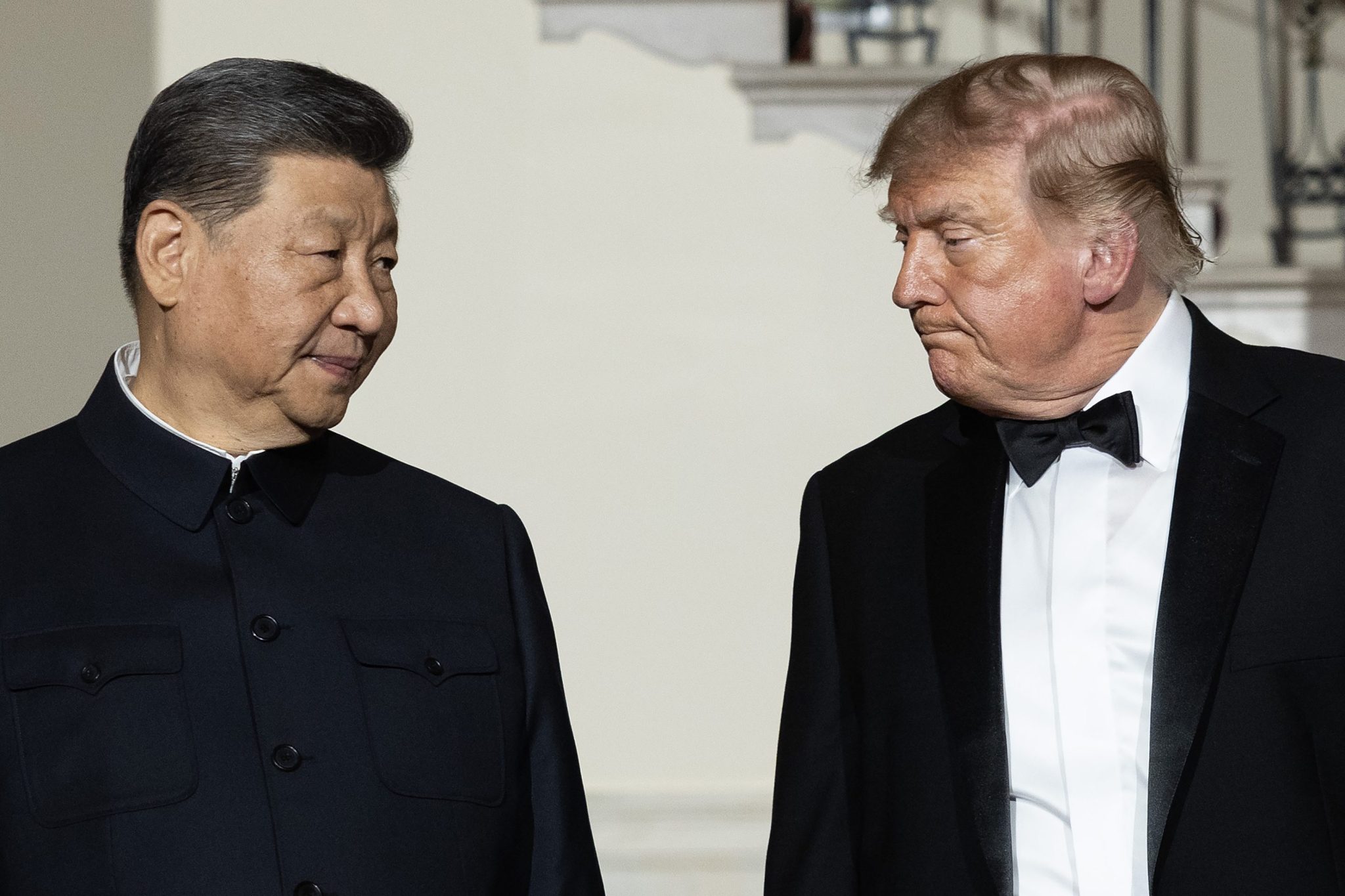
When President Trump announced his tariff plan 18 months ago, he made it clear who he hoped would pay for the sharp end of the scheme: It wouldn't be U.S. consumers; it would be foreign exporters who would "eat" the increased costs. Indeed, following the tit-for-tat trade war between the U.S. and fellow economic superpower, China, President Trump warned the rival force was headed for "big trouble" if it didn't engage in a "two-way street" of trade. Yet while 100% of U.S. exports to China are reportedly subject to tariffs—and a respective 88.8% of Chinese exports are subject to U.S. tariffs—the world's second-largest economy has continued to grow ahead of expectations, and has seemingly grown its export business with the rest of the world. Goldman Sachs' Hui Shan noted over the weekend that China's Q3 real GDP grew 4.5% year on year, slightly above the consensus expectation of 4.4%. Shan added that September activity data were firmer than expected, with industrial production growth accelerating to 5.5% on a year-on-year basis, and retail sales above expectations.
The growth target of 4.5% to 5% appears on track, noted Shan.
Those are the sort of numbers that growth agenda economists in the U.S. can only dream of—especially when policymakers are advocating a plan to grow the economy out of any fiscal unease owing to the nation's $40 trillion national debt burden. U.S. GDP for the first and second quarters came in at 2.5% and 2.2%, respectively, per the Bureau of Economic Analysis .
That said, data analysts highlight that while the headline figures between the U.S. and China leave something to be desired on the Western side, the U.S. remains the largest economy in the world and has a GDP per capita that dwarfs China's. The International Monetary Fund (IMF) reports China's GDP per capita is $15,370, while that of the U.S. is in excess of $95,000.
On deficits, China also appears to be making some moves in the right direction—though from a more unbalanced starting point. Shan notes: "Contrary to our expectation of moderate fiscal loosening at the beginning of the year, fiscal data have shown effective tightening. In the first nine months of this year, combined revenues from the general public budget and government managed funds increased by 1.4% yoy [year over year], whereas expenditures fell by 3.5% yoy.
"Our estimated augmented fiscal deficit (AFD) narrowed from 11% of GDP in December 2025 to 9.4% in September 2026 on a 12-month moving average basis."
Unlike the U.S., China seems to be reducing its budget deficit as a share of GDP. However, while U.S. policymakers have yet to agree on targets to reduce deficits as a share of GDP, they are already operating from a smaller basis: The Congressional Budget Office's long-term budget projections show total deficits averaging 7.2% of GDP over the next three decades (2026–56).
Topics in this story
Gathered from external sources. Rights to this text belong to whoever originally published it.