ICE’s ‘Midway Blitz’ operation cost Chicago businesses $1.2 billion: Study
Immigration and Customs Enforcement’s (ICE) Chicago-area operation cost local businesses more than $1.2 billion last year, according to a new study. The study, conducted by researchers at the University of Illinois Chicago’s Great Cities Institute, found that residents of Cook County’s Latino-heavy neighborhoods made “substantially fewer” visits to restaurants and retail businesses in neighborhoods without…
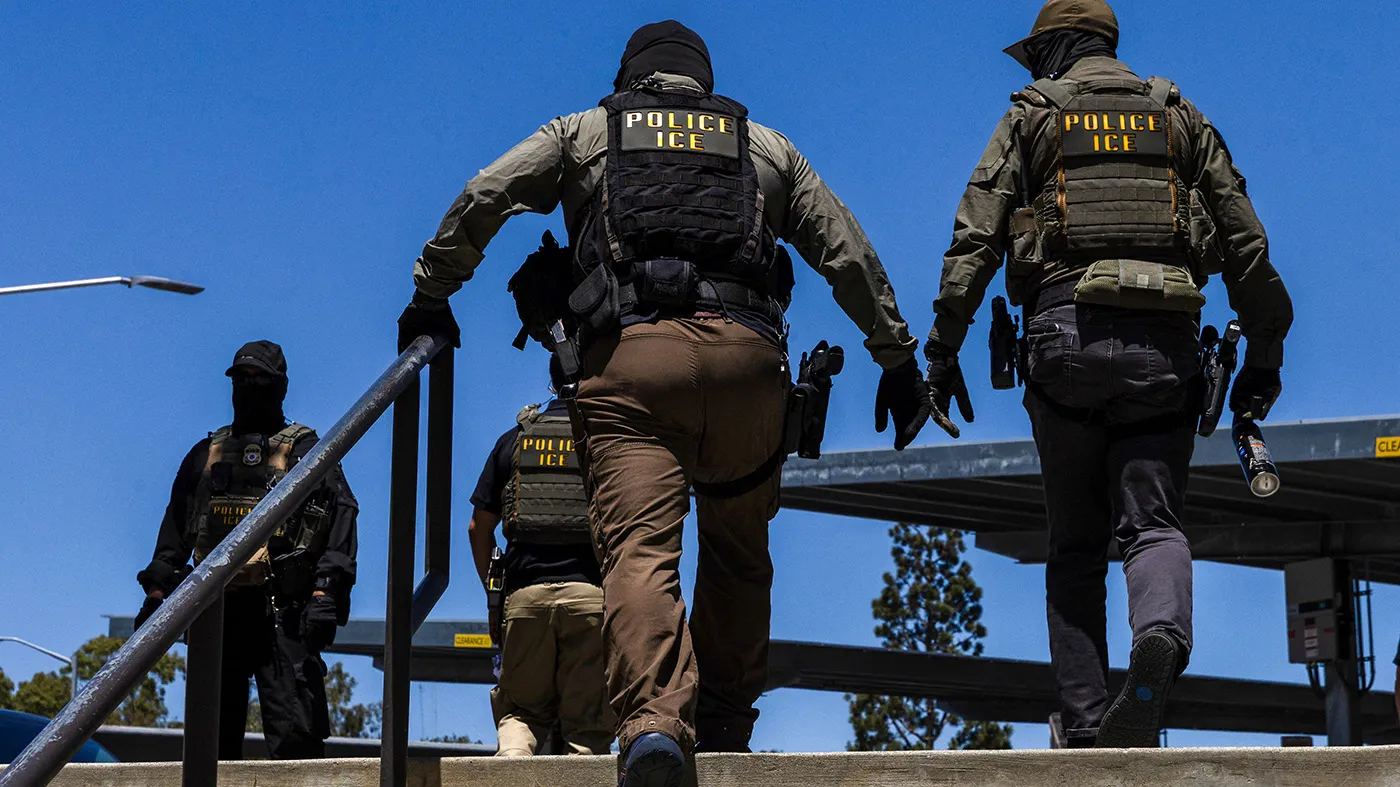
Immigration and Customs Enforcement’s (ICE) Chicago-area operation cost local businesses more than $1.2 billion last year, according to a new study.
The study, conducted by researchers at the University of Illinois Chicago’s Great Cities Institute , found that residents of Cook County’s Latino-heavy neighborhoods made “substantially fewer” visits to restaurants and retail businesses in neighborhoods without a high concentration of Latin America-born individuals.
The decline in those “cross-community” trips corresponded with roughly $1.26 billion in “foregone commercial activity” for restaurants and retail businesses in Cook County, where Chicago is located.
Additionally, local governments in Cook County received approximately $107 million less in sales-tax revenue than they otherwise would have due to the estimated decline in commercial activity, the study noted.
“Visits to businesses in high Latin America-born neighborhoods did not increase enough to offset the decline in cross-community trips, and visits to destinations outside Cook County did not increase,” the study noted. “Within the commercial activity visible in our data, the decline therefore appears to represent foregone rather than relocated activity.”
A spokesperson for the Department of Homeland Security (DHS) defended the operation, telling The Hill that removing “criminals from the streets makes communities safer for business owners and customers.”
“Let’s be clear, if there was any correlation between rampant illegal immigration and a good economy, [former President] Biden would have had a booming economy,” added the DHS spokesperson, who also highlighted multiple people with crime records that federal officers arrested during the operation.
The surge of ICE officers to the Chicago area, which the agency dubbed “Operation Midway Blitz,” began a year ago Tuesday and lasted through mid-November 2025.
During the roughly two-month operation , federal officers detained 3,841 people, 15 percent of which had a prior criminal conviction, according to a report from the Chicago Sun-Times.
Of the detainees, 2,732 have either been deported or left the country voluntarily, the Sun-Times noted.
The Trump administration launched the crackdown over the objections of Chicago Mayor Brandon Johnson (D) and Illinois Gov. JB Pritzker (D).
Citing the study on the economic costs of the operation, Pritzker said it caused “real damage” to businesses in the state. The governor also touted the work of the Little Village Chamber of Commerce in helping businesses rebuild.
“I just can’t thank you enough for that work. And I want to continue to support that,” Pritzker told Jennifer Aguilar, the executive director of the Little Village Chamber of Commerce, in a phone call he shared Tuesday to social platform X.
Topics in this story
Gathered from external sources. Rights to this text belong to whoever originally published it.