Defiance Politely Asks the SEC to Let It Sell An ETF 8-Ball
Sixteen new Defiance ETFs would reset 2x leverage six times a session, which is more leverage than the SEC’s current 3x line in the sand
Our analysts just identified a stock with the potential to be the next Nvidia. Tell us how you invest and we'll show you why it's our #1 pick. Tap here.
There is a moment in every wild party where somebody suggests a new thing that will make the night 10 times more fun for 45 minutes and excruciatingly worse for the days that will follow. Defiance ETFs has decided that we've reached that point in the ETF party and just filed its suggestion with the Securities and Exchange Commission… sixteen times over.
Defiance wants to launch 16 new ETFs, all built on the same idea and all named for it: the Defiance 2X Hourly Reset ETF, one each for NVDA, TSLA, PLTR, GOOG, META, MSFT, AMD, MU, TSM, MRVL and six more. Paperwork went in through Tidal Trust V with the clock set to run 75 days, so they go live around November 4 unless somebody stops them.
Each fund promises double whatever the stock does, and then delivers on that promise six separate times a day. Every roughly hour-long window starts fresh, with the leverage reset to 2x from wherever the stock happens to be sitting. The filing says outright that the promise applies to nothing else. Not to a day, not to a month, not to a year. Six windows, and after each one closes, whatever happened in it is permanent.
Your losses don't get a fresh start when the leverage does. A stock that whipsaws its way to nowhere by 4 p.m. can leave the fund substantially poorer, and every additional reset is another chance for that to happen.
Defiance gets its exposure mostly through swaps, then short-dated options, and will hold the stock outright on margin when the derivatives dry up. Between 40% and 60% of the fund sits parked as collateral rather than doing anything. Each reset skims a basis point on whatever gets traded. Six times a day, 252 days a year, that adds up to a toll nobody notices individually.
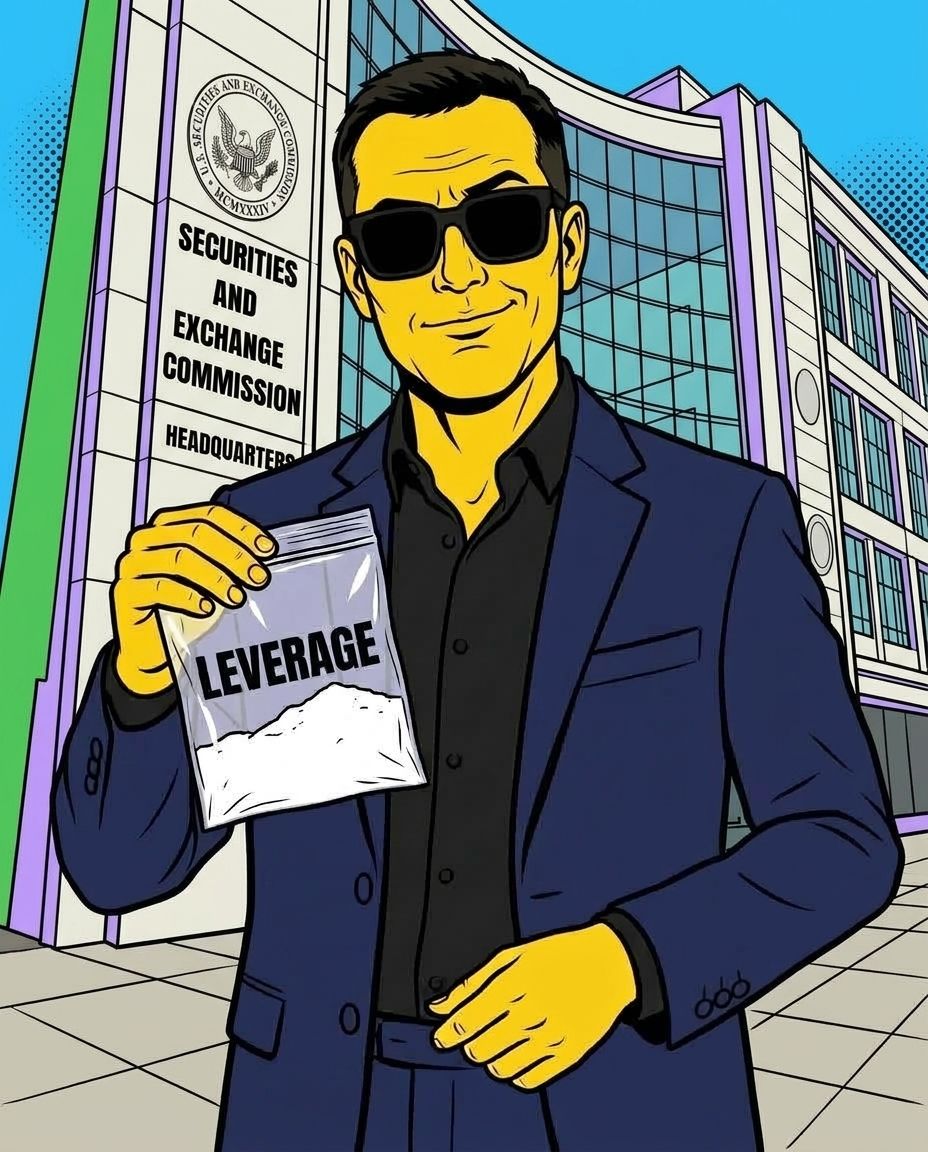
Getting back to the party analogy, Defiance has clearly recognized this is the inflection point in the ETF frenzy where the drugs are starting to wear off and the anhedonia is creeping in, leaving the more devoted party animals to chase a new hivh. So Defiance just asked the SEC if it would be cool to drop an 8-ball on the table and see who's down.
Unlike an 8-ball though, the comes with a warning label. Buried in the filing is a table showing what a holder loses when the stock finishes the year exactly where it started. At 25% annualized volatility, down 6.1%. At 75%, down 43%. At 100% volatility on a stock that went nowhere, down 63.2%.
Topics in this story
Gathered from external sources. Rights to this text belong to whoever originally published it.