10-year Treasury yield hits 5 percent
The 10-year U.S. Treasury bond yield surpassed 5 percent during Monday trading, marking just the second time it has done so in the last 19 years. The yield on the 10-year Treasury note hit 5.014 percent but has sunk to 4.961 percent as of mid-afternoon Monday, nearly 1 basis point above where it opened. Monday…
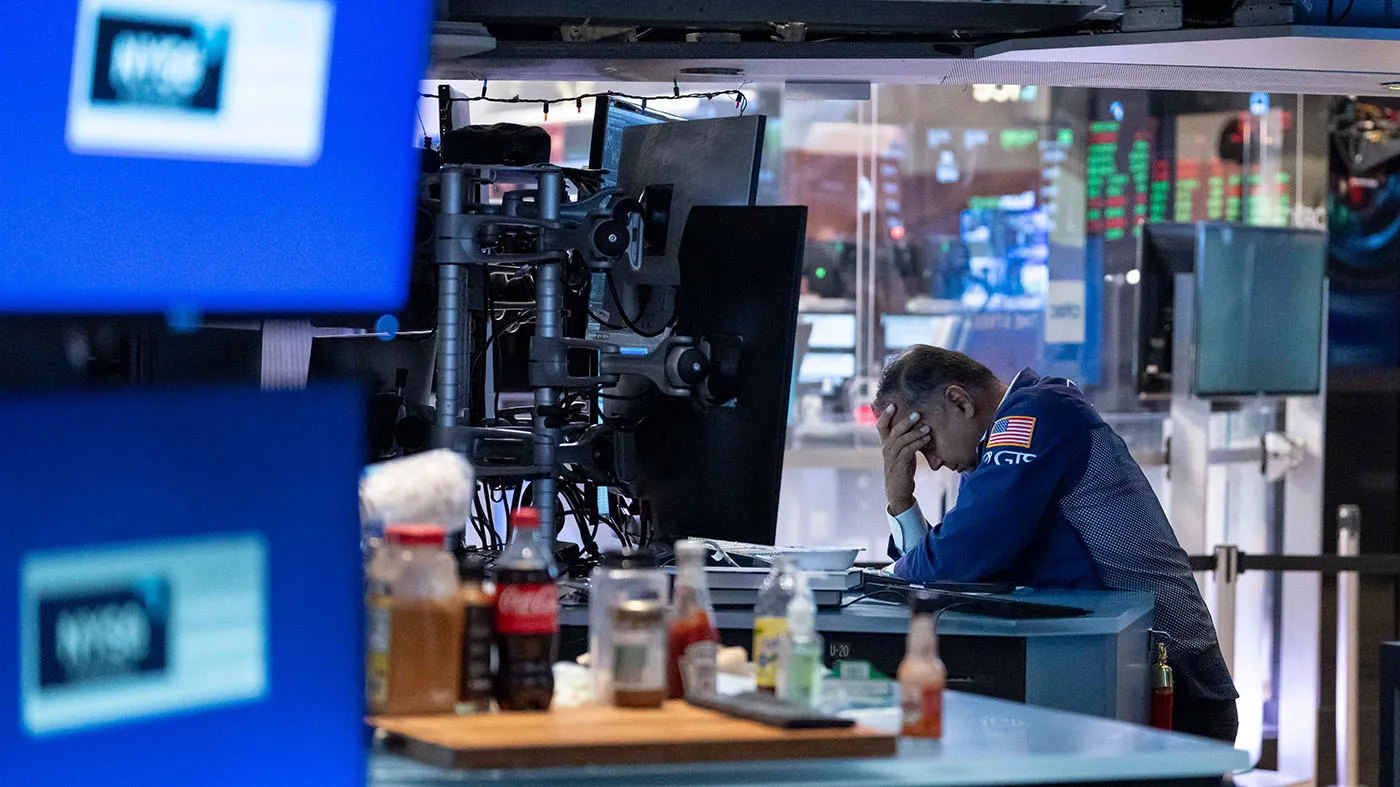
The 10-year U.S. Treasury bond yield surpassed 5 percent during Monday trading, marking just the second time it has done so in the last 19 years.
The yield on the 10-year Treasury note hit 5.014 percent but has sunk to 4.961 percent as of mid-afternoon Monday, nearly 1 basis point above where it opened.
Monday marked the first time the 10-year bond yield touched 5 percent since October 2023 , and just the second time it has done so since July 2007 — before the global financial crisis.
The 10-year bond yield is up 80-plus basis points from the start of this year and more than a full percentage point higher than where it stood at closing time the day before the U.S. and Israel launched the Iran war .
The yield on the 30-year Treasury bond, meanwhile, is down by nearly 2 basis points to less than 5.33 percent as of Monday afternoon. The 30-year bond yield is up by 70 basis points since the day before the Iran conflict started.
Bond yields have risen in the U.S. and other major countries due to persistent inflation amid the Iran war and mounting government debt. The U.S. national debt crossed the $40 trillion threshold last month, with the federal government having paid $1.27 trillion in interest on the debt this fiscal year alone.
President Trump also pledged last week to send every American adult a $5,000 dividend if Republicans maintain control of Congress this November. Trump’s proposal would cost the federal government roughly $1.35 trillion.
Economist Robin Brooks noted Friday that investors are “aggressively differentiating between high- and low-debt countries,” chalking up the sharp rise in American, French, Japanese, Italian, British and Greek bond yields to a global debt shock.
“Markets are differentiating based on the level of public debt, which they’re only doing because they’re uniquely fixated on this issue,” Brooks, a senior fellow at the Brooks Institute, wrote on Substack .
Elevated energy costs , as the Iran conflict approaches the seven-month mark, are also contributing to investors’ concerns. West Texas Intermediate crude oil, the North American benchmark, is trading at above $101 per barrel as of Monday afternoon.
The Trump administration has attempted to tamp down bond yields, so far to no avail. The Treasury Department on Thursday repurchased nearly $5.2 billion worth of 10- to 20-year securities, after increasing its maximum buyback limit from $2 billion to $6 billion.
The Treasury is set to buy back up to $4 billion worth of 7- to 10-year securities on Thursday, according to its operations schedule .
The increase in the 10-year bond yields comes with heavy implications for Americans. The average 30-year mortgage rate, which follows the 10-year bond yield, was 6.76 percent last week — its highest mark since late June 2025.
The week before the U.S. and Israel launched strikes on Iran, the average 30-year mortgage rate was below 6 percent. The average 30-year rate has not topped 7 percent since mid-January of last year .
Topics in this story
Gathered from external sources. Rights to this text belong to whoever originally published it.