Goldman Sachs CEO offers surprising new take on U.S. economy
One overlooked shift could push America’s economy into higher gear
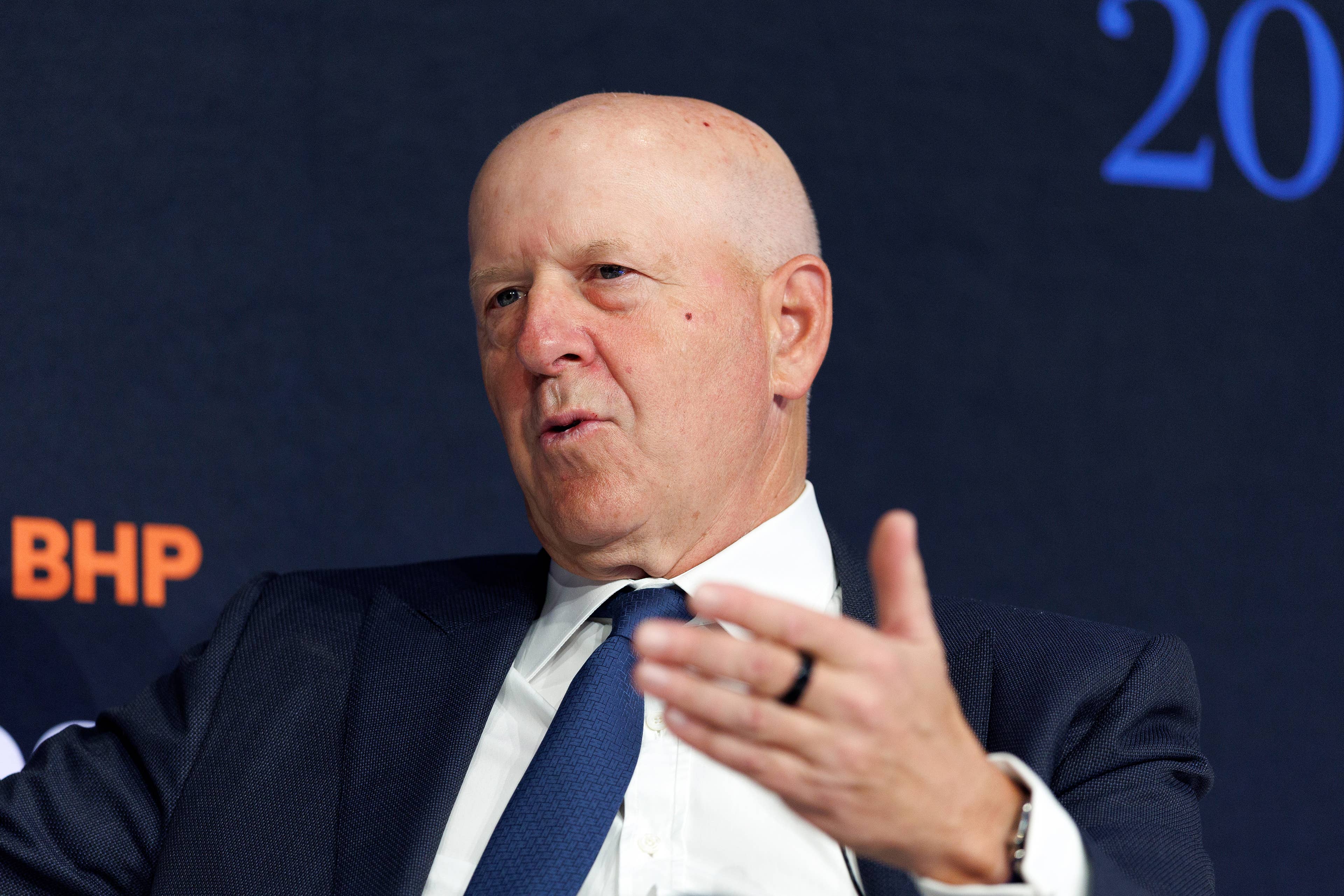
The American economy is growing, but the footing looks a lot less comfortable.
GDP expanded at a 1.5% annualized pace in Q2 , down from 2.1% in Q1 , while July payrolls dropped by 23,000 and unemployment held near 4.1%, as reported by CNBC .
Yet private domestic demand jumped to 4.2%, as reported by Investing.com , suggesting that the engine hasn't stalled. Goldman Sachs CEO David Solomon argues a bigger story is developing beneath these mixed signals.
Consumers are at the heart of that dichotomy.
Personal income increased by 0.4% in July , but real spending was mostly flat, the saving rate tanked to 3%, and retail sales fell 0.6%. Inflation also remains sticky, with the PCE index running at 3.7% above last year, as reported by Reuters .
Then we have the enormous AI investment cycle. Companies continue to borrow heavily for funding infrastructure, raising questions about whether the boom might eventually create a credit problem or lead to a painful reset.
Solomon's remains unexpectedly constructive.
In a CNBC interview , he talked about how he sees enough strength beneath the surface to look past the current risks.
His more striking argument is that a familiar technology might unleash an "extraordinary" productivity boom that could potentially revamp America's long-term growth potential.
Why Solomon sees a stronger U.S. economy beneath the noise
Solomon argues that even though the current headwinds might slow down the economy, he doesn't believe they have broken its engine.
That distinction effectively shapes how he interprets every major risk ahead.
"Generally speaking, you know, the consumer is still pretty resilient," Solomon said. "The economy is performing well."
It's important to note that consumer spending remains the biggest source of U.S. activity. If households continue spending while labor conditions cool off, the economy could absorb weaker patches without tipping into a contraction.
The second pillar is the investment cycle.
Solomon pointed to an "enormous investment cycle" contributing to growth and activity, a nod to the heavy spending surrounding AI, data centers, and related infrastructure. According to him, the capital buildout is supporting demand today, even before the promised productivity gains arrive.
Corporate earnings reinforce the argument.
Solomon called the numbers coming in as "extraordinary," describing it as "a big tailwind for the market and for the economy." Rising profits offer businesses greater capacity to invest, hire, service debt, and absorb higher borrowing costs.
Topics in this story
Gathered from external sources. Rights to this text belong to whoever originally published it.