China link, US curbs & new executive controversy: Why Nvidia halted AI server shipments to 4 Southeast Asian countries
Nvidia instructed its manufacturing partners to halt shipments of servers containing its advanced artificial intelligence (AI) chips to Malaysia,
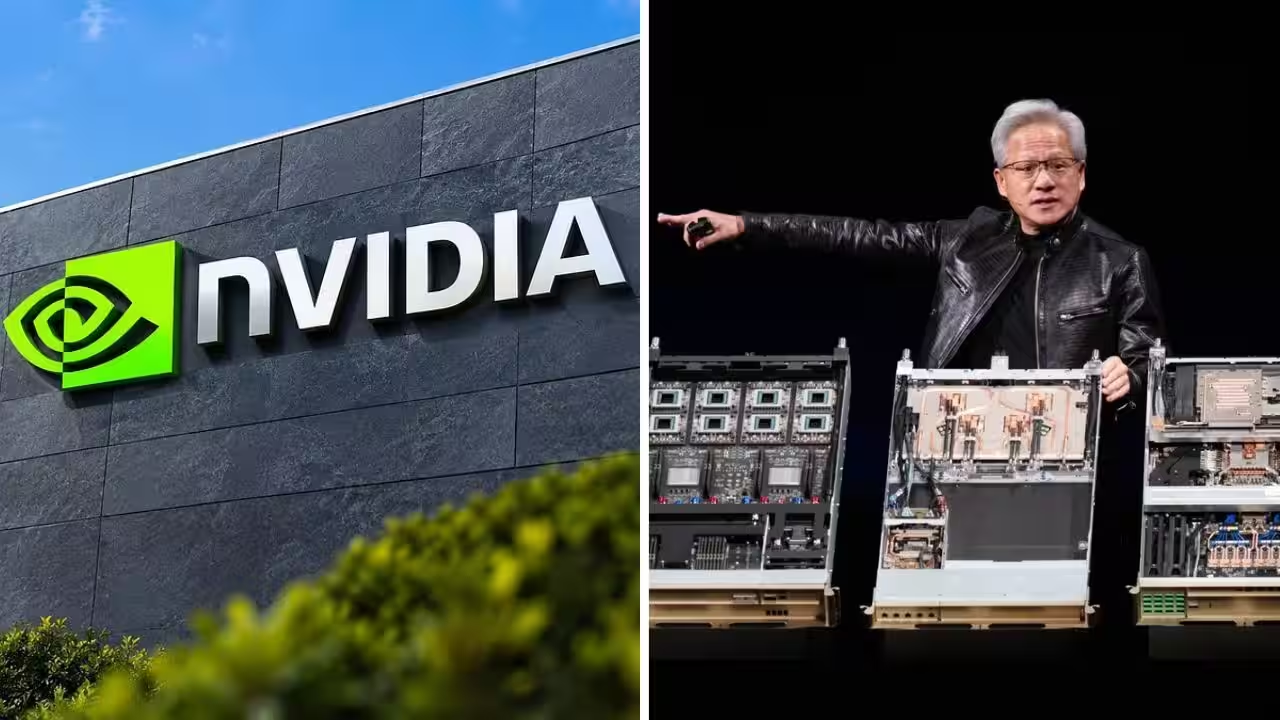
Nvidia instructed its manufacturing partners to halt shipments of servers containing its advanced artificial intelligence (AI) chips to Malaysia, Singapore, Thailand and Indonesia, as the United States tightens export controls to prevent Chinese companies from accessing restricted computing technology through overseas data centres.The reported suspension follows new US export rules that seek to close a loophole allowing Chinese technology companies to remotely rent computing power from facilities operating in Southeast Asia.According to a Financial Times report, manufacturing partners including Dell and Super Micro Computer have informed customers in the four countries that Nvidia would not authorise their orders for shipment. The duration of the suspension remains unclear, with the move reportedly intended as a temporary measure while Nvidia and its partners assess compliance requirements under the new regulations.The development comes as Nvidia faces increased scrutiny over its business relationships in Asia and the alleged diversion of its advanced chips to China. Two separate cases involving senior Nvidia executives, Jensen Huang and Jay Puri, have also drawn attention to the company's network of business partners and the allocation of its AI processors.Why has Nvidia stopped shipments to four Southeast Asian countriesThe immediate reason behind the reported suspension is Washington's effort to prevent Chinese companies from accessing advanced American AI chips indirectly through data centres located outside China.Direct exports of some of Nvidia's most advanced processors to China are already restricted under US export controls. However, Chinese technology companies have found alternative ways to access computing infrastructure without purchasing the chips themselves.Companies operating data centres in Southeast Asia purchase advanced Nvidia processors, install them in servers and rent out their computing capacity to customers. This arrangement allows overseas clients to access powerful AI computing infrastructure remotely, even when they are restricted from purchasing the underlying hardware directly.Chinese technology companies, including Alibaba, Tencent and ByteDance, have relied on such arrangements to access computing resources in the region.Southeast Asia has consequently emerged as an important market for Nvidia, with data centre operators investing billions of dollars in infrastructure built around its processors.However, Washington believes such arrangements could undermine restrictions imposed on China's access to advanced semiconductor technology. The new rules are intended to prevent companies in countries considered high-risk from becoming indirect channels through which Chinese firms obtain restricted computing power.What do the new US export rules sayThe US Commerce Department introduced an interim final rule titled 'Addressing Remote Access to Advanced Semiconductors', which came into effect on November 19.The regulations introduce additional licensing requirements for exports of advanced semiconductors to Indonesia, Malaysia, Singapore, Thailand and Brazil, countries identified by Washington as presenting a higher-than-normal risk of diversion.The rules also target overseas data centres that provide significant volumes of computing power to companies headquartered in countries classified by the US as national security concerns, including China.Under the framework, data centre operators, chip exporters and other entities involved in the supply chain must conduct due diligence on customers, including checking their ownership and control structures. The objective is to establish who ultimately accesses the computing resources and whether restricted entities could benefit from them.The regulations also provide an exemption for qualifying US-headquartered companies and their subsidiaries, subject to reporting requirements.Nvidia's reported decision to pause shipments appears to be a compliance measure as the company and its manufacturing partners assess how to operate under the new licensing framework.The Financial Times report said it was unclear how long the suspension would last. Nvidia, Dell and Supermicro did not immediately respond to requests for comment.Why is China not among the four countriesChina is not included in the list of destinations affected by the reported shipment suspension because the latest restrictions are specifically aimed at countries that could serve as transit points for advanced American computing technology.Washington already has separate export-control restrictions governing the direct sale of advanced AI processors to China.The latest measures seek to address a different problem: Chinese companies accessing the same technology through data centres operating in third countries.Under this arrangement, a company in China does not necessarily need to own an Nvidia processor. It can instead rent computing capacity from an overseas operator that has purchased and installed the hardware.The new rules seek to regulate both the physical movement of advanced chips and the remote use of computing infrastructure powered by them.Although Brazil is also included in the Commerce Department's licensing framework, the reported Nvidia shipment suspension has so far covered Malaysia, Singapore, Thailand and Indonesia.How did Megaspeed and Jensen Huang's controversy add to the scrutinyThe shipment suspension comes amid separate scrutiny of Singapore-based cloud computing company Megaspeed International, an Nvidia partner that rents computing capacity through its data centres.The company has come under investigation over allegations that advanced Nvidia chips or servers containing them may have been illegally diverted to China.The controversy also brought Nvidia CEO Jensen Huang under scrutiny following reports of his relationship with Alice Huang, a former Megaspeed executive who was reportedly in contact with an officer of China's Ministry of State Security (MSS).US intelligence officials have examined whether Chinese intelligence attempted to obtain information from Alice Huang during her association with the Nvidia chief. However, the available reporting has not established that she was specifically directed to collect information about Jensen Huang or that she passed information of substantial intelligence value to China. Beijing has rejected allegations of espionage.The controversy triggered questions about Huang's position at Nvidia. He subsequently resigned before the company's board reinstated him as CEO on November 23, following intervention by US President Donald Trump.Megaspeed's alleged role in the diversion of advanced chips has added to Washington's concerns about the extent to which overseas data centre operators could provide Chinese companies with access to restricted American technology.Why has Jay Puri's relationship with Cenly Chen come under scrutiny?Jay Puri, a longtime Nvidia executive who previously headed its global sales operations, has drawn attention over his relationship with Cenly Chen, former chief growth officer at US-based server maker Super Micro Computer. The couple dated for several years and married on March 7, 2026, according to The Wall Street Journal.Their relationship has come under scrutiny because Chen regularly dealt with Puri while Super Micro was seeking access to Nvidia's advanced chips for its customers. She also accompanied Super Micro CEO Charles Liang during visits to Nvidia's offices, while Puri was responsible for overseeing global sales and chip allocation.The developments have raised questions about potential conflicts of interest, particularly amid a US investigation into an alleged scheme to divert Nvidia-powered servers to China. On March 19, the Justice Department charged Super Micro co-founder Yih-Shyan “Wally” Liaw, a sales manager and a third-party broker with conspiring to smuggle more than $500 million worth of servers containing Nvidia chips into China. Prosecutors alleged that at least $510 million worth of equipment was diverted through a Southeast Asian company.Neither Puri nor Chen was named in the indictment. Super Micro was also not named as a defendant and has maintained that it was a victim of the alleged scheme. Chen denied that her relationship with Puri influenced her professional decisions, saying, “I never had to rely on personal relationships for professional gain.” She also denied involvement in chip procurement, while Super Micro said chip allocation was handled through a multi-department process.Money habits form by age 7. Is your child learning the right ones? Join the TOI Money Masterclass.
Topics in this story
Gathered from external sources. Rights to this text belong to whoever originally published it.